Cross-Border Ecommerce#online business#first online sale#validate business idea#getting started
A Practical Roadmap for Launching Your First Online Business
Navigate the early stages of building an online business with this decision framework. Learn how to map out your minimum offer, validate your idea, and set up the foundations for your first sale before launching your site.
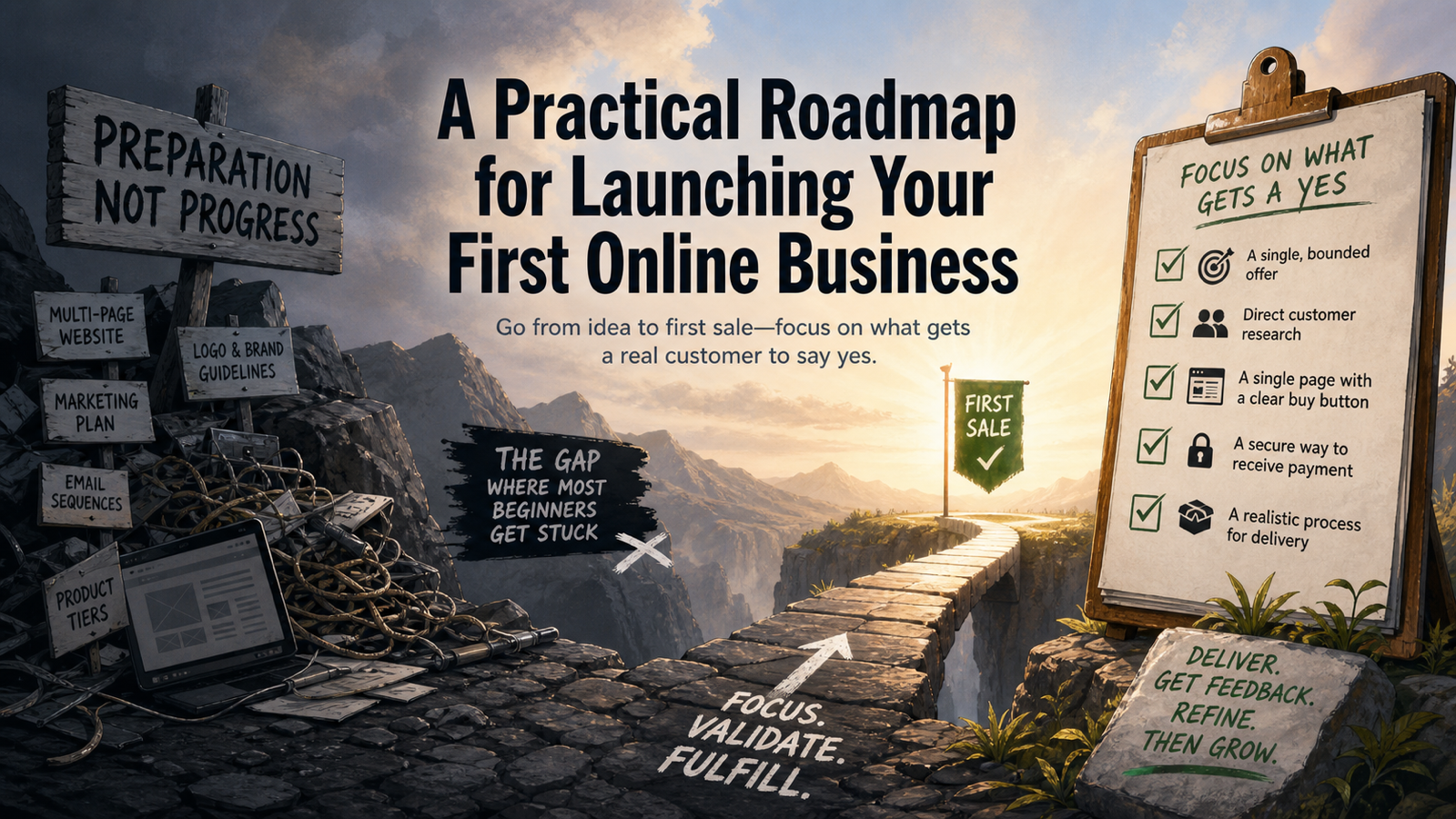
A launch is not validated by a finished website, a perfect logo, or an automated marketing funnel. It is validated by a real customer making an informed commitment to a bounded offer that you can actually fulfill. The gap between a broad business direction and that first real transaction is where most beginners get permanently stuck, usually because they confuse preparation with progress.
To cross this gap, you must separate the work that secures a commitment from the work that can wait.
The Minimum Transaction Surface
Before asking anyone for money or time, you must construct an environment where a transaction can actually take place. This does not mean building an entire digital storefront. It means defining a tightly scoped solution that a specific person will trade resources for today.
Crafting an irresistible offer requires abandoning future product tiers and nice-to-have features. You must define a bounded, deliverable outcome. Once defined, you need a minimum presentation page to house it. This page only needs to articulate the problem, state the solution, name the price, and provide a clear mechanism for the user to commit. If you use a tool like Foundax to construct this initial page, rely on its verified visual editing and preview of product, site-page, and blog SEO information, with important fields sourced from verified product facts.
Gathering Direct Evidence
Broad industry data will tell you if a market exists, but it will not tell you if a specific person wants to buy your specific offer. According to the US Small Business Administration’s “Market research and competitive analysis” guide (updated March 24, 2026), there is a critical distinction between broad existing-source research and direct customer research. The SBA notes that direct methods, such as interviews, can answer audience-specific questions.
You must engage in these direct conversations. When you do, recognize the difference between a compliment and a buying signal. "That is a great idea" is a compliment. Handing over payment details, signing a binding contract, or committing dedicated time is a buying signal.
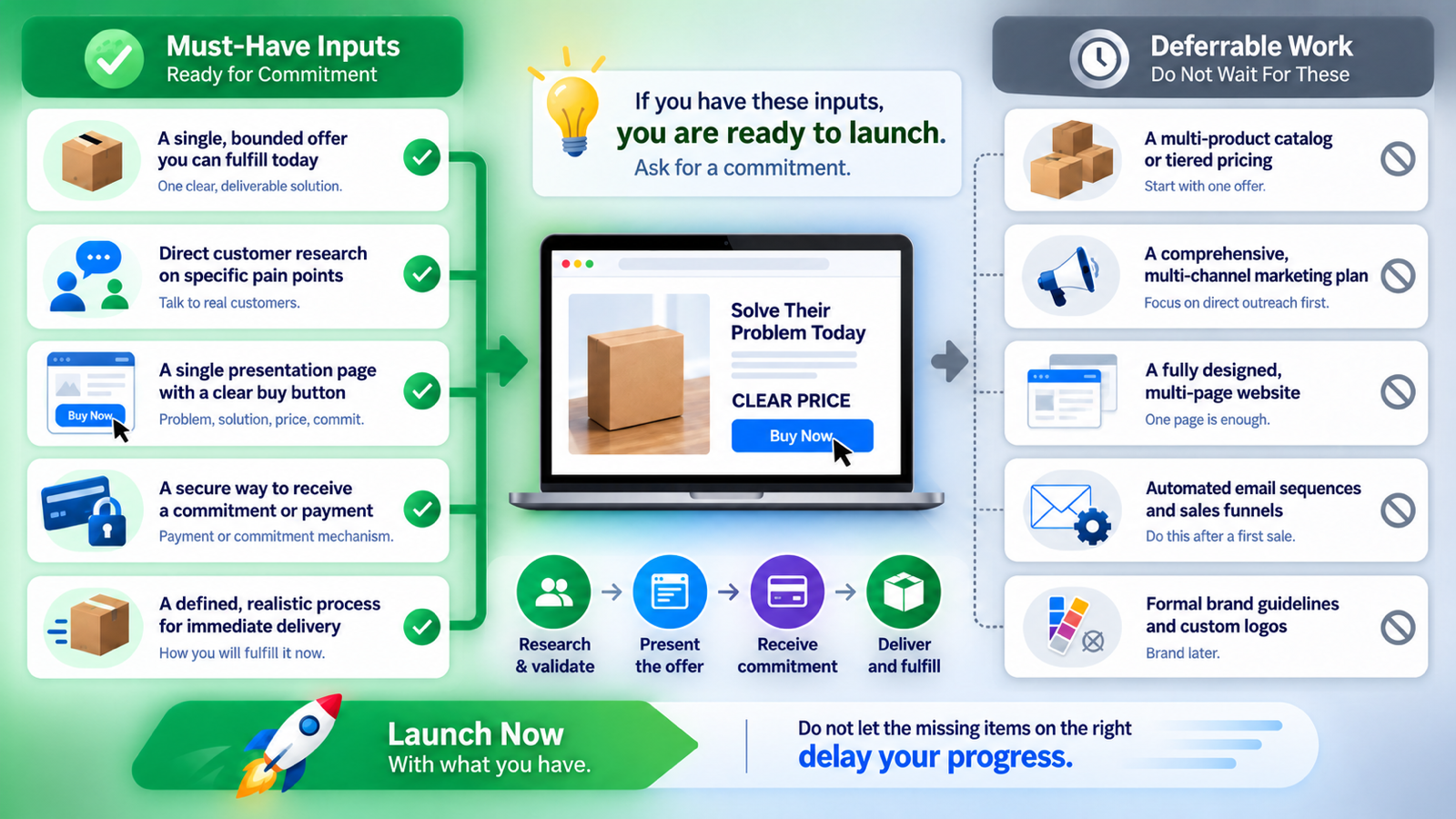
The Transaction-Readiness Map
Use this map to determine if you are ready to ask for a commitment. If you have the inputs on the left, you are ready to launch. Do not let the missing items on the right delay your progress.
Must-Have Inputs (Ready for Commitment)
Deferrable Work (Do Not Wait For These)
A single, bounded offer you can fulfill today
A multi-product catalog or tiered pricing
Direct customer research on specific pain points
A comprehensive, multi-channel marketing plan
A single presentation page with a clear buy button
A fully designed, multi-page website
A secure way to receive a commitment or payment
Automated email sequences and sales funnels
A defined, realistic process for immediate delivery
Formal brand guidelines and custom logos
Reading the Signals and Routing Failure States
Once your minimum transaction surface is live and you begin directing your researched audience toward it, your sole objective is learning how to get your first customer. As you present the offer, you will encounter observable signals that require an immediate decision: stop, revise, or proceed.
Signal: Complete Silence or Disinterest. You present the offer to your target audience, and they do not engage, ask questions, or click. Next Action: Revise the audience or the core problem. You are either talking to the wrong people, or the problem you are solving is not urgent enough to command their attention.
Signal: High Engagement but No Commitment. People ask questions, express interest, and view your presentation page, but no one completes the transaction when presented with the price. Next Action: Revise the offer or the price. The audience cares about the problem, but the risk, cost, or scope of your proposed solution does not align with their expectations.
Signal: An Informed Commitment. A customer understands the offer, agrees to the terms, and completes the transaction mechanism (e.g., submitting payment or signing a commitment). Next Action: Proceed immediately to fulfillment.
Fulfillment Proves the Launch
A commitment validates the demand, but successful delivery proves the transaction was real. The launch process is fully complete only when you have delivered the bounded offer to your first buyer and they have received the promised value.
Do not scale yet. Deliver the product manually if necessary, gather direct feedback on their experience, and refine your operational process. Once you have successfully bridged the gap from a broad idea to a fulfilled commitment for one person, you will have the baseline evidence required to pursue your next customers.
Frequently Asked Questions
Do I need a fully designed website before I can launch my business?
No, building an entire digital storefront, creating a multi-product catalog, and establishing formal brand guidelines are deferrable tasks that frequently delay actual progress. A launch is validated by securing a commitment, which only requires a minimum transaction surface. Stop building out future product tiers and immediately publish a single presentation page dedicated to a bounded offer you can fulfill today, ensuring it includes a clear mechanism for the user to commit or pay.
How do I know if people actually want to buy my product?
You cannot rely on broad industry data or verbal compliments like "that is a great idea" to validate real market demand. You must engage in direct customer conversations and look for concrete buying signals, such as a customer handing over payment details, signing a binding contract, or committing dedicated time. Present your minimum presentation page directly to your researched audience and measure actual financial or time commitments rather than verbal encouragement.
What should I do if people engage with my offer but nobody actually buys it?
If you receive high engagement and questions but zero completed transactions when the price is presented, the audience likely cares about the problem, but your specific solution's risk, cost, or scope does not align with their expectations. Your immediate next action is to revise the specific offer or adjust your pricing, then present the modified solution to that same engaged audience.