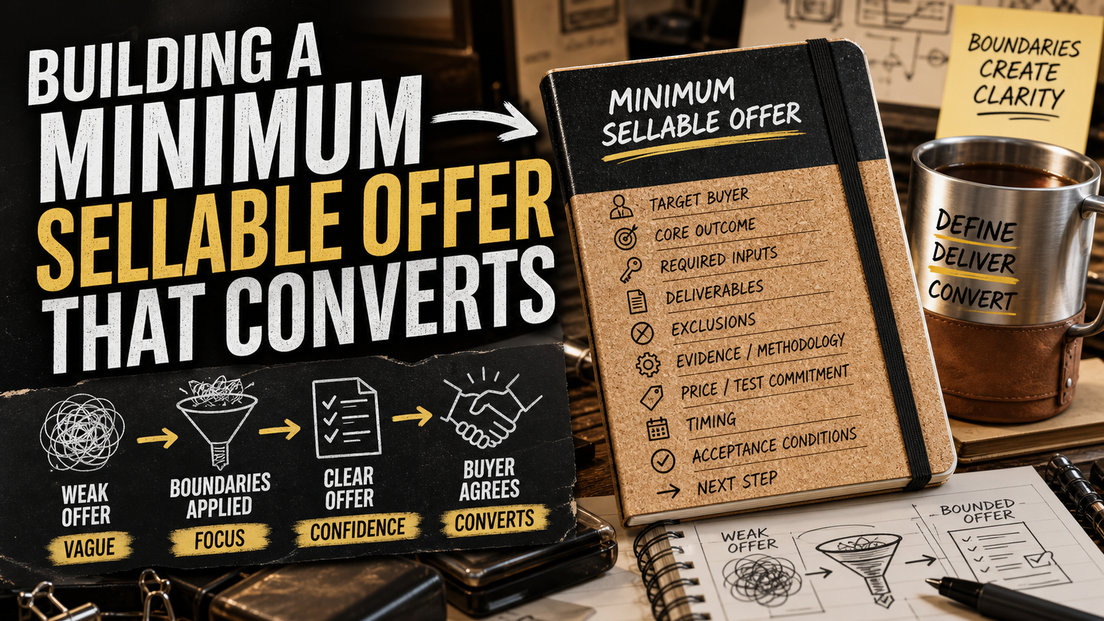
Mapping the Path to Your Very First Business Transaction
Ready to make a sale but unsure what steps to take next? This guide breaks down the essential sequence of creating a landing page, setting up payments, and reaching out directly to secure your very first buyer.
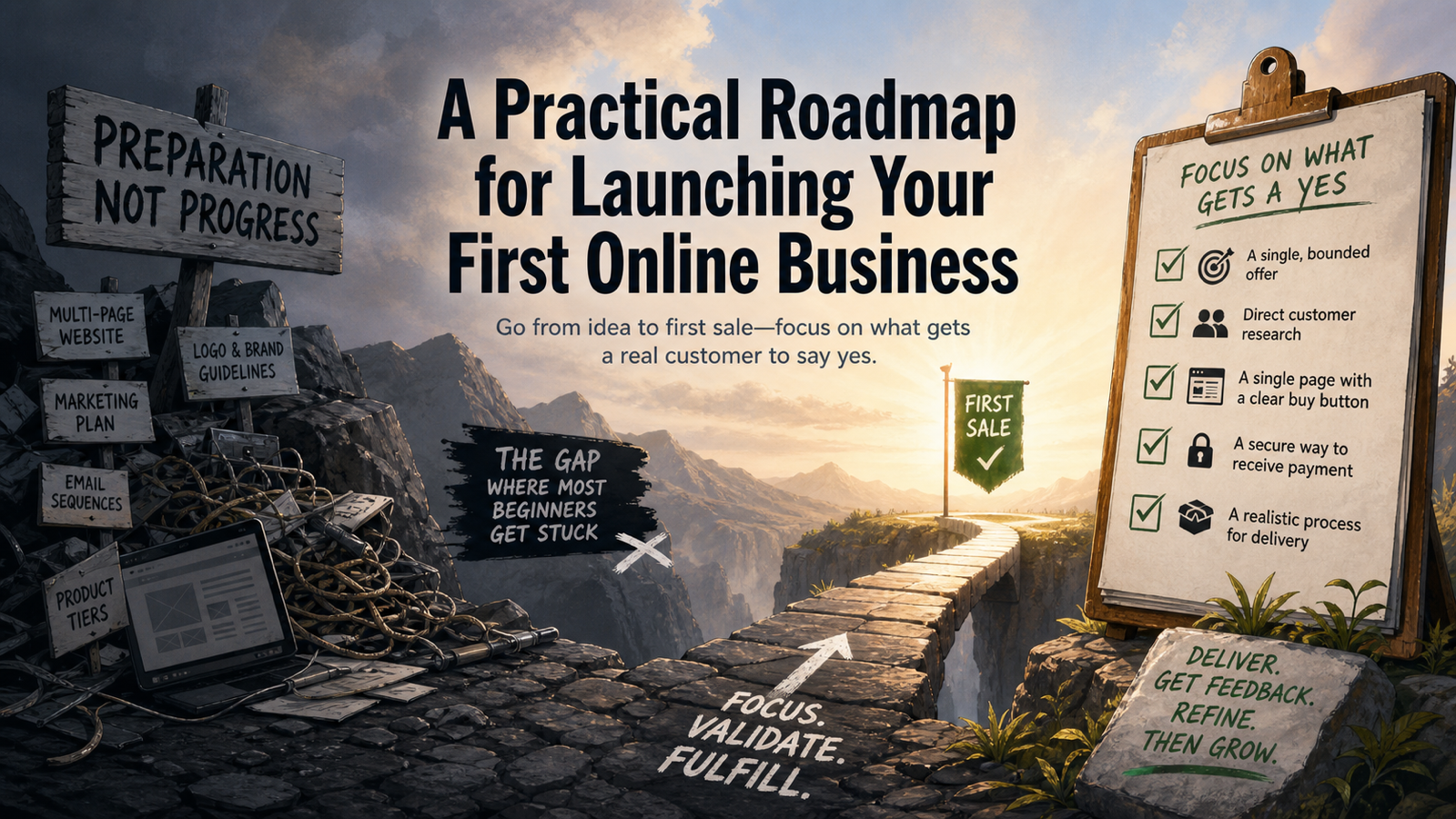
Securing your first transaction requires ruthless prioritization. When determining how to start an online business, it is incredibly easy to get distracted by tasks that feel productive but do not actually unblock a sale. To reach customer number one, you must explicitly postpone peripheral work and focus entirely on a strict dependency sequence.
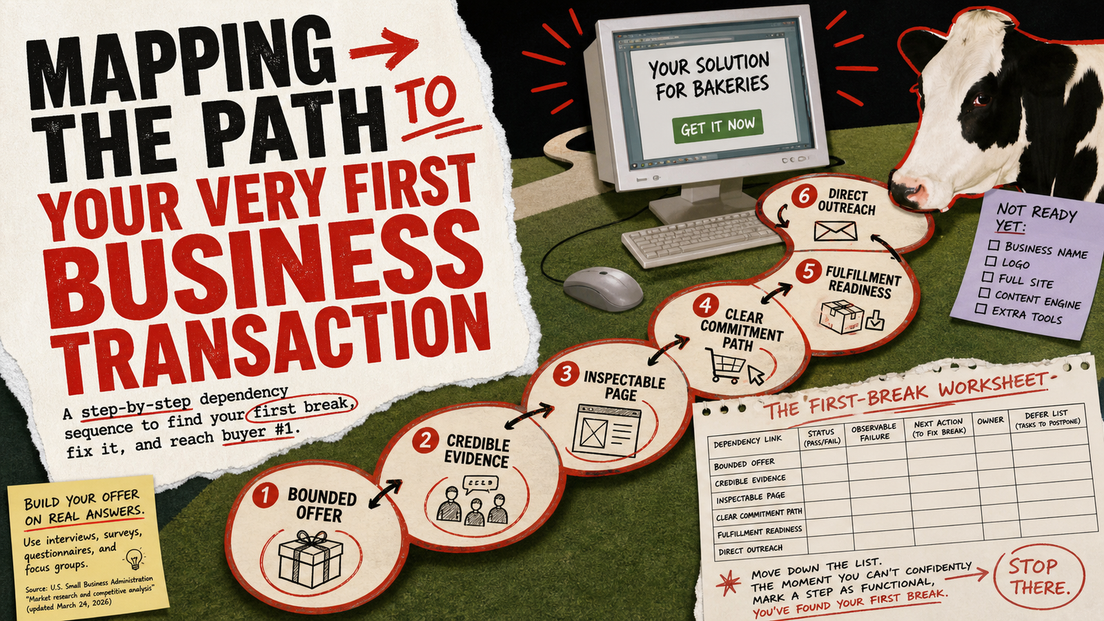
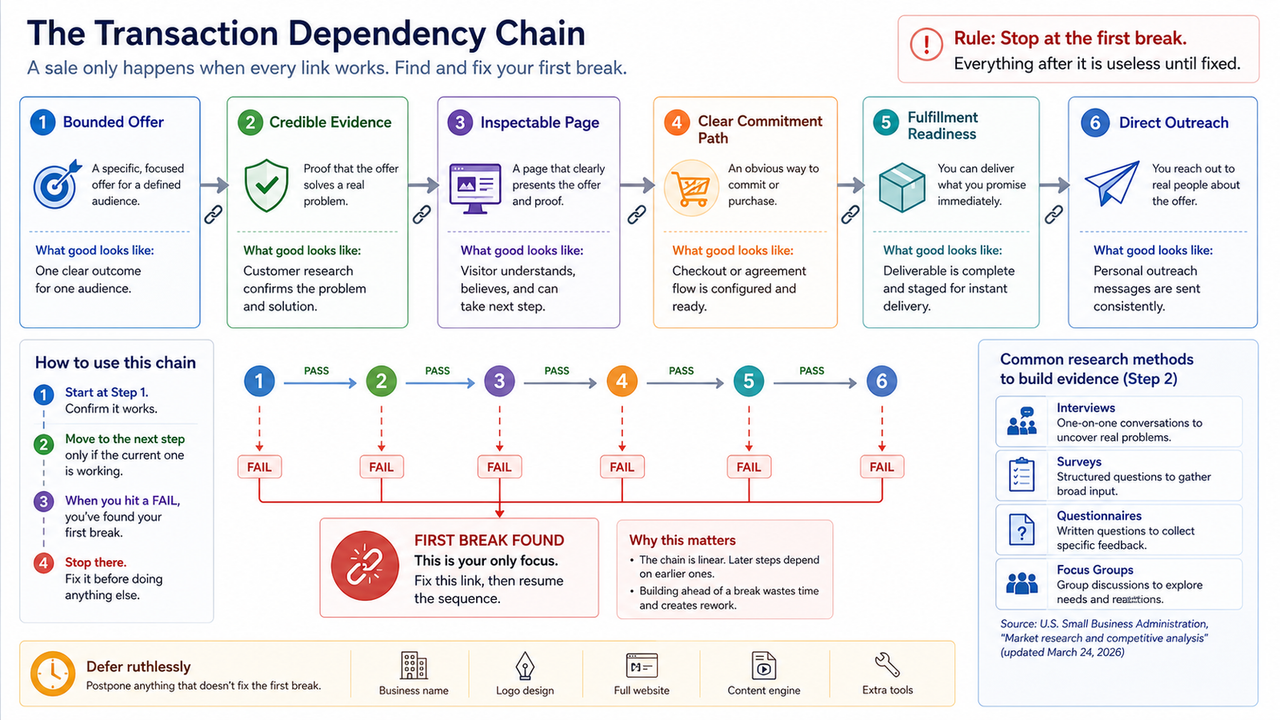
A transaction relies on a continuous chain of dependencies: bounded offer, credible evidence, inspectable page, clear commitment path, fulfillment readiness, direct outreach. If any link in this sequence is broken or missing, the steps that follow it are useless. Your objective is not to build a massive infrastructure, but to evaluate this chain sequentially and identify your first broken link.
Answering audience-specific questions is often the first hurdle in building a bounded offer and gathering credible evidence. According to the US Small Business Administration's "Market research and competitive analysis" (updated March 24, 2026), you can conduct direct customer research to answer these questions using methods such as interviews, surveys, questionnaires, and focus groups (https://www.sba.gov/business-guide/plan-your-business/market-research-competitive-analysis).
The First-Break Worksheet
Use the following copyable framework to audit your dependency chain. Move down the list sequentially. The moment you cannot confidently mark a step as functional, you have found your first break. Stop there.
Dependency Link
Status (Pass/Fail)
Observable Failure
Next Action (To Fix Break)
Owner
Defer List (Tasks to Postpone)
Bounded Offer
Credible Evidence
Inspectable Page
Clear Commitment Path
Fulfillment Readiness
Direct Outreach
Navigating a Broken Link: A Hypothetical Example
Consider a hypothetical operator aiming to sell specialized inventory forecasting templates to local bakery owners.
They start evaluating their chain. They have a specific bounded offer (a forecasting template for bakeries). To establish credible evidence, they use direct customer research methods like surveys and interviews with bakery owners to validate the specific inventory problems their template solves. They compile this into an inspectable page detailing the solution.
Next, they verify the clear commitment path by confirming the page includes a configured checkout link ready to capture an agreement, recognizing that displaying this call-to-action does not itself prove a sale will settle. Moving to the fulfillment readiness check, however, they find a break. The checkout flow promises instant delivery, but the template itself remains an unformatted draft on their local hard drive.
Observable Failure: The deliverable is not formatted or staged for immediate distribution upon customer commitment.
Next Action: Finalize the template spreadsheet, export it as a clean file, and connect it to the delivery mechanism.
Owner: The operator.
Defer List: Finalizing a business name, designing a logo, building a full multi-page site, launching a content engine, and purchasing extra tools.
Because the dependency chain is linear, a failed dependency radically changes the next move. If this same operator had discovered a break earlier in the chain—for instance, if they realized they lacked credible evidence that the template actually solved a bakery's problem—building an inspectable page or testing fulfillment would be a waste of time. The immediate next action would shift entirely back to conducting interviews to prove the concept, pushing page design onto the defer list.
Working through this sequence and completing the worksheet does not guarantee that a transaction will occur. It is designed solely to keep you focused on the immediate operational bottleneck. By locating the first break in the chain, you know exactly what needs to be fixed today, and more importantly, exactly what you have permission to ignore.
Frequently Asked Questions
What should I do if multiple steps in my dependency sequence are broken?
Move down the list sequentially and stop at the very first break you encounter. Because the dependency chain is linear, fixing a later step is useless if an earlier link is missing. Focus your next action entirely on resolving that initial bottleneck and explicitly postpone later steps.
How can I build credible evidence before I have my first customer?
You can establish credible evidence through direct customer research. Using methods like surveys, interviews, questionnaires, and focus groups allows you to validate the specific problems your offer solves and answer audience-specific questions without needing prior sales.
Will completing the First-Break Worksheet guarantee a sale?
No. Working through the dependency sequence and completing the worksheet does not guarantee that a transaction will occur. The framework is designed solely to keep you focused on your immediate operational bottleneck so you know exactly what needs fixing today and what peripheral work to ignore.