Ecommerce AI#DTC site vs marketplace#agentic commerce#AI shopping#product data#DTC strategy
DTC Sites vs Marketplaces in Agentic Commerce
Agentic commerce gives marketplaces new distribution power, but DTC sites remain the place where brands control product facts, trust, customer data, and measurement.
Agentic commerce changes the buyer journey, but it does not erase the difference between a marketplace and a DTC site. Marketplaces have distribution, traffic, reviews, checkout trust, and increasingly their own AI shopping assistants. A DTC site has the brand's canonical product facts, deeper content, first-party customer data, policy context, and a measurement layer the team can operate.
What Agentic Commerce Changes
This raises the cost of inconsistency. If the PDP says one thing, the feed says another, the policy page is vague, and localized pages are stale, an AI-mediated journey can surface the weakest version of the brand. Agentic commerce rewards brands that treat product data as operating infrastructure, not as copy written once for a launch.
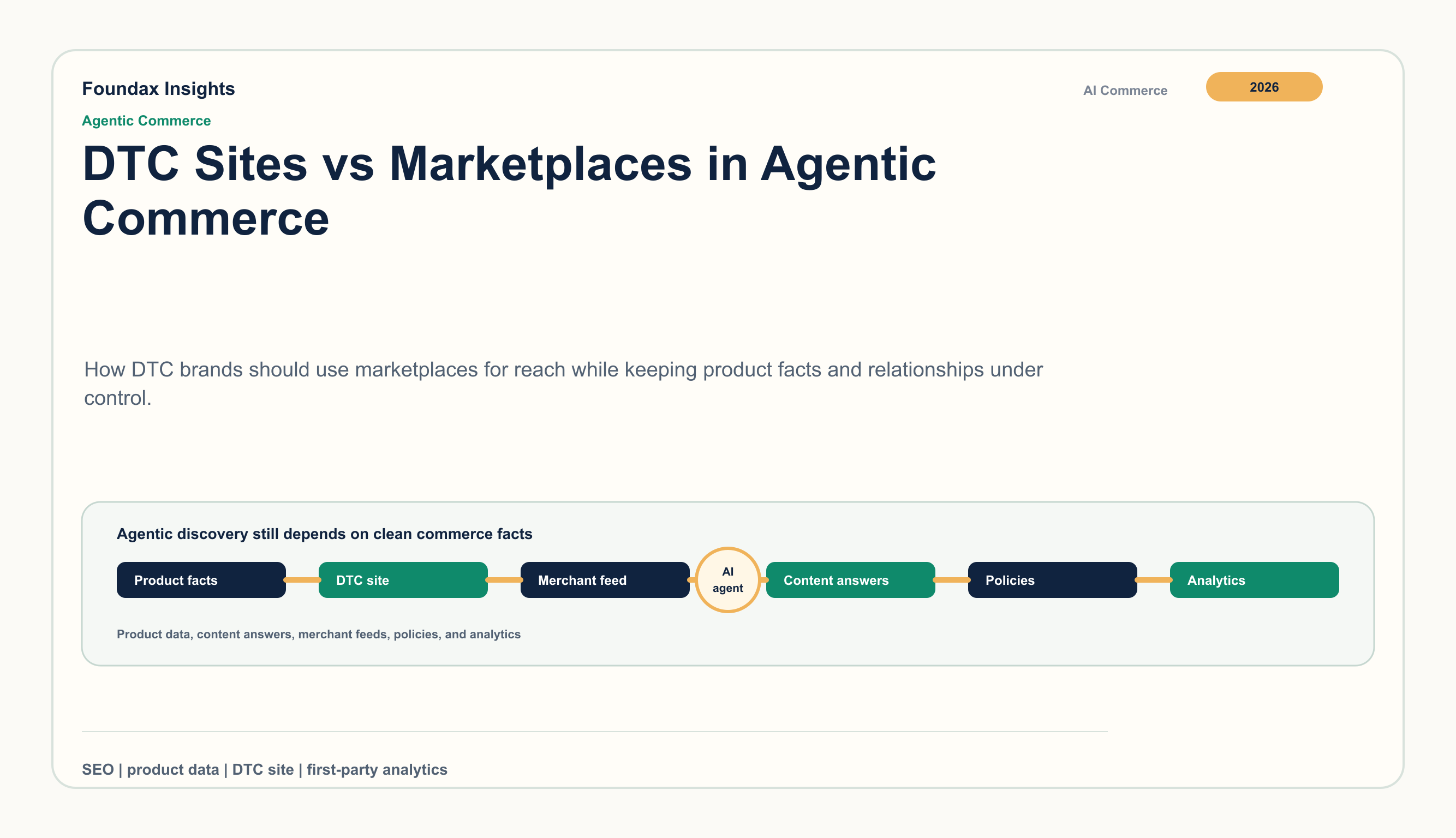
Shopify, Google, Amazon, and other commerce platforms are building systems where AI agents help shoppers discover, compare, and act. More discovery may happen before a shopper lands on a normal page. The AI layer needs readable facts: titles, attributes, images, price, availability, delivery, returns, reviews, and policy claims.
Marketplace Strengths
That strength is real, but it comes with a boundary. The marketplace optimizes for the marketplace experience. It may compress brand context into a comparison card, reorder products based on platform signals, or prioritize offer conditions that fit its own conversion model. Sellers should use that distribution, but they should not let it become the only place where the product is understood.
Marketplaces aggregate demand, normalize checkout trust, collect reviews, and reduce the friction of first purchase. For many categories, marketplace presence is still the fastest way to meet shoppers who do not know the brand.
DTC Site Strengths
The DTC site also lets the brand decide how evidence is organized. It can connect product specs to buying guides, connect policy pages to PDP expectations, connect reviews to use cases, and connect content to the exact products being evaluated. That creates a richer source graph than a single listing.
A DTC site is where the brand can publish full product context: why the product exists, how it compares, what the material means, which variants matter, how shipping and returns work, and which questions buyers ask before purchase.
The Operating Model
A useful operating cadence looks like this: update product facts in one place, publish PDP and content changes, check structured data, review Merchant Center issues, submit or refresh sitemaps, monitor search queries, and compare traffic quality by source. This turns agentic commerce from a vague trend into a weekly operations routine.
Use marketplaces to capture demand where shoppers already are. Use the DTC site to make product facts, content, policies, localization, and analytics coherent. Then feed those learnings back into listings, merchant feeds, content, and paid campaigns.
Where Foundax Fits
The important Foundax role is not a promise of automatic visibility. It is operational consistency: the same product facts should appear in the public page, structured data, merchant feed, localized content, and analytics review. That consistency gives the brand a better foundation as AI shopping surfaces evolve.
Foundax helps DTC teams maintain site SEO, sitemap and robots, Product JSON-LD, Merchant Center preflight and sync, Search Console workflows, Content Studio, multilingual content, and first-party analytics.
FAQ
Will agentic commerce favor marketplaces?
Marketplaces may get early distribution advantages because they already aggregate products, checkout, reviews, and demand. That makes DTC data and content discipline more important.
What should a DTC site publish?
Complete product attributes, offer data, shipping and return policies, structured data, comparison content, FAQs, localized copy, and updated availability.
What is the role of content?
Content turns buyer questions into durable answers that listings usually cannot hold.