Why Marketplace Sellers Need a DTC Site in 2026
Marketplace sellers need a DTC site to build brand search, product depth, first-party customer data, SEO content, and margin visibility while still using platforms for reach.
Read more
A practical 12-month playbook for marketplace-first sellers building a DTC site without interrupting existing platform revenue.
Marketplace sellers usually ask the wrong first question. The question is not when to leave the platform. The better question is which business assets should stop living only inside the platform.
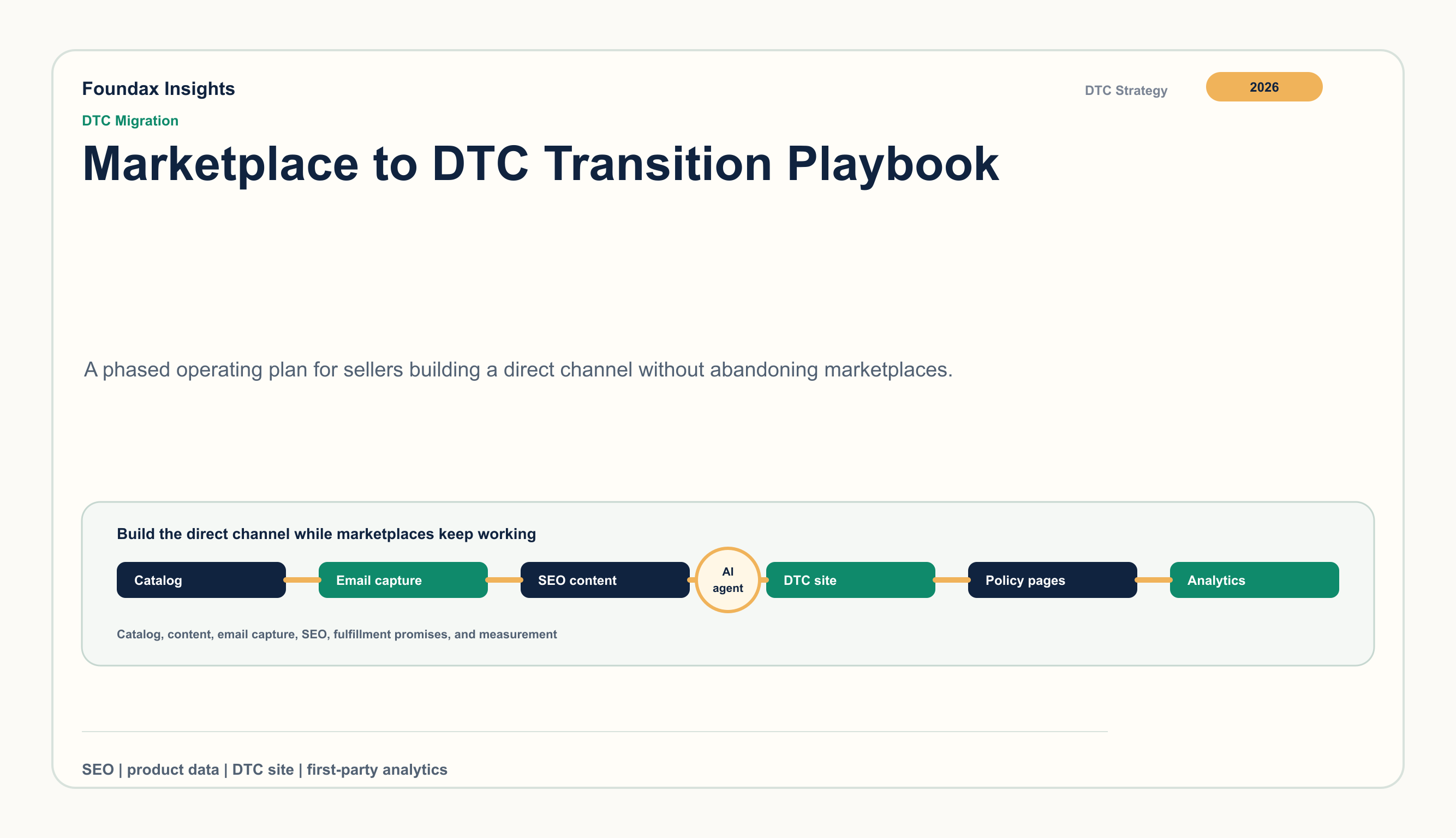
A DTC transition works best as channel expansion. The marketplace keeps funding the business. The DTC site starts with a narrow catalog, then earns more responsibility as product data, search visibility, email capture, content, and measurement become reliable.
Keep the marketplace operation stable. Use it to identify high-margin products, recurring buyer questions, search demand, return issues, and content gaps. The first year should create a working operating system: product pages, policies, email capture, Search Console, Merchant Center data, content cadence, and analytics.
Start with a brand domain, core pages, and 5-10 priority products. Pick products with healthy margin, clear differentiation, manageable returns, and enough demand to justify content work. Each product page should include variants, price, inventory, images, shipping expectations, return policy, FAQ, and Product JSON-LD.
Add the next product set and build email capture into the site: footer signup, product-page signup, checkout capture, and post-purchase flows where platform rules allow. Publish comparison guides, care guides, and category explainers that answer questions too long for marketplace listings.
Increase content around long-tail commercial questions. Maintain Merchant Center data if Shopping surfaces are part of the plan. Treat product attributes as operating data: material, size, color, compatibility, certification, shipping, returns, and availability must stay consistent across the PDP, feed, and content.
Review landing pages, checkout drop-off, repeat purchase, email performance, product-level margin, and support questions. Expand what works and remove what creates operational drag.
Foundax keeps SEO settings, sitemap and robots, Product JSON-LD, Merchant Center preflight and sync, Search Console workflows, Content Studio, multilingual content, and first-party analytics in one place.
Think in 6-12 month operating milestones, not a single launch date. The site can go live quickly, but search, content, customer data, and retention need time to compound.
Start with products that have strong margin, lower return risk, existing demand, and questions that deserve richer content than a marketplace listing can hold.
Trying to launch the full catalog before the operating foundation is ready. A small, clean catalog with strong product facts is better than a large, thin catalog.