First-Party Customer Data for DTC Brands: The Asset Marketplaces Do Not Give You
Marketplace orders rarely become customer relationships. DTC brands need first-party data to understand retention, search demand, content intent, and product performance.
A marketplace order can look like success while leaving the brand with very little customer memory. The seller sees an order, a SKU, a delivery address, and a payout. The platform keeps the broader relationship: discovery history, repeat browsing, communication channel, cross-category behavior, and the next shopping session.
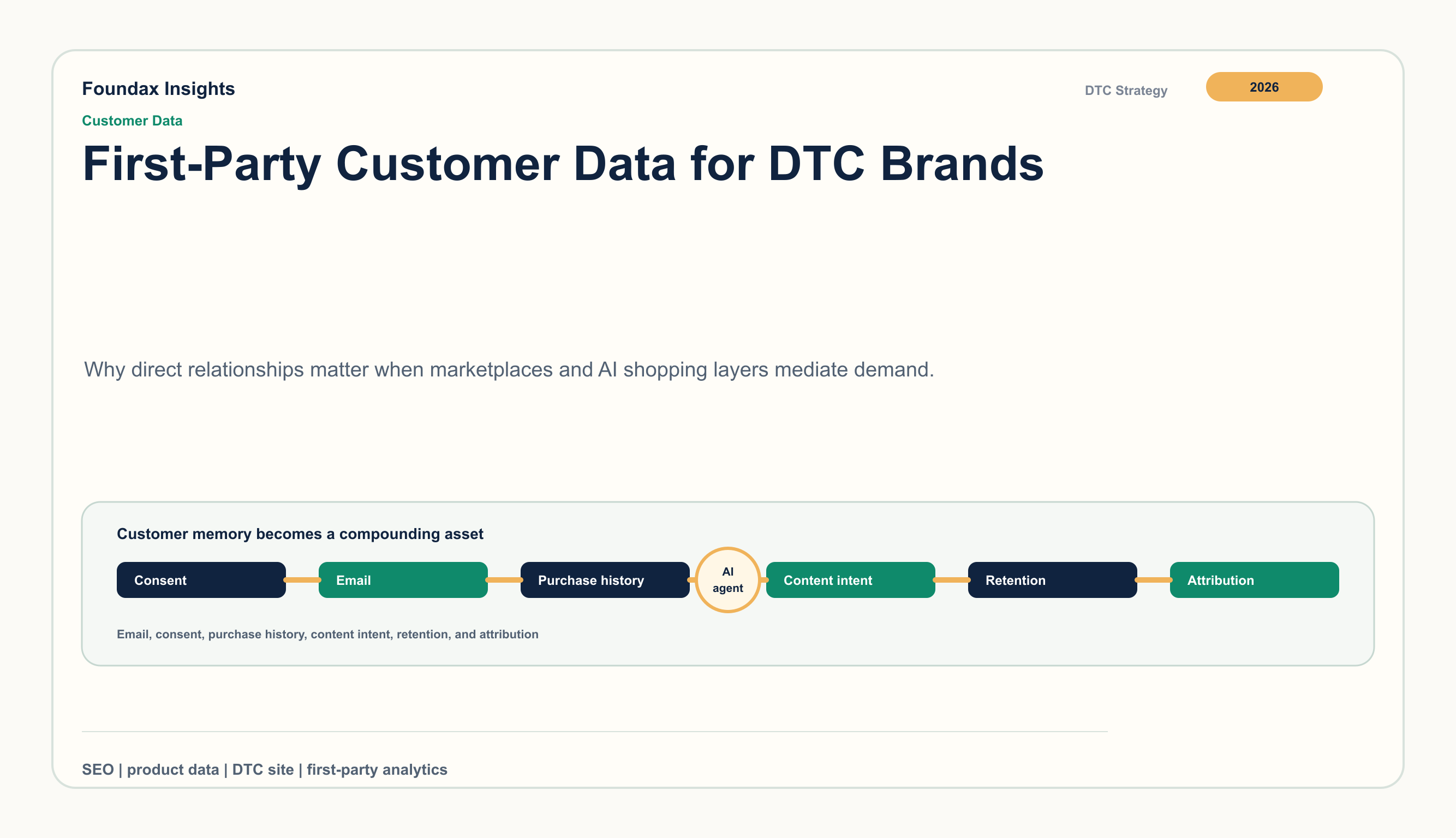
For DTC brands, first-party customer data is the operating base for retention, product planning, content strategy, and channel measurement.
What Marketplaces Usually Keep
Marketplaces are built to make the buyer return to the marketplace. The seller may see order and shipping information, but not a portable customer list for marketing, not full browsing behavior, not cross-product interest, and not a clean way to measure lifetime value across channels.
What a DTC Site Can Learn
A DTC site can collect useful data at several points: source channel, landing page, product views, search queries, add-to-cart behavior, checkout completion, email signup, order history, review responses, support issues, and repeat purchase. These signals answer practical questions about which pages attract qualified traffic, which products drive repeat orders, and which markets need different copy or policy details.
Consent and Trust Matter
First-party data should be collected with clear consent, clear privacy policy language, and useful value exchange. Guides, product care content, early access, warranty registration, replenishment reminders, and post-purchase education can all create better reasons for customers to share an email address.
The AI Shopping Connection
AI shopping systems make first-party data more important because discovery is becoming more data-mediated. Search Engine Land reported that AI Overviews appeared on 14% of shopping queries in a Visibility Labs analysis published March 18, 2026. DTC teams need feedback loops that show which product facts, content answers, and policies are missing.
Where Foundax Fits
Foundax gives DTC teams a common layer for site SEO, Product JSON-LD, Merchant Center preflight and sync, Search Console workflows, Content Studio, localization, and first-party analytics.
FAQ
Can marketplace sellers export customer emails?
Generally, marketplaces do not provide a portable customer email list for marketing. Communication is usually restricted to order support and platform-controlled messaging.
What should a DTC brand collect first?
Start with email consent, purchase history, product views, source channel, search queries, review responses, support topics, and repeat-purchase behavior.
Does this require an enterprise CDP?
No. Start with clean site analytics, email capture, product data discipline, and campaign tagging.