Turn an overwhelming ecommerce SEO audit into an evidence-led action plan. Learn how to move from a list of symptoms to a clear strategy for discovery, understanding, and impact.
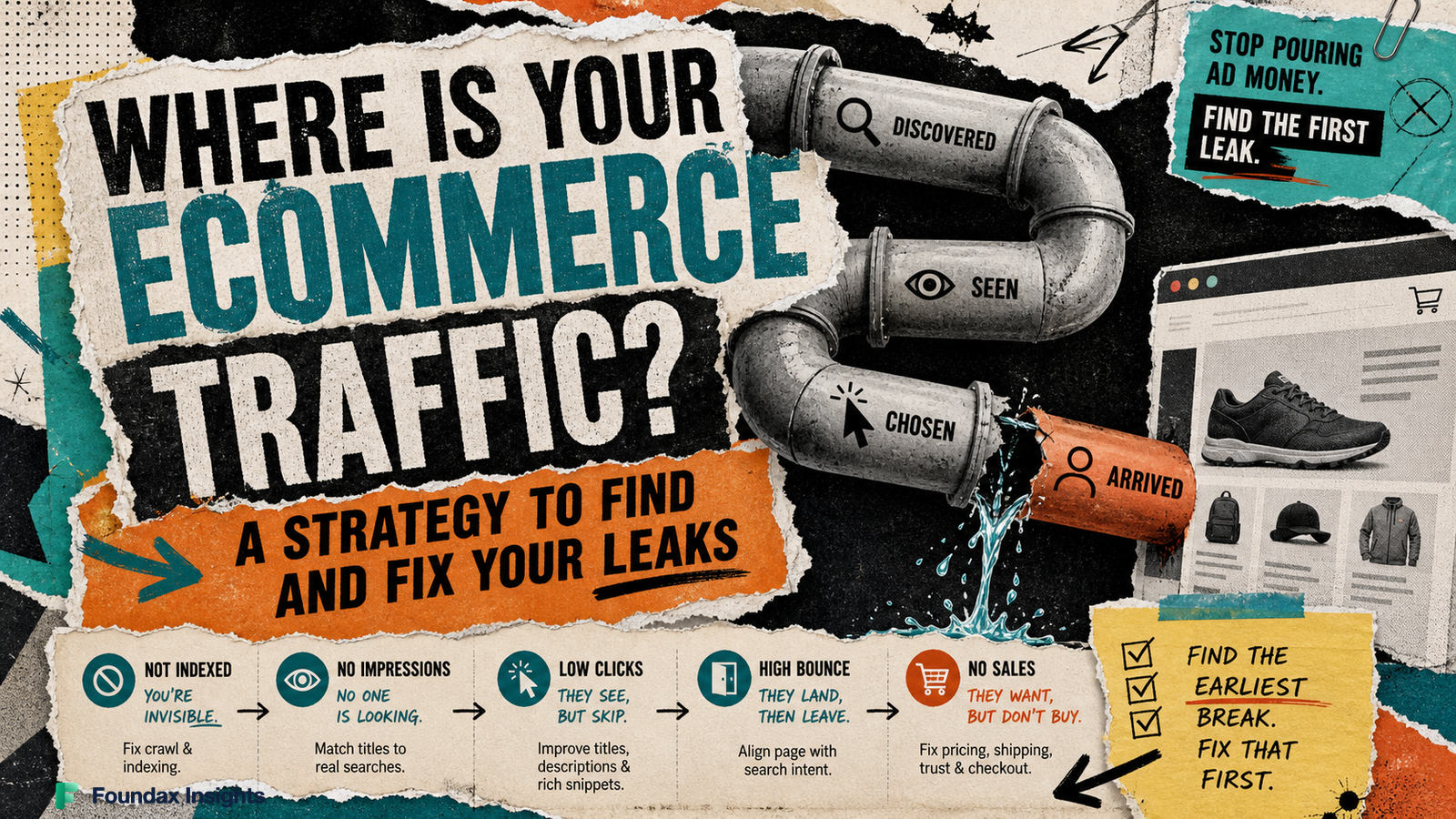
You are sitting in a meeting looking at the results of your latest ecommerce SEO audit. The report is comprehensive, but it is also paralyzing. There are 87 red and amber findings spanning everything from missing canonical tags to duplicate headers and thin category pages. The hour ends, the team closes the spreadsheet, and no one actually knows what to fix first, who owns the work, or how to measure if the fix mattered.
You do not need another meeting to figure it out. Give it 10 minutes to make a first prioritization pass. This is not 10 minutes to page-one rankings or doubled revenue—SEO compounds through patient, repeated work—but it is enough time to group scattered symptoms into a concrete strategy.
SEO is a system that helps search engines understand who your brand serves, what your products solve, and whether your most important pages and product facts are discoverable, understandable, and trustworthy. Updating metadata and increasing blog volume are inputs into that system, not the system itself. To get unstuck, you have to separate coverage from diagnosis.
Moving from Symptom to Evidence
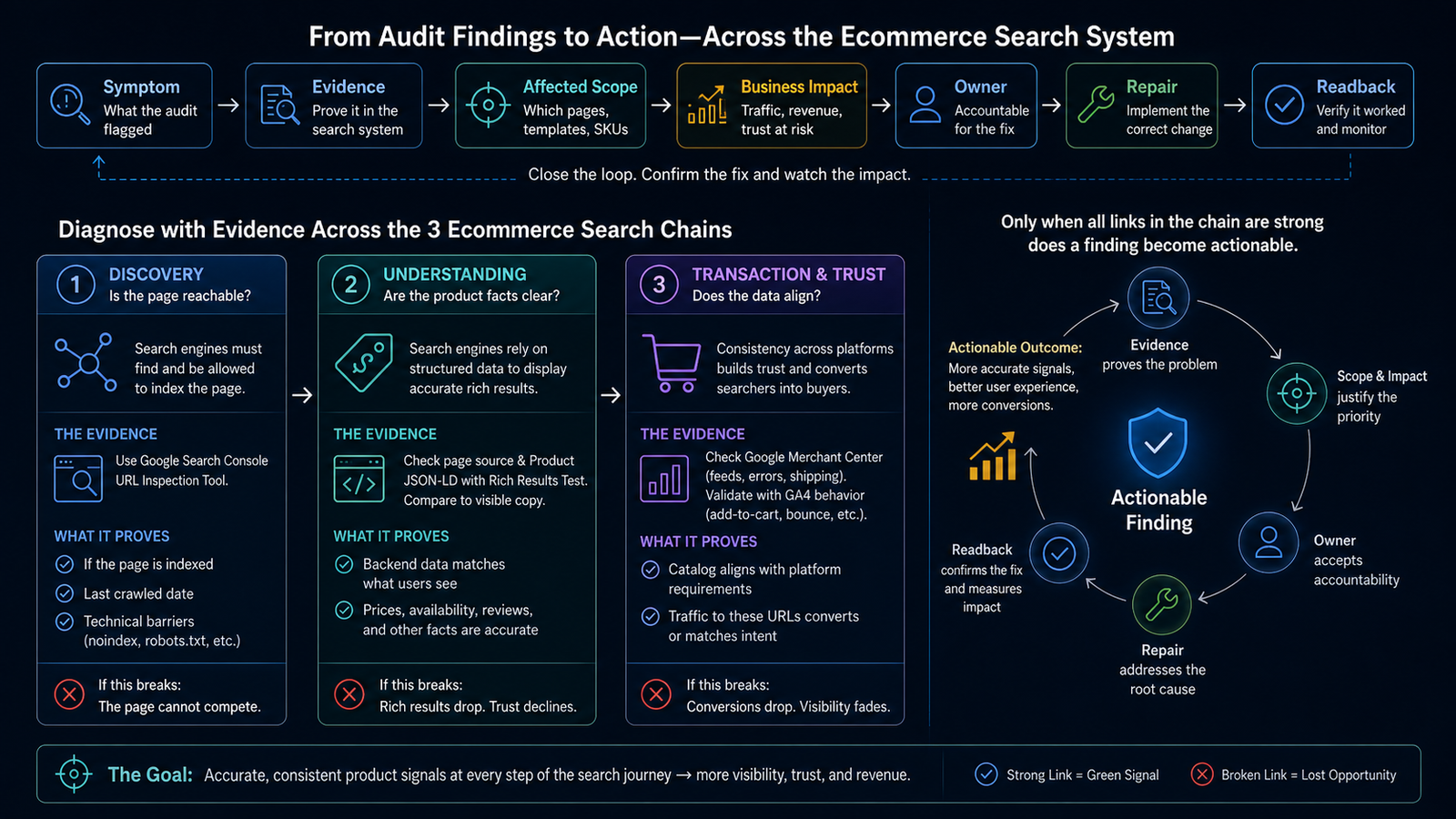
A typical audit checklist flags symptoms: "240 pages are missing meta descriptions" or "12 product pages have slow load times." Chasing these blindly leads to busywork. Instead, you need an evidence-led method that maps a symptom to a specific bottleneck in the search system.
Every finding on your audit should pass through this workflow before it gets assigned:
To gather the evidence, you need to understand how a product actually moves through the search ecosystem—from discovery, to understanding, to transaction—and where to look to prove the system is breaking.
1. Discovery: Is the Page Reachable?
If a search system cannot find or index your page, no amount of optimization matters.
The Evidence: Do not guess if Google knows about a page. Drop the URL into the URL Inspection Tool in Google Search Console (GSC).
What it proves: It tells you definitively if the page is indexed, when it was last crawled, and if a technical barrier (like a rogue noindex tag or a robots.txt block) is in the way. It cannot prove that the page will rank well, only that it is allowed to compete.
2. Understanding: Are the Product Facts Clear?
Search systems rely on structured data to accurately display prices, reviews, and availability in rich results.
The Evidence: Look at the page source and your Product JSON-LD using Google’s Rich Results Test. Compare this data to the visible copy on the page.
What it proves: It proves whether your back-end code matches your front-end reality. If your page visibly displays a jacket on sale for $120, but the structured data still broadcasts the original $150, search systems lose trust in the accuracy of your page, and your rich snippets suffer.
3. Transaction and Trust: Does the Data Align?
Ecommerce SEO extends beyond the website. Search systems look for consistency across shopping surfaces.
The Evidence: Check Google Merchant Center for feed errors, disapproved items, or missing shipping data. Pair this with GA4 to track if organic traffic to these specific URLs is actually resulting in add-to-cart events or bouncing due to mismatched intent.
What it proves: It shows whether you are successfully aligning your product catalog with user expectations and platform requirements.
The Operational Burden and the Foundax Workflow
Applying this method reveals a harsh operational reality. Manually checking visible copy, Product JSON-LD, Merchant Center data, and live inventory across hundreds of SKUs requires constant vigilance. When a flash sale goes live or inventory drops to zero, it is far too easy for isolated teams to update the visible site while leaving stale SEO information behind in the source code or XML sitemaps. The drag of managing these fragmented systems is why audits sit untouched.
Foundax resolves this burden by bringing page SEO preview, field-source mapping, Product JSON-LD, and Merchant-aligned checks into one reviewable workflow. Instead of jumping between GSC, code validators, and feed dashboards, growth teams can view page and locale publish readiness in a single environment. Foundax handles Search Console verification and sitemap submission, while offering bounded AI-agent audit suggestions right where the work happens. Because product facts flow directly from the central product record, a price, promotion, or stock change updates your SEO inputs simultaneously—keeping your search signals accurate and your team focused on strategy rather than forensic data cleanup.
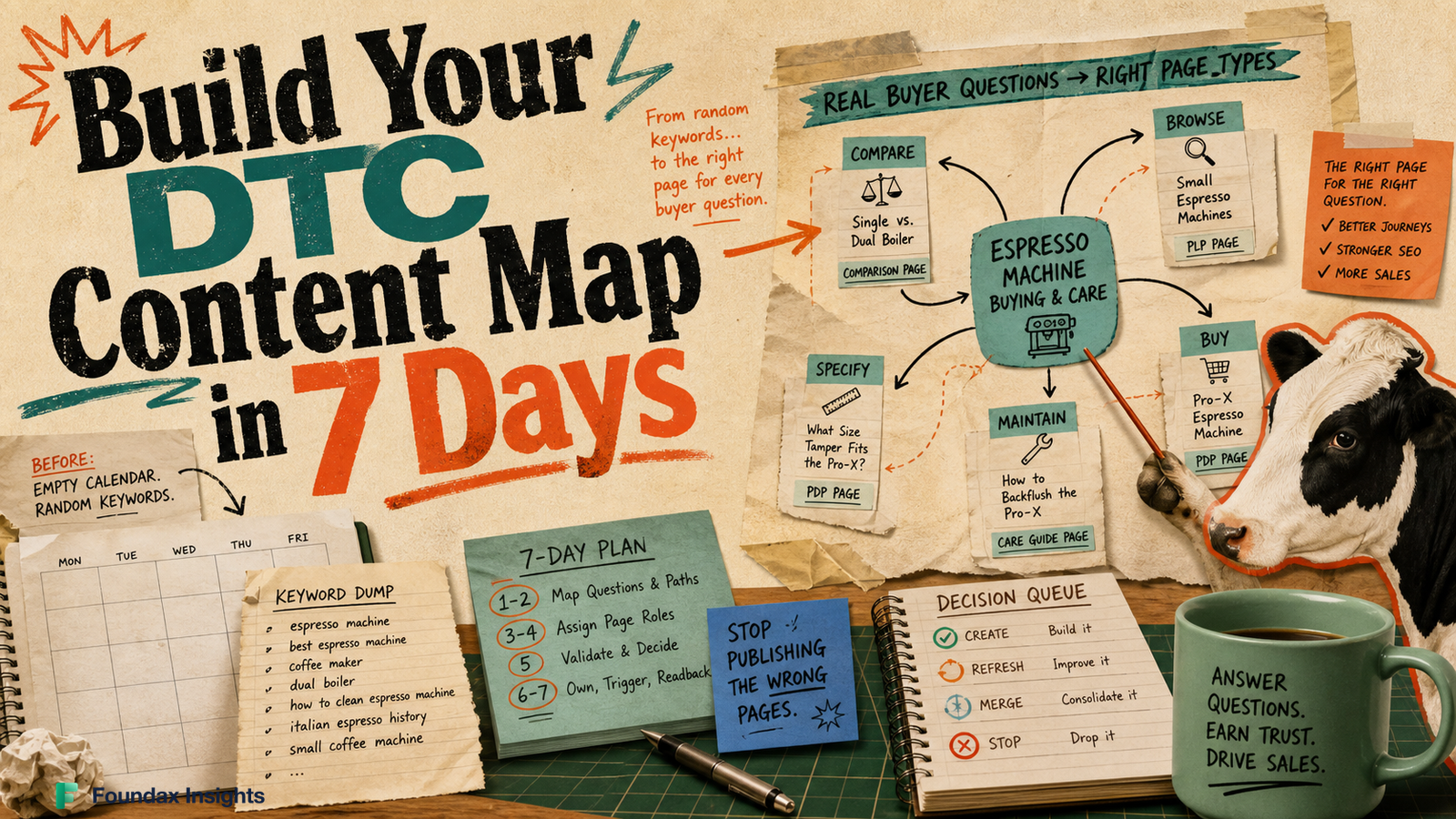
Once you have your technical foundation verified and your audit prioritized, the next phase of growth is strategic expansion. If you are building out your editorial schedule to support product awareness, map out your ecommerce SEO content calendar for DTC brands. If you are expanding into new regions and weighing search investments against local market tuning, review GEO vs. SEO for ecommerce brands to decide where to allocate your next 10 minutes.
Does a higher number of reported issues indicate a more professional ecommerce SEO audit?
Not necessarily. The volume of issues primarily reflects inspection coverage, not diagnostic depth. What truly determines whether an audit report is actionable is whether key findings include verifiable evidence, affected scope, commercial impact, clear ownership, and defined readback criteria.
Should all unindexed URLs be prioritized for immediate remediation?
No. First verify whether the URL was ever intended to be indexed, taking into account its template scope, product priority, and current indexing state. System pages, duplicate facets, or discontinued product URLs may be intentionally and correctly excluded from search indices.
How soon after deploying a fix should verification be performed?
Determine your verification cadence based on the specific evidence type. Storefront page output can be checked immediately via live tests; however, search engine indexed versions, Merchant Center approval statuses, and downstream business funnel metrics require reading back after the respective external systems complete their processing cycles. Avoid applying a single rigid timeline across fundamentally different system layers.