Product Page SEO Checklist for AI Search: Schema, Feeds, and Product Facts
A practical PDP audit for AI search readiness: align visible product facts, Product JSON-LD, Merchant Center feed fields, images, localization, and measurement.
Read more
A practical guide to turning specs, attributes, variants, policies, reviews, images, and feed fields into consistent product facts that AI-assisted shopping systems can parse and verify.
A shopper no longer has to type one short keyword and scan ten product pages. In AI-assisted shopping, they can ask for a waterproof hiking jacket under a budget, in a specific size, available in a target market, with a return policy that fits their trip. Search and shopping systems then need product facts they can compare: price, availability, materials, size, color, variants, identifiers, images, reviews, shipping, returns, and source freshness.
That does not mean AI systems ignore product pages or read only schema. OpenAI says shopping results may use merchant product data, publicly available product information, and other retail sources. Google documents both page-level Product structured data and Merchant Center product feeds. The practical lesson is more useful than the hype: product content should be written for humans and organized so machines can verify it.
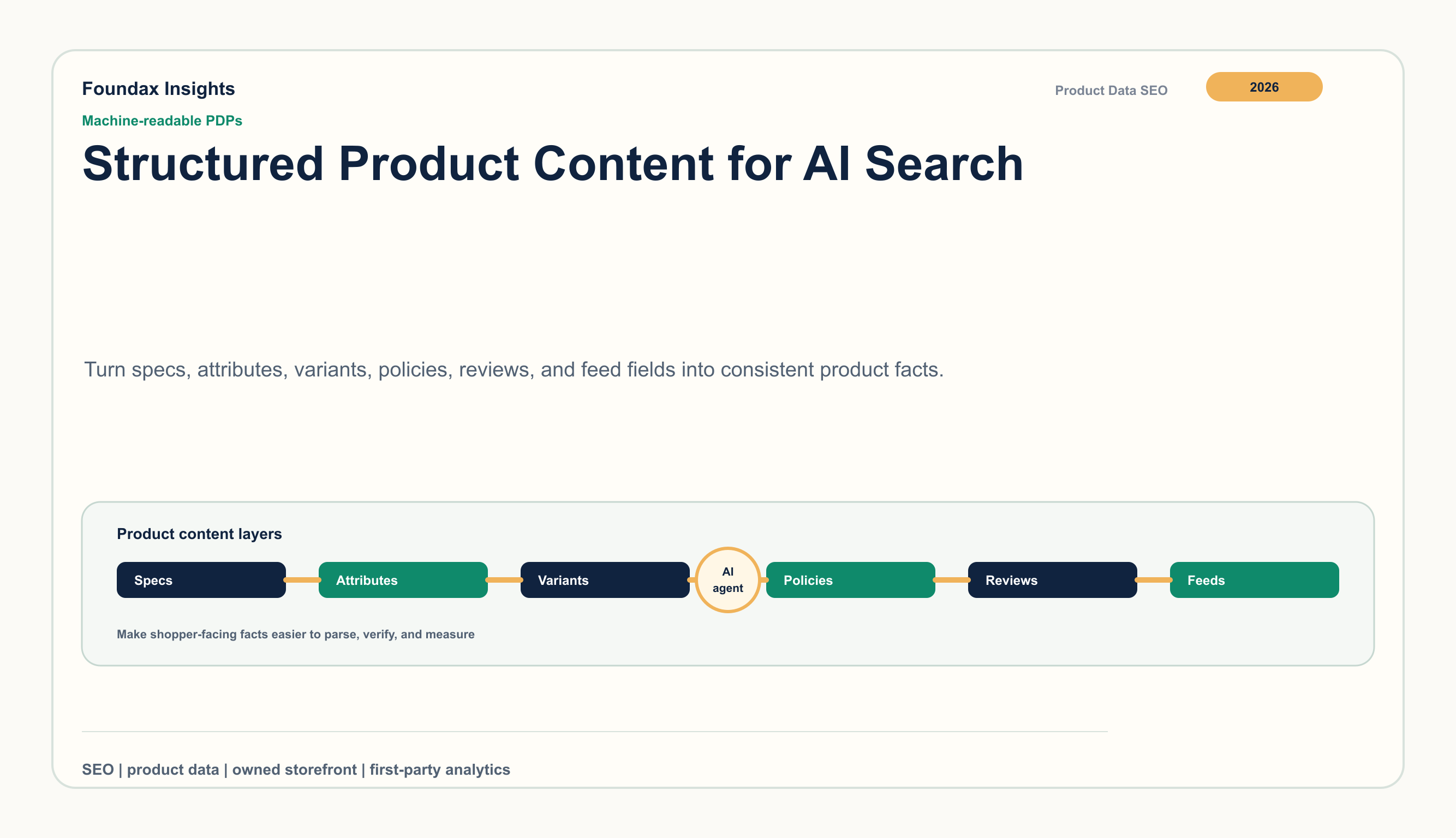
Structured product content is the layer between prose and feed data. It turns buyer-facing facts into consistent specs, attributes, highlights, policies, and variant records that can be rendered on the PDP, mapped into Product JSON-LD, and submitted through Merchant Center without every channel telling a different story.
Structured data is the machine-readable markup or feed payload: Product JSON-LD, Offer fields, Merchant Center attributes, product identifiers, and feed records. Structured content is the source content model that makes those outputs reliable: spec tables, attribute lists, comparison points, product highlights, FAQ answers, review summaries, and localized product facts.
A product page can have valid schema but poor structured content. For example, the JSON-LD may contain a product name, price, and availability, while the page description buries material, fit, care instructions, and shipping limits in vague prose. That is not enough for shoppers who ask detailed questions, and it is not enough for teams that want reliable feeds across markets.
The work is to make the product record itself clearer before it becomes schema, feed, page copy, or localized content.
Google's Merchant Center product data specification says Google uses product data to match products to relevant queries, and warns that incorrect, inaccurate, or missing information can cause disapprovals, limited eligibility, incorrect display, or conflicts between feed and website. The same document calls out examples such as category, GTIN, variant attributes, image quality, and conflicting feed/page data.
Google's May 27, 2026 Merchant Center AI insights announcement makes this more explicit for AI-powered shopping experiences: it references product attribute insights and an attribute completeness score for identifying products missing structured attributes such as color, style, and material.
OpenAI's shopping help also points in the same direction without making SEO promises. ChatGPT may rank merchants based on factors like availability, price, quality, and whether the merchant is the maker or primary seller; shopping research can use merchant product data, publicly available product information, and other retail sources. Complete, current, consistent product facts are therefore a discovery foundation, not a magic ranking lever.
1. Identity and identifiers
Start with stable identity fields:
Identity is what prevents one product from fragmenting into multiple inconsistent records across the PDP, feed, and analytics stack.
2. Specs and attributes
Specs should be written as reusable facts, not as paragraphs that only a human can interpret. Useful attributes include:
Keep attributes short, normalized, and tied to the product record. Product prose can explain why a spec matters, but the spec itself should remain extractable.
3. Offers, inventory, and policies
Commerce facts change more often than evergreen copy. Separate them clearly:
Google's Merchant Center structured data setup guide says structured data must match user-facing values, and the code generating structured data should stay in sync with changes to the visible site. This is why price and availability need operational ownership, not occasional content edits.
4. Reviews, proof, and FAQs
Reviews and FAQs can help explain fit, use cases, tradeoffs, and buyer concerns. But they are also high-risk if inflated or hidden. Use them carefully:
Structured content should make proof easier to verify, not create claims the product cannot support.
5. Images and product highlights
Images are product data too. Audit:
Google's structured data guidelines require image URLs used in structured data to be relevant, crawlable, and indexable. Merchant Center product data also treats low-quality images and feed/page conflicts as practical risk areas.
Use this workflow before rewriting hundreds of product descriptions:
Foundax should be framed as an operating layer for consistency across public pages, structured data, feeds, and measurement:
The value is operational consistency: fewer mismatches between product record, storefront page, structured markup, feed, and measurement.
Structured product content is buyer-facing product information organized into reusable facts: specs, attributes, variants, images, policies, highlights, reviews, and FAQs. It is the content model that feeds PDP copy, structured data, and merchant feeds.
Product schema is one machine-readable output. Structured content is the underlying product fact model that keeps schema, feed data, and page content consistent.
It should make product facts clearer, easier to reuse, easier to localize, and easier to compare across PDP, schema, feed, and analytics. That makes product operations easier to audit and improve.
Start with identity, price, availability, images, brand, GTIN/MPN/SKU, variant attributes, material, color, size, item group ID, shipping, returns, and the attributes buyers actually use to filter or compare products.
Only when real shopper questions exist and the answers are visible on the page. FAQ content should clarify purchase decisions, not create hidden markup.
Foundax helps keep product records, display specs, localized fields, Product JSON-LD, GMC preflight/sync, sitemap/Search Console workflows, and analytics checks in one operating path.
Use the product page SEO checklist for AI search to audit a live PDP, then read the agentic commerce product data guide for field prioritization and product data for AI commerce discovery for the broader discovery model.