別再過度設計你的 AI Agent 了——四代架構踩坑實錄,最笨的那個反而贏了
Foundax 的 AI Agent 經歷了四代架構迭代——從固定 workflow 到目錄式探索,再到 runtime 檢索,最後回歸到一個輕量的語言化能力目錄。每一次「優化」,本質上都是在替模型做模型本可以自己做的決定。這是我們交過的所有學費。
閱讀全文
Foundax 的獨立站 Agent 架構把受控 workspace、virtual business tables、writeArtifact、owner executor 和 read-back 放在核心。
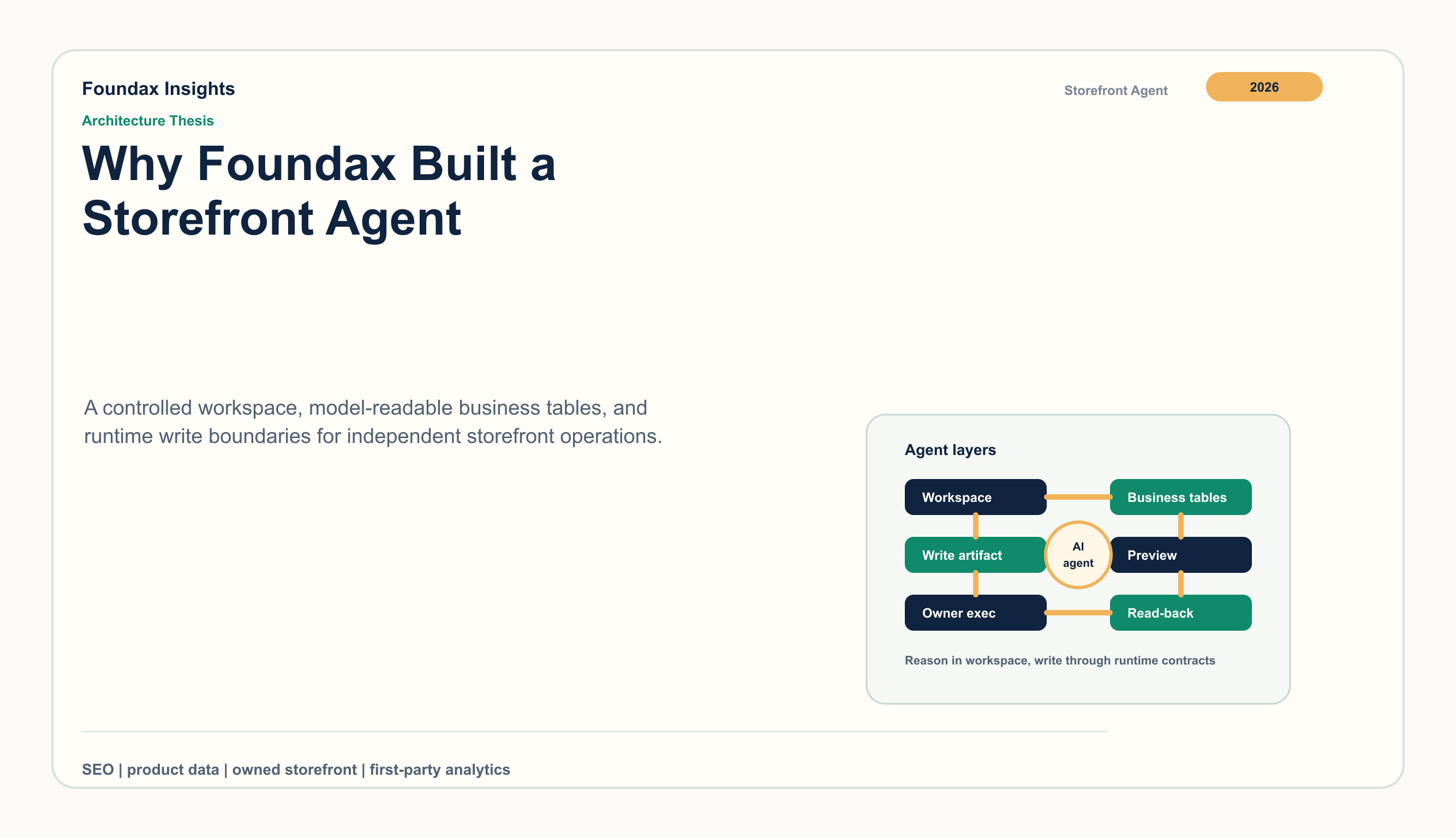
Foundax 的方向是面向獨立 DTC 商家的 storefront agent,而不是把一堆後台按鈕包成聊天框。agent 先在受控 workspace 內調查、比對和準備變更,再由 runtime 合約接管寫入。
Google announced UCP, Business Agent, new Merchant Center attributes, and agentic shopping tools on January 11, 2026. Shopify Engineering describes UCP as a layered protocol for capability discovery and negotiation. Shopify's June 18, 2026 guide explains that AI agents depend on structured product data, pricing, inventory, shipping, and checkout rules. Anthropic's guidance also separates predictable workflows from flexible agents; storefront operations need both.
A thin tool-calling wrapper can handle narrow actions, but independent storefront work crosses product data, SEO metadata, Product JSON-LD, GMC, Content Studio, shipping, payment, refund, promotion, tax, orders, and analytics. If the model only chooses from APIs, reasoning, diff, validation, and execution become hard to audit.
The workspace sandbox uses the versioned Foundax workspace sandbox policy. Repo and data mounts are read-only; work and outputs are writable; network and package installation are denied by default; path traversal is rejected; .env is excluded from repo snapshots. The agent can inspect current scope, business tables, repo/code context, and memory, then stage patches and submit structured output.
Foundax projects operations into scoped virtual business tables covering catalog products, variants, images, GMC, site pages, SEO articles, Content Studio, commerce rules, orders, SKU sales, and analytics metrics. These tables are model-visible, not provider-callable. Writes use workspace update mode and stay behind a a runtime-internal compiler boundary compiler boundary.
Confirmable writes use writeArtifact with operationId, ownerAction, targets, updates, previewRows, readBackToolIds, riskLevel, and sourceEvidence. Final confirmation is a runtime confirmation card, not chat prose. Owner services execute only after validation, and read-back verifies real state.
Foundax does not currently claim UCP, ACP, AP2, direct agent checkout, autonomous checkout, ChatGPT checkout, Copilot selling, or ranking guarantees in external AI shopping surfaces. The claim is narrower: owned storefront operations need business context plus a controlled write boundary.
An agent that understands product data, content, SEO, policies, operations, and analytics for an owned ecommerce storefront.
Foundax separates reasoning from write authority through workspace context, business tables, writeArtifact, preview, confirmation, owner executors, and read-back.
Where a surface is implemented, the model stages scoped changes and runtime adapters apply them through owner services.
No. This article covers owned storefront operations architecture, not external checkout protocol support.
Improve structured product data, SEO metadata, policy facts, localized content, and owner-confirmed operational workflows.