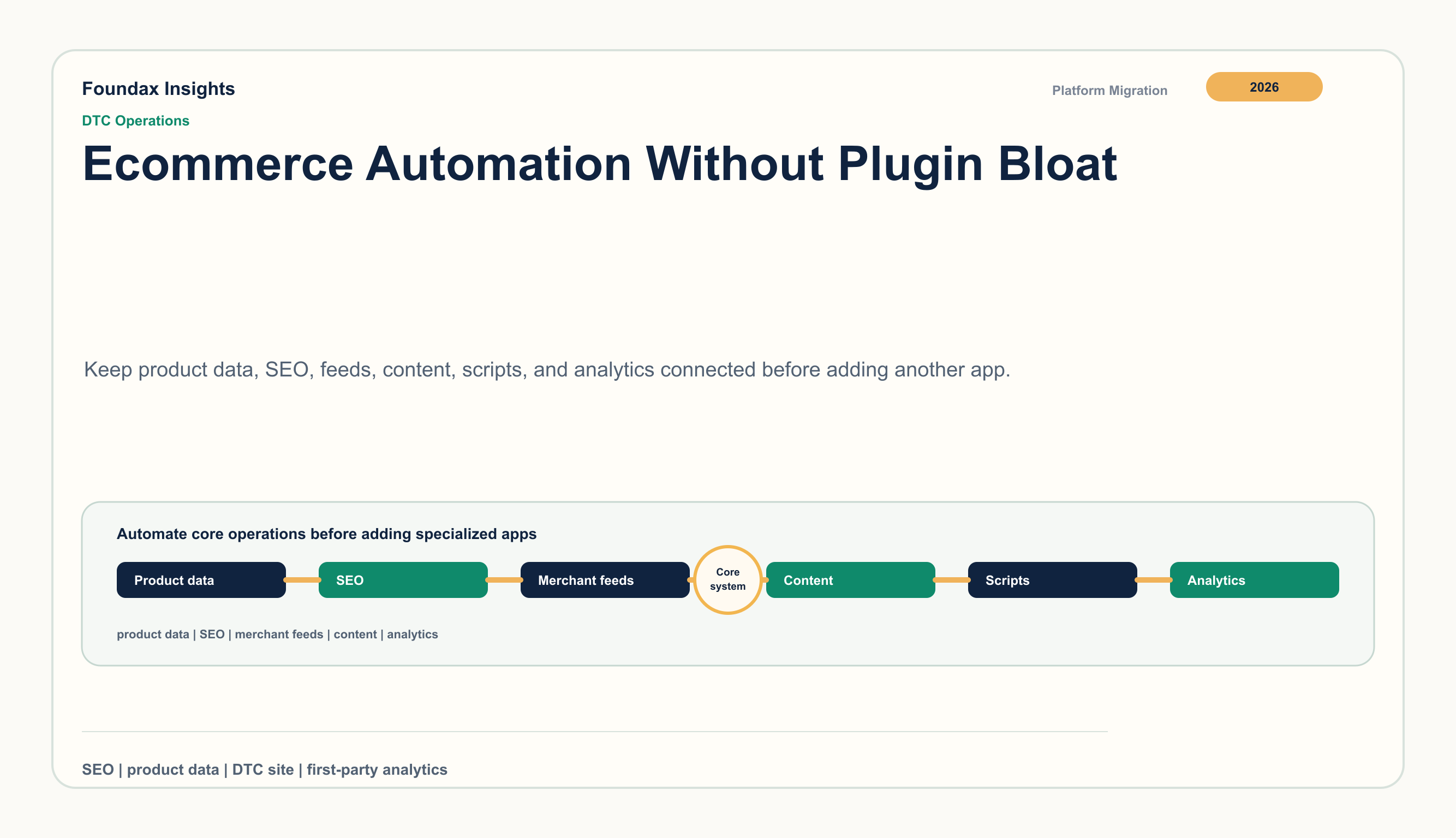
Automatisation ecommerce sans plugin bloat : construire le système central avant d’ajouter une app
Modèle opérationnel pour équipes DTC qui veulent automatiser sans disperser données produit, SEO, feeds, contenu, scripts et analytics dans des apps séparées.
Automatisation ecommerce sans plugin bloat : construire le système central avant d’ajouter une app
L’automatisation ecommerce attire les équipes DTC parce que le travail répétitif est partout : mises à jour produit, SEO, feeds, contenu, remises, support, analytics, localisation. Une app peut être la bonne réponse pour un besoin spécialisé. Le problème commence quand les apps deviennent le modèle d’exploitation.
Le plugin bloat est un problème système
There is no magic number of apps that makes a store unhealthy. The warning sign is duplicated product truth: titles, variants, prices, SEO fields, feed values, policies, scripts and reports being managed in several places.
Définir le propriétaire des faits avant d’automatiser
Before automating, decide which system owns product titles, price, inventory, PDP copy, Product JSON-LD, feed fields, shipping promises, return language and analytics labels. Automation should read from that source, not create a parallel one.
Construire le système central en premier
The core system should keep product data, SEO, Merchant Center checks, content, localization, scripts and analytics connected. Without that layer, each new app adds another dashboard and another hidden reconciliation task.
Utiliser les apps comme fonctions spécialisées
Apps are still useful for reviews, email, subscriptions, support, loyalty, warehouse, marketplace operations or specialized reporting. The question is whether the app has a clear job, data boundary, owner and review date.
Installer une cadence de revue
Every app should be reviewed for cost, permissions, data ownership, script weight, performance, consent, duplicated fields and whether the business still uses the output. Otherwise automation quietly becomes maintenance debt.
Ce que Foundax rapproche
Foundax keeps site SEO, sitemap, PDP Product JSON-LD, Merchant Center preflight and sync, Content Studio, multilingual content, first-party analytics and GA4 diagnostics closer together. That gives automation a cleaner operating base.
FAQ
What is plugin bloat?
It is not simply having many apps. It is when apps duplicate product facts, SEO fields, scripts, reports and operational ownership.
Should DTC teams remove every app?
No. Keep apps with a clear job, data boundary, owner and measurable value. Remove or replace apps that create hidden drift.
What should be automated first?
Start with repeatable checks around product data, SEO fields, feed-page alignment, content refresh, localization and analytics labels.