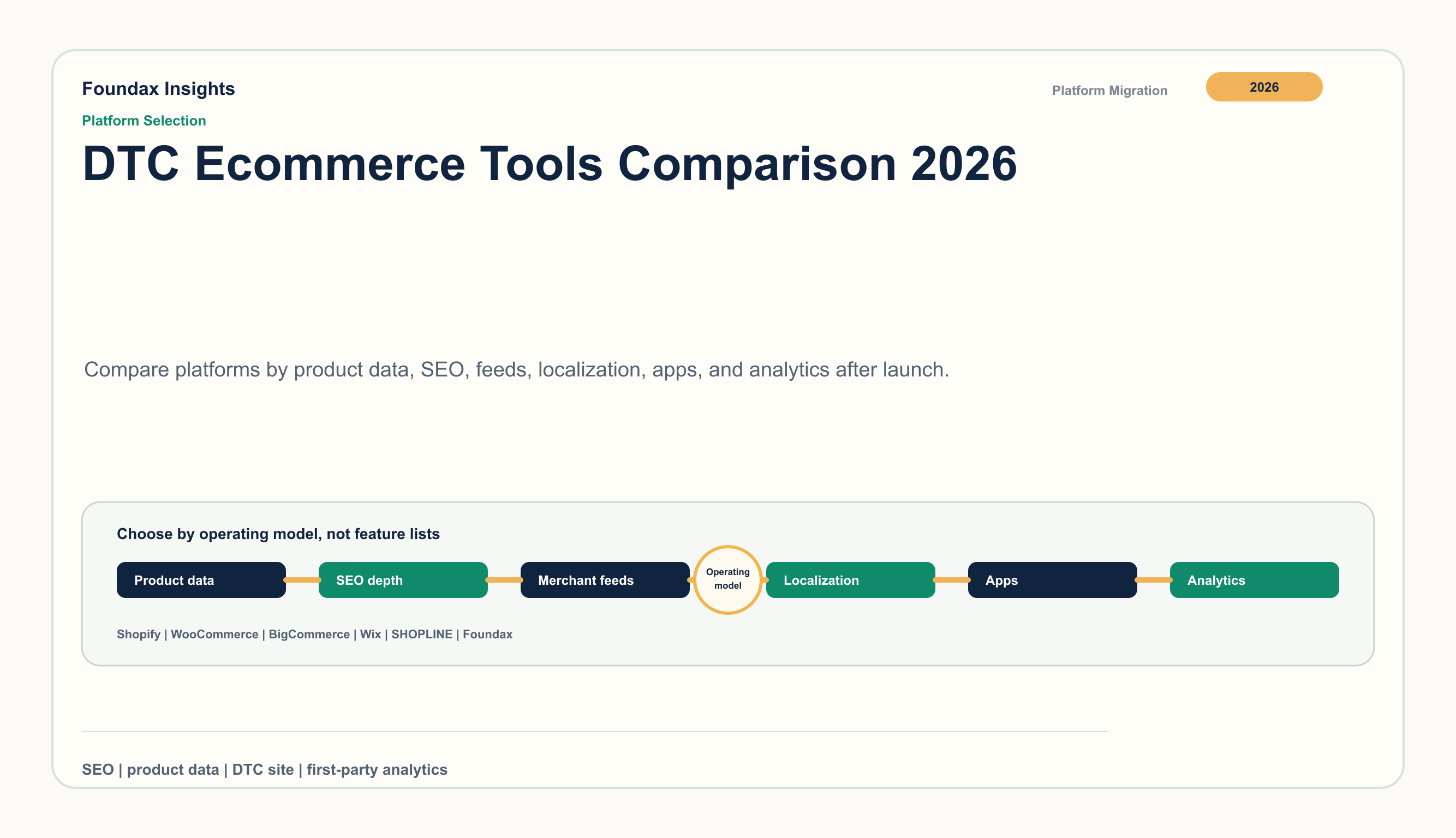
Comparatif outils ecommerce DTC 2026 : choisir par modèle opérationnel, pas par liste de fonctions
Comparer Shopify, WooCommerce, BigCommerce, Wix, SHOPLINE et Foundax selon le travail après lancement : données produit, SEO, feeds, localisation, apps et analytics.
Comparatif outils ecommerce DTC 2026 : choisir par modèle opérationnel, pas par liste de fonctions
Le choix d’une plateforme DTC ne se résume pas au nombre de fonctionnalités. Après le lancement, il faut regarder quel système rend les données produit, le SEO, Merchant Center, le contenu, la localisation, les apps et l’analytics plus faciles à maintenir.
Le bon cadre de comparaison
A useful 2026 comparison starts after launch: where product facts live, how SEO is governed, how feed quality is checked, how localization works, how apps are reviewed, and whether analytics can explain the full path from discovery to purchase.
Shopify
Shopify is a strong hosted default for teams that want mature checkout, hosting, themes, payments, integrations, partner support, and a broad app ecosystem. The main operating question is governance: who owns scripts, app permissions, duplicated fields, feed mapping, and analytics when the stack grows?
WooCommerce
WooCommerce fits teams that value WordPress control, content depth, open-source flexibility, and direct stack ownership. The tradeoff is maintenance responsibility: hosting, updates, security, plugin compatibility, backups, performance, and release discipline become part of the platform decision.
BigCommerce
BigCommerce is relevant for teams with broader commerce needs such as B2B, wholesale, multi-store operations, headless patterns, or more complex selling models. The evaluation should focus on admin fit, implementation complexity, partner dependency, reporting handoffs, and day-to-day operating rhythm.
Wix
Wix is useful for fast visual setup, smaller catalogs, founder-led stores, and teams that value ease of editing. The question is how far the brand expects to grow in catalog complexity, feed operations, localization, content governance, and analytics depth.
SHOPLINE
SHOPLINE can be relevant for Asia-focused or cross-border teams that need regional market setup, language, domains, payment assumptions, and market operations. Teams should still review SEO governance, product-data ownership, integration depth, and analytics structure.
Foundax
Foundax is designed as an operating layer for DTC teams that want product data, site publishing, SEO, Product JSON-LD, Merchant Center preparation, Search Console, Content Studio, localization, first-party analytics, and GA4 diagnostics closer together. It is strongest when the team wants fewer disconnected places maintaining the same commercial facts.
Processus de sélection
Before choosing, simulate real work: create five priority SKUs, one PDP, one collection, one content guide, one localized page, and one campaign landing page. Then change price, inventory, image, URL, shipping language, and market availability. The platform that keeps those changes easiest to review is usually the better operating fit.
FAQ
What is the best ecommerce platform for DTC brands?
There is no single best option. Shopify fits broad hosted ecosystems, WooCommerce fits WordPress control, BigCommerce fits complex commerce, Wix fits fast visual setup, SHOPLINE fits regional cross-border needs, and Foundax fits connected DTC operations.
Should teams choose by price or operating model?
Price matters, but recurring work after launch often costs more than the entry subscription. Product data, SEO, feeds, content, localization and analytics should drive the decision.
What should be tested before migration?
Test priority SKUs, PDP structured data, sitemap behavior, Merchant Center checks, localized pages, third-party scripts and analytics.