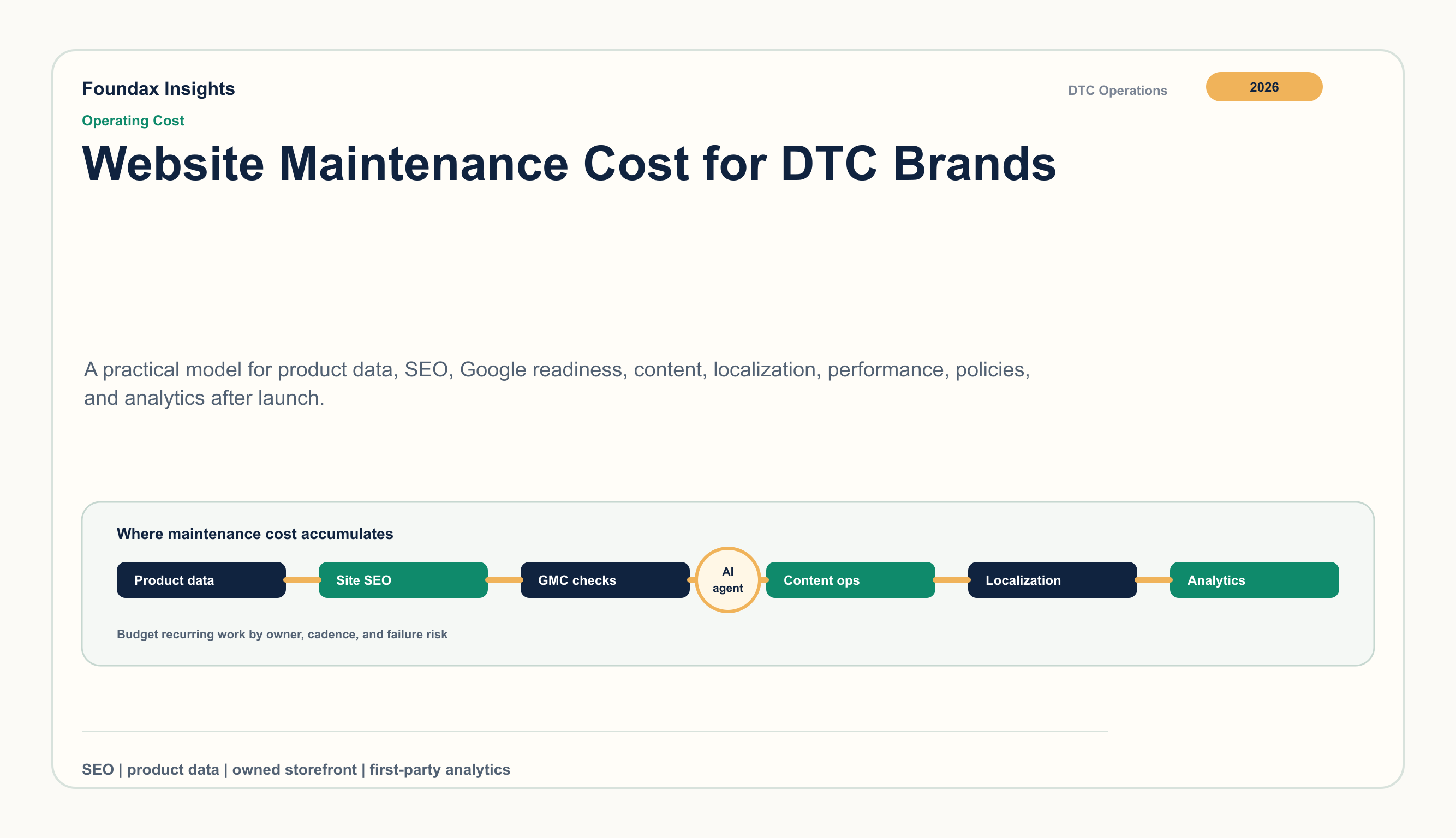
Coût de maintenance d’un site DTC : le vrai budget opérationnel après lancement
La maintenance d’un site DTC ne se limite pas à l’hébergement et aux bugs. Le vrai budget se trouve dans les données produit, le SEO, Google, le contenu, la localisation, les politiques, les scripts et l’analytics.
Coût de maintenance d’un site DTC : le vrai budget opérationnel après lancement
Un site DTC est le moins cher le jour de son lancement. Ensuite produits, prix, stock, politiques, pages marché, tracking, scripts et feeds commencent à dériver. Le coût de maintenance n’est donc pas l’hébergement, mais le budget pour garder ces couches alignées.
Le coût commence par la dérive
A price change can touch PDPs, collections, Product JSON-LD, Merchant Center, ads, email and support. A new market touches hreflang, currency, sizing, delivery, returns and links. Budget should follow these recurring surfaces.
Huit lignes de budget
The underestimated lines are product data, SEO/URL, Merchant Center feed, content refresh, localization, policies, third-party scripts and analytics. None of them is a one-time setup.
Données produit et canaux Google
Product data is the base. Titles, SKU, images, price, stock, materials, sizing, shipping, returns and warranty must stay aligned with public PDPs and Google-facing data.
Contenu, localisation et politiques
Buying guides, FAQ, category copy, policies and locale pages age. When season, inventory, shipping, tax, return language or sizing changes, content must be refreshed.
Scripts, performance et analytics
Scripts affect speed, consent, checkout and attribution. Analytics also needs stable event names, source labels, locale and product identifiers.
Transformer la maintenance en opération avec Foundax
Foundax keeps SEO, sitemap, Product JSON-LD, Merchant Center preflight, Search Console, Content Studio, multilingual content, first-party analytics and GA4 diagnostics closer together.
FAQ
What is the most underestimated maintenance cost?
Keeping product facts, SEO, feeds, content, localization and analytics aligned as the business changes.
How often should teams review the site?
High-traffic SKUs and Google-facing data should be reviewed monthly, and every product or market launch needs a release check.
Does Foundax remove maintenance work?
No. It reduces drift by keeping product data, publishing, SEO, Google checks, content and analytics closer together.