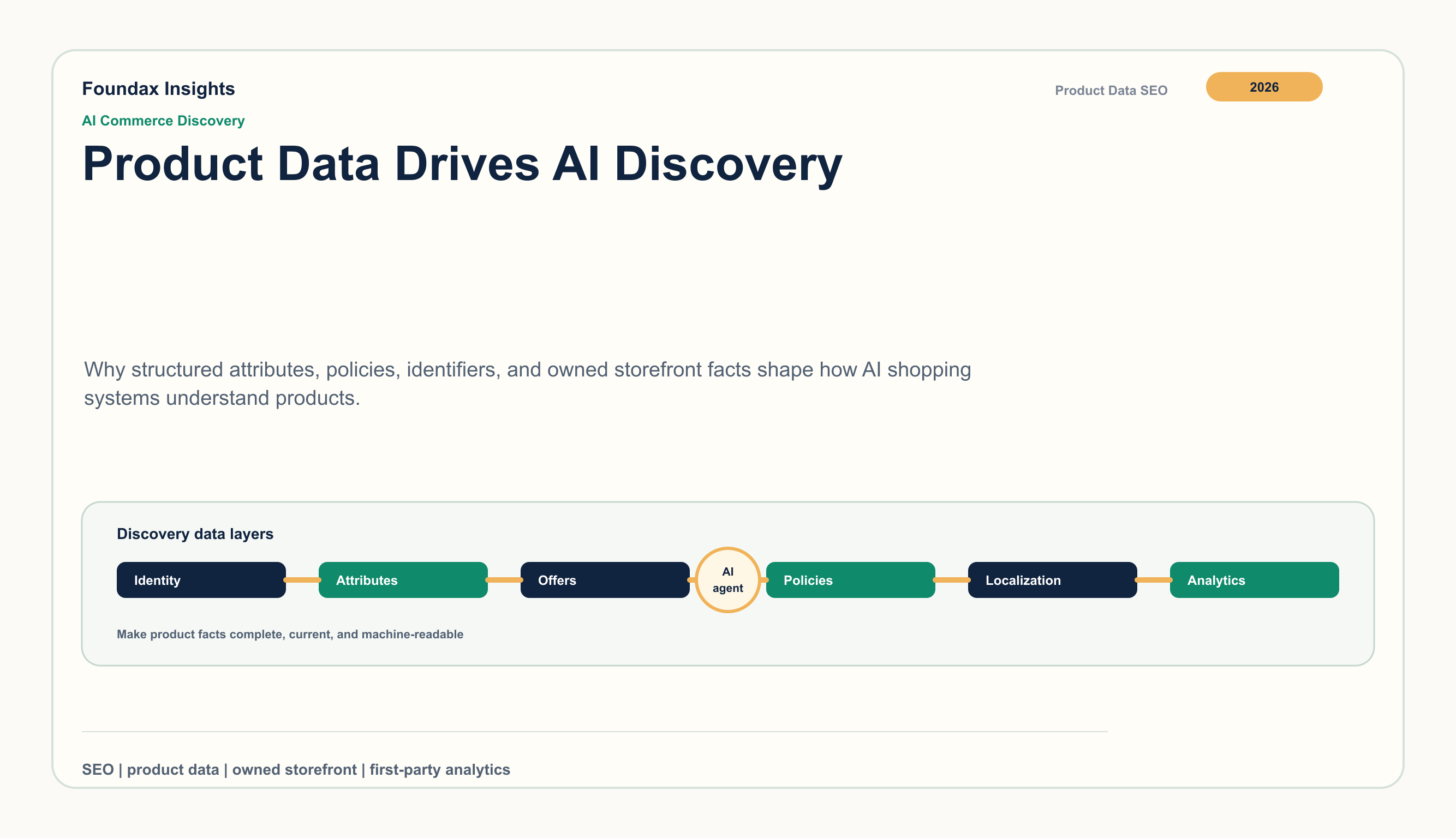
Les données produit deviennent la couche SEO de la découverte commerce IA
Le SEO ecommerce commençait souvent par les pages : title tags, descriptions, backlinks, liens internes et profondeur de contenu. Ces bases restent importantes. AI shopping ajoute une deuxième couche opérationnelle : les faits produit doivent être assez structurés pour être lus, comparés et vérifiés.
Ce mouvement apparaît dans les mises à jour officielles. Google Merchant Center déploie des AI-powered shopping insights autour de share of voice, shopping funnel performance, product terms et product attribute insights. Shopify Spring '26 présente Catalog comme une infrastructure produit structurée et queryable pour les AI channels. Shopify Engineering décrit les difficultés derrière cette idée : product identity, merchant schemas incohérents, clustering et strict outputs qui préservent les product IDs. AWS décrit des assistants agentic shopping que les retailers peuvent combiner avec leur catalog, customer context, business rules et brand voice.
Pour les équipes DTC, la conclusion utile est simple : product data devient la couche machine-readable sous ecommerce discovery. Brand site, product feeds, policy pages, contenu localisé, structured data et measurement doivent décrire la même offre.
Ce qui change en 2026
Les Merchant Center AI insights font entrer la qualité des données produit dans AI surface reporting. La documentation décrit product term insights, product attribute insights et attribute completeness score pour les produits auxquels il manque des attributs structurés comme color, style et material. Ce n'est pas seulement du feed hygiene : cela montre que les expériences AI-powered shopping ont besoin d'attributs comparables.
Shopify Spring '26 pointe dans la même direction. Shopify explique que Catalog structure les product data et les distribue vers AI channels afin que les agents puissent discover, understand et recommend products. La documentation agentic storefront précise aussi que les produits syndiqués via Shopify Catalog sont listés avec title, description, options, images, price, availability et d'autres key attributes dans un format que les AI agents peuvent parser.
Le post Shopify Engineering sur Catalog clustering montre le problème de fond : les merchants décrivent des produits similaires avec des schemas différents, l'identité produit se fragmente et agentic commerce a besoin de strict structured outputs pour conserver les product IDs.
AWS montre le même mouvement côté retailer. Même lorsque l'interface devient conversationnelle, catalog, policies, context et brand facts restent essentiels.
Pourquoi les mots-clés seuls sont trop faibles
Une page peut répéter “quiet espresso grinder” sans répondre à une requête utile si les données de fond ne disent rien sur burr type, dimensions, noise context, price, availability, warranty, shipping region et return terms. Les keywords aident une page à être trouvée. Les données produit structurées aident un produit à être compris.
Les questions shopping en langage naturel combinent souvent attributs, contraintes et politiques : grinder silencieux pour petit appartement, veste à moins de 150 dollars avec retours en Allemagne, skincare set adapté aux peaux sensibles. Une copy mince ne porte pas tout cela. Une product data layer claire le peut.
Six couches de données produit lisibles par machine
1. Identity. canonical URL, product name, brand, SKU, GTIN ou MPN, item group stable et relations de variantes.
2. Attributes. material, color, size, dimensions, compatibility, certifications, use cases, performance specs et category-specific facts.
3. Offers. price, currency, availability, sale windows, shipping cost, delivery promise, return policy, market restrictions et warranty.
4. Content proof. descriptions, buyer FAQs, buying guides, comparison notes, review context, product highlights et alt text utile.
5. Localization. langue marché, unités, devise, systèmes de taille, compliance text, attentes de livraison et détails de politiques.
6. Measurement. Merchant Center diagnostics et AI insights disponibles, Search Console trends, source/referrer, UTM analytics, comportement PDP, add-to-cart, checkout start, orders et observations manuelles des surfaces AI.
Où Foundax intervient
Foundax est une couche opérationnelle pour garder les faits produit DTC cohérents entre site, structured data, Google workflows et measurement.
Foundax soutient product records, SKU et variant structure, SEO metadata, multilingual pages, sitemap workflows et Product JSON-LD rendu serveur lorsque les données existent. Foundax couvre aussi Search Console verification, sitemap submission, Merchant Center preflight/sync et bulk import templates pour Products, Options, SKUs et GMC fields.
La valeur est la cohérence opérationnelle : maintenir les faits produit dans un workflow, les vérifier avant channel submission, les publier dans du contenu DTC multilingue et les mesurer avec first-party analytics.
Plan opérationnel de 30 jours
- Auditer les 20 produits principaux par revenu ou marge et relever identifiers, attributes, offers, policy facts, images et localized copy manquants.
- Comparer public PDP, Product JSON-LD, Merchant Center feed fields, sitemap URLs et Search Console records pour corriger price, availability, image, URL et category mismatches.
- Ajouter des FAQ concrètes pour sizing, compatibility, ingredients, care, warranty, shipping, return limits et market availability.
- Renforcer les category-specific attributes avant de réécrire une copy marketing générique.
- Suivre Merchant Center product terms et attribute gaps, Search Console page/query trends, referrer/UTM, PDP engagement, add-to-cart, checkout start et manual AI-surface checks.
- Tenir un experiment log pour relier product data changes à visibility, clicks et conversion movement.
FAQ
Les données produit remplacent-elles le SEO ?
Les données produit ajoutent une couche machine-readable au SEO. Page quality, crawlability, internal links, content relevance et performance restent importantes. AI commerce discovery a aussi besoin de faits produit comparables et vérifiables.
Quels champs produit comptent le plus ?
Commencez par canonical URL, product name, brand, identifiers, price, availability, image, category, core attributes, shipping, returns, warranty, descriptions localisées et buyer FAQ answers.
Que signale Shopify Catalog aux marques hors Shopify ?
Il signale une direction plus large : les données produit structurées et queryable deviennent une infrastructure pour AI channels. Les marques hors Shopify gagnent aussi à renforcer leurs pages DTC, structured data, feeds, policies et analytics.
Comment Foundax améliore-t-il ce workflow ?
Foundax place product records, multilingual pages, Product JSON-LD, sitemap workflows, Search Console operations, Merchant Center preflight/sync et first-party measurement dans une même couche opérationnelle.
Articles liés
Références