電商品牌如何理解 GEO 與 SEO:當搜尋結果變成答案層
GEO 不是取代 SEO,而是提高了公開內容的證據標準。商品頁、內容、feed、結構化數據和分析口徑,需要同時服務排名、引用和比較。
閱讀全文
把規格、屬性、變體、政策、評價、圖片和 feed 欄位組織成一致商品事實,讓商品頁、schema、Merchant Center 和分析指標更容易互相校驗。
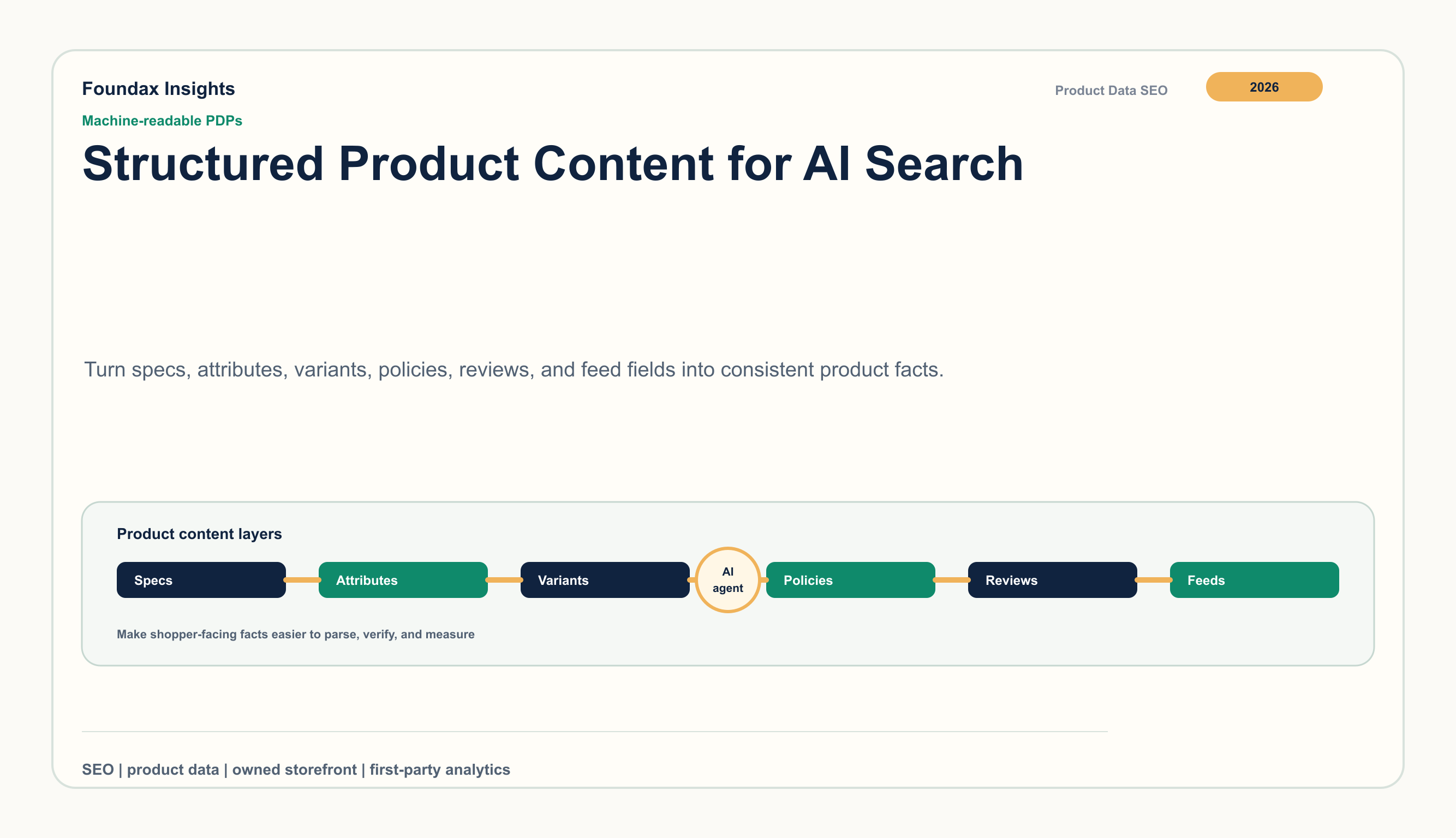
買家不再只輸入一個短關鍵詞,然後自己打開十個商品頁慢慢比較。在 AI 輔助購物場景裏,他們可能直接問:預算內、防水、適合某個尺碼、能送到某個市場、退貨政策適合旅行計劃的徒步外套。搜尋和購物系統要回答這類問題,需要可以比較和校驗的商品事實:價格、庫存、材質、尺碼、顏色、變體、標識符、圖片、評價、配送、退貨和資訊新鮮度。
這不代表 AI 系統只讀 schema,也不代表商品文案失去價值。OpenAI 的購物幫助文檔說明,購物結果可能使用商家商品數據、公開商品資訊和其他零售來源。Google 同時提供頁面級 Product structured data 與 Merchant Center product feeds 的文檔。更實用的結論是:商品內容要寫給人看,也要組織成機器可以驗證的事實。
結構化商品內容位於「自然語言文案」和「feed 數據」之間。它把買家能看到的事實整理成穩定的規格、屬性、賣點、政策和變體記錄,讓同一組事實可以出現在 PDP、Product JSON-LD 和 Merchant Center feed 裏,而不是每個渠道講一個版本。
結構化數據是機器可讀的輸出,例如 Product JSON-LD、Offer 欄位、Merchant Center 屬性、商品標識符和 feed records。結構化商品內容則是這些輸出背後的內容模型:規格表、屬性列表、對比點、商品亮點、FAQ 答案、評價摘要和本地化商品事實。
一個商品頁可能 schema 有效,但結構化內容很弱。例如 JSON-LD 裏有商品名、價格和庫存,但頁面描述把材質、版型、護理說明和配送限制全部埋在模糊文案裏。對會提出細節問題的買家來說,這不夠;對需要跨市場維護 feed 的團隊來說,也不夠。
真正要做的是先把商品記錄本身變清楚,然後再生成 schema、feed、頁面文案和本地化內容。
Google Merchant Center 的 product data specification 說明,Google 會用商品數據把商品匹配到相關 query,也提醒錯誤、不準確或缺失的資訊可能導致 disapproval、eligibility 限制、錯誤展示,或 feed 與網站之間發生衝突。文檔裏也特別提到 category、GTIN、變體屬性、圖片質素,以及 feed/page 數據衝突等問題。
Google 在 2026 年 5 月 27 日宣布的 Merchant Center AI insights,把這一點放到了 AI-powered shopping experiences 的語境裏:報告包括 product attribute insights 和 attribute completeness score,用來識別缺少結構化屬性的商品,例如 color、style 和 material。
OpenAI 的購物幫助文檔也指向同一個方向。ChatGPT 可能根據 availability、price、quality,以及商家是否為 maker 或 primary seller 等因素排序商家;shopping research 可以使用商家商品數據、公開商品資訊和其他零售來源。完整、當前、一致的商品事實是發現基礎,而不是一個孤立的 SEO 技巧。
1. 身份與標識符
先穩定商品身份:
身份層的作用,是防止同一個商品在 PDP、feed 和 analytics 裏拆成多個互不一致的記錄。
2. 規格與屬性
規格要寫成可複用事實,而不是只有人才能從段落裏猜出來的描述。常見屬性包括:
屬性要短、標準化,並綁定到商品記錄。商品文案可以解釋某個規格為甚麼重要,但規格本身要能被抽取和複用。
3. Offer、庫存與政策
商業事實比常青文案變化更快,所以要清楚拆開:
Google Merchant Center 的 structured data setup guide 說明,結構化數據必須與用戶可見值匹配,生成結構化數據的代碼也需要跟隨可見頁面變化同步。這就是為甚麼價格和庫存需要運營歸屬,而不是偶爾由內容團隊手動改。
4. 評價、證明與 FAQ
評價和 FAQ 可以解釋版型、使用場景、取捨和買家顧慮,但也是高風險區域。使用時要謹慎:
結構化內容的作用是讓證明更容易校驗,而不是創造商品本身支撐不了的說法。
5. 圖片與商品亮點
圖片也是商品數據。審計時要看:
Google 的結構化數據指南要求結構化數據裏的圖片 URL 相關、可抓取、可索引。Merchant Center product data 也把低質素圖片和 feed/page 衝突視為實際風險。
在重寫幾百個商品描述之前,先用這個流程:
Foundax 可以作為公開頁面、結構化數據、feed 和測量之間的運營層:
這套工作流的價值是運營一致性:商品記錄、店舖頁面、結構化 markup、feed 和測量指標之間的錯位更少。
結構化商品內容是把買家能看到的商品資訊組織成可複用事實:規格、屬性、變體、圖片、政策、亮點、評價和 FAQ。它是 PDP 文案、結構化數據和 merchant feed 背後的內容模型。
不是。Product schema 是機器可讀輸出之一。結構化內容是底層商品事實模型,用來保持 schema、feed 數據和頁面內容一致。
它應該讓商品事實更清楚、更容易複用、更容易本地化,也更容易在 PDP、schema、feed 和 analytics 之間對照。這樣團隊才能更快發現和修正數據錯位。
先看 identity、price、availability、images、brand、GTIN/MPN/SKU、variant attributes、material、color、size、item group ID、shipping、returns,以及買家實際用來篩選和比較的屬性。
只有當真實買家問題存在,並且答案在頁面上可見時才需要。FAQ 內容應該幫助購買決策,而不是製造隱藏 markup。
Foundax 把商品記錄、展示規格、本地化欄位、Product JSON-LD、GMC preflight/sync、sitemap/Search Console 工作流和 analytics 檢查放在同一條運營路徑裏。
用AI 搜尋商品頁 SEO 檢查清單審計線上 PDP,再閱讀Agentic Commerce 商品數據指南梳理欄位優先級,以及AI 電商發現中的商品數據 SEO 層理解更完整的發現模型。