ไซต์ DTC กับ marketplace ในยุค agentic commerce
คู่มือปฏิบัติสำหรับใช้ marketplace พร้อมสร้างช่องทาง DTC ที่เก็บข้อมูลสินค้า ความสัมพันธ์ลูกค้า คอนเทนต์ และการวัดผล
อ่านเพิ่มเติม
AI สำหรับ ecommerce operations: clean data ก่อน chatbot และ agent. A problem-led pillar for using AI in ecommerce operations without losing control of product facts, content, localization, channel data, policies, and measurement.
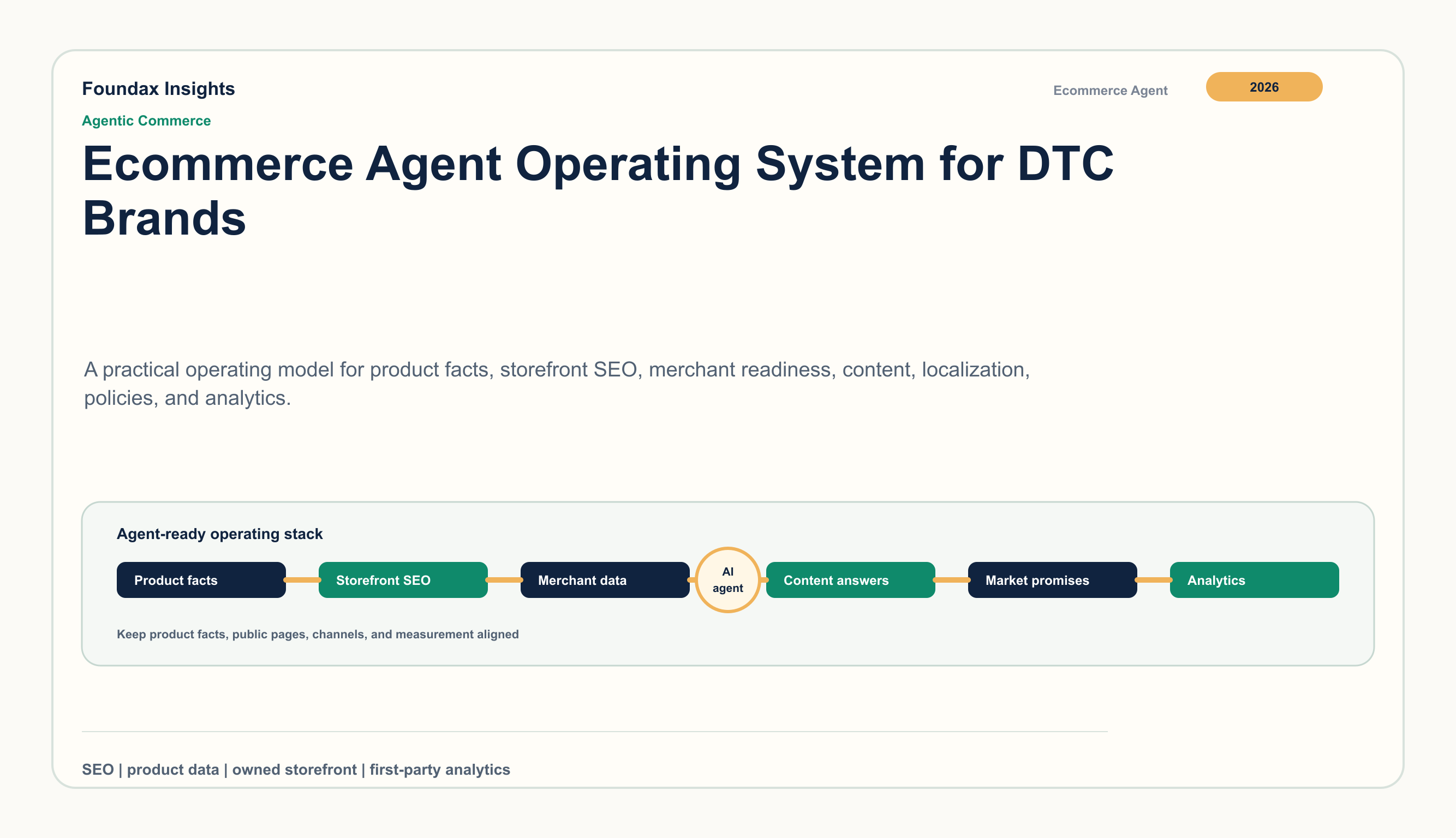
เมื่อ AI เข้ามาเป็นตัวกลางในการค้นพบสินค้า งานของทีม ecommerce จะเปลี่ยนไป หน้าสินค้ายังต้องโน้มน้าวผู้ซื้อจริง แต่ก็ต้องส่งข้อเท็จจริงที่สอดคล้องกันให้ search systems, merchant feeds, AI shopping surfaces และเครื่องมือวิเคราะห์ด้วย
คำตอบที่ใช้ได้จริงสำหรับแบรนด์ DTC คือระบบปฏิบัติการ: วิธีทำงานซ้ำได้เพื่อดูแลข้อมูลสินค้า หน้าเว็บสาธารณะ structured data ความพร้อมของช่องทาง คอนเทนต์ โลคัลไลซ์ นโยบาย และการวัดผลให้ตรงกัน
Many merchants do not need another chatbot first. They need AI workflows that can safely use the business facts they already depend on:
This pillar treats AI as an operating layer, not a magic front end. The useful question is: which business objects are clean enough for AI to read, draft, translate, explain, or improve without creating drift?
ในเส้นทางเดิม ผู้ซื้อค้นหา เปิดหน้าเว็บ เปรียบเทียบ แล้วตัดสินใจเอง แต่ในเส้นทางที่มี AI เป็นตัวกลาง ผู้ซื้อมักเริ่มจากบริบทการใช้งาน งบประมาณ ประเทศปลายทาง หรือคำถามเปรียบเทียบ ชั้น AI จึงต้องการข้อเท็จจริงสินค้าและ merchant ที่เชื่อถือได้
สัญญาณจาก Google, Shopify, Google Merchant Center และ OpenAI ชี้ไปทางเดียวกัน: metadata สินค้า structured data ความพร้อมของช่องทาง และการวัดผล กลายเป็นสินทรัพย์เชิงปฏิบัติการ
ชื่อสินค้า ตัวเลือก รูปภาพ ราคา สต็อก การคืนสินค้า การจัดส่ง canonical URL schema และข้อความท้องถิ่นต้องอธิบายความจริงทางธุรกิจเดียวกัน
เมื่อข้อมูลเหล่านี้ไม่ตรงกัน feed จะขัดกับหน้าเว็บ structured data จะบางลง และระบบ search หรือ AI shopping จะเข้าใจข้อเสนอได้ยากขึ้น
| ชั้นงาน | คำถามเชิงปฏิบัติการ | หลักฐานที่ต้องดูแล |
|---|---|---|
| ข้อเท็จจริงสินค้า | ระบบระบุสินค้า ตัวเลือก คุณลักษณะ และ offer ได้หรือไม่ | ชื่อ, SKU, GTIN/MPN, แบรนด์, ราคา, สต็อก, รูปภาพ, คุณลักษณะ, Product JSON-LD |
| SEO storefront | หน้าเว็บถูก crawl, index, canonical และเข้าใจได้หรือไม่ | title, description, canonical, sitemap, robots, hreflang, structured data |
| ความพร้อม merchant | feed ตรงกับหน้าเว็บสาธารณะหรือไม่ | ข้อมูล Merchant Center, landing page consistency, preflight, sync results |
| คำตอบจากคอนเทนต์ | ผู้ซื้อหรือ AI assistant ตอบคำถามเปรียบเทียบจริงได้หรือไม่ | FAQ, use case, buying guide, comparison, policy explanation |
| คำมั่นตามตลาด | การจัดส่ง ภาษี คืนสินค้า รับประกัน และจ่ายเงินชัดเจนตามตลาดหรือไม่ | policy pages, PDP promises, localized copy, support workflow |
| การวัดผล | ทีมเห็นการเปลี่ยนแปลงหลังแก้ไขหรือไม่ | Search Console, Merchant Center insights, first-party analytics, GA4 diagnosis |
| จังหวะรีวิว | ตรวจข้อเท็จจริงก่อนเก่าหรือไม่ | monthly SKU audit, feed/page diff, content refresh log |
เริ่มจากสินค้าที่สำคัญอยู่แล้ว: SKU อันดับต้นตามรายได้ margin หรือความสำคัญเชิงกลยุทธ์ ตรวจข้อเท็จจริงเดียวกันใน product record, PDP, structured data, merchant data, content, policy และ analytics
Foundax วาง product records, public pages, content, localization, Google merchant workflows และ measurement ไว้ในชั้นปฏิบัติการเดียวกัน
| ชั้นงาน | หลักฐานที่ต้องดูแล |
|---|---|
| Product records และ PDP | ดูแลข้อมูลสินค้าที่แบรนด์เป็นเจ้าของ และเผยแพร่ PDP ที่รองรับ Product JSON-LD ได้ |
| Site SEO | จัดการ SEO fields, sitemap, robots, Search Console verification และ sitemap submission |
| GMC preflight | ใช้ strict preflight และ sync เพื่อเห็น blocker ก่อนส่งข้อมูลเข้า Merchant Center |
| Content Studio | เผยแพร่ FAQ, comparison และ buying scenario เป็น owned content |
| Analytics | ใช้ first-party analytics ร่วมกับ GA4 diagnosis เพื่อติดตามการเปลี่ยนแปลง |
| Time | Work |
|---|---|
| สัปดาห์ 1 | Audit identifiers, attributes, variants, images, price, stock และ policy facts ของ SKU สำคัญ |
| สัปดาห์ 2 | แก้ title, description, canonical, sitemap, Product JSON-LD และ policy pages ที่ crawl ได้ |
| สัปดาห์ 3 | เพิ่มคำตอบเรื่อง use case, comparison, size, compatibility, shipping และ returns |
| สัปดาห์ 4 | ทบทวน Search Console, Merchant Center checks, first-party analytics และเขียน backlog ถัดไป |
คือ workflow ที่ช่วยให้ product facts, SEO, merchant data, content, localization, policies และ analytics สอดคล้องกันต่อเนื่อง
เริ่มจาก SKU สำคัญ: identifiers, attributes, variants, images, price, stock, Product JSON-LD, shipping และ returns
SEO ยังสำคัญ แต่ AI operations discipline เพิ่ม machine-readable product facts, feed consistency, market promises และ measurement rhythm
รวม storefront publishing, Site SEO, Product JSON-LD, Google merchant workflows, Content Studio, localization และ analytics ไว้ใน flow เดียว