AI는 웹사이트를 빠르게 구축할 수 있습니다. 하지만 출시 후 유지보수는 누가?
AI 웹사이트 빌더는 몇 분 만에 스토어프론트를 생성할 수 있습니다. 하지만 실제 비용은 출시 후에 드러납니다.
더 읽기
DTC 팀이 no-code ecommerce builder가 상품 데이터, SEO, Merchant Center, 콘텐츠, 현지화, 성능, 분석에서 언제 부족해지는지 판단하는 가이드입니다.
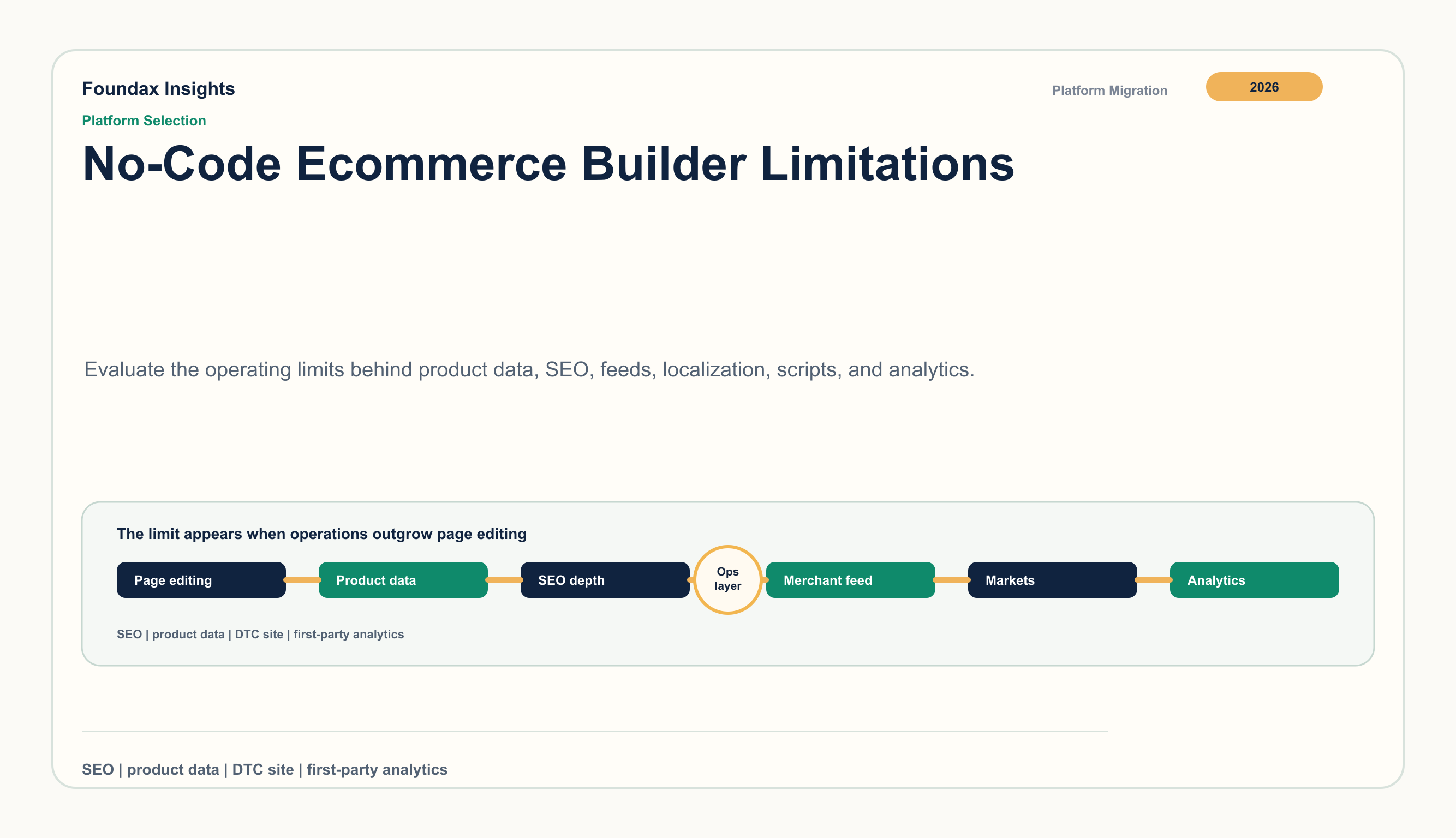
No-code ecommerce builder는 첫 단계에 유용합니다. 상품 스토리를 빠르게 공개하고, 포지셔닝을 테스트하며, 작은 팀이 landing page를 낼 수 있습니다. 문제는 런칭 이후입니다. 페이지는 편집되지만 상품 사실, SEO, feed, 현지화, 분석을 연결하지 못하면 한계가 드러납니다.
A site can look good while every campaign or catalog update creates cleanup somewhere else. The useful question is not whether a block can be designed, but whether the business promise stays accurate next month.
When title, variant, price, image, identifier or availability drift, search, feed, PDP, support and reporting stop describing the same product. Visual editing cannot fix a weak source of product truth.
Meta fields are not enough. Canonical, sitemap, robots, hreflang, Product JSON-LD and Merchant Center landing pages must stay aligned with the public PDP.
Buying guides, FAQ, comparison pages and locale pages age when products, inventory, delivery or return policy changes. More translated pages do not help if local buying context is weak.
Third-party scripts affect speed, consent, checkout and attribution. Analytics also fails when events, sources, locales and product IDs drift.
Foundax keeps SEO settings, sitemap, PDP Product JSON-LD, Merchant Center preflight, Content Studio, multilingual content, first-party analytics and GA4 diagnostics closer together.
페이지는 편집되지만 상품 사실, SEO, feed, 현지화, 정책, 분석을 맞추지 못할 때입니다.
아닙니다. 런칭과 테스트에는 유용합니다. 문제는 언제 더 강한 운영층이 필요한가입니다.
상품 데이터 소유권, SEO 제어, Merchant Center, 콘텐츠 업데이트, 현지화, script 관리, first-party analytics입니다.