AI는 웹사이트를 빠르게 구축할 수 있습니다. 하지만 출시 후 유지보수는 누가?
AI 웹사이트 빌더는 몇 분 만에 스토어프론트를 생성할 수 있습니다. 하지만 실제 비용은 출시 후에 드러납니다.
더 읽기
DTC 팀이 상품 데이터, SEO, feed, 콘텐츠, script, analytics를 분산시키지 않고 자동화하기 위한 운영 모델입니다.
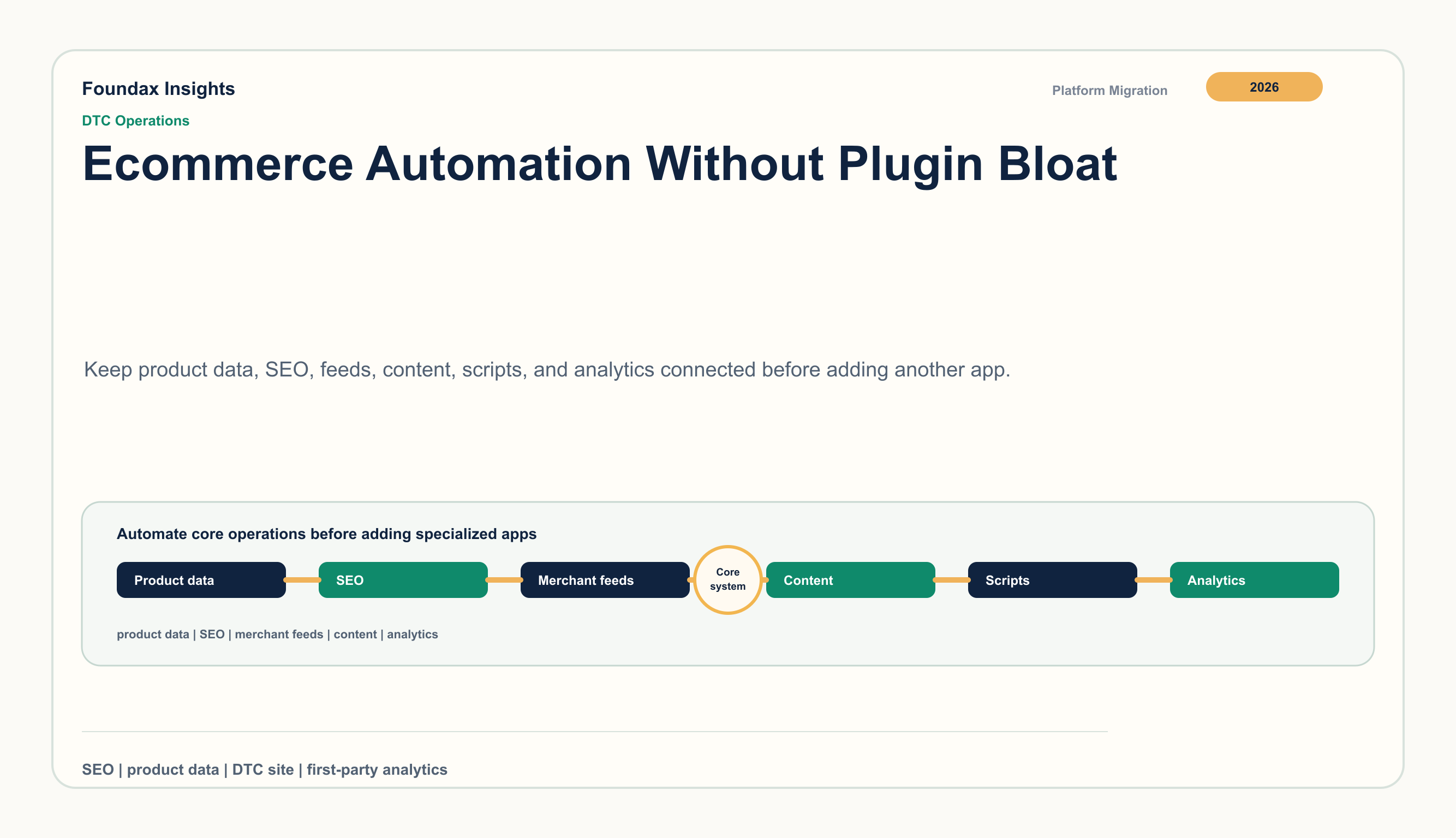
이커머스 자동화가 매력적인 이유는 DTC 팀에 반복 작업이 너무 많기 때문입니다. 상품 업데이트, SEO, feed 정리, 콘텐츠 업데이트, 할인, support, analytics, 현지화. app이 좋은 답일 때도 있습니다. 하지만 app이 운영 모델 자체가 되면 상품 사실과 측정 통제력이 줄어듭니다.
There is no magic number of apps that makes a store unhealthy. The warning sign is duplicated product truth: titles, variants, prices, SEO fields, feed values, policies, scripts and reports being managed in several places.
Before automating, decide which system owns product titles, price, inventory, PDP copy, Product JSON-LD, feed fields, shipping promises, return language and analytics labels. Automation should read from that source, not create a parallel one.
The core system should keep product data, SEO, Merchant Center checks, content, localization, scripts and analytics connected. Without that layer, each new app adds another dashboard and another hidden reconciliation task.
Apps are still useful for reviews, email, subscriptions, support, loyalty, warehouse, marketplace operations or specialized reporting. The question is whether the app has a clear job, data boundary, owner and review date.
Every app should be reviewed for cost, permissions, data ownership, script weight, performance, consent, duplicated fields and whether the business still uses the output. Otherwise automation quietly becomes maintenance debt.
Foundax keeps site SEO, sitemap, PDP Product JSON-LD, Merchant Center preflight and sync, Content Studio, multilingual content, first-party analytics and GA4 diagnostics closer together. That gives automation a cleaner operating base.
It is not simply having many apps. It is when apps duplicate product facts, SEO fields, scripts, reports and operational ownership.
No. Keep apps with a clear job, data boundary, owner and measurable value. Remove or replace apps that create hidden drift.
Start with repeatable checks around product data, SEO fields, feed-page alignment, content refresh, localization and analytics labels.