L'AI può costruire un sito web velocemente. Ma chi lo mantiene dopo il lancio?
I costruttori di siti web AI possono generare un negozio in minuti. Ma il costo reale emerge dopo il lancio — aggiornamenti, sicurezza, prestazioni.
Leggi di più
La manutenzione di un sito DTC non è solo hosting e bug fix. Il budget reale è in dati prodotto, SEO, canali Google, contenuti, localizzazione, policy, script e analytics.
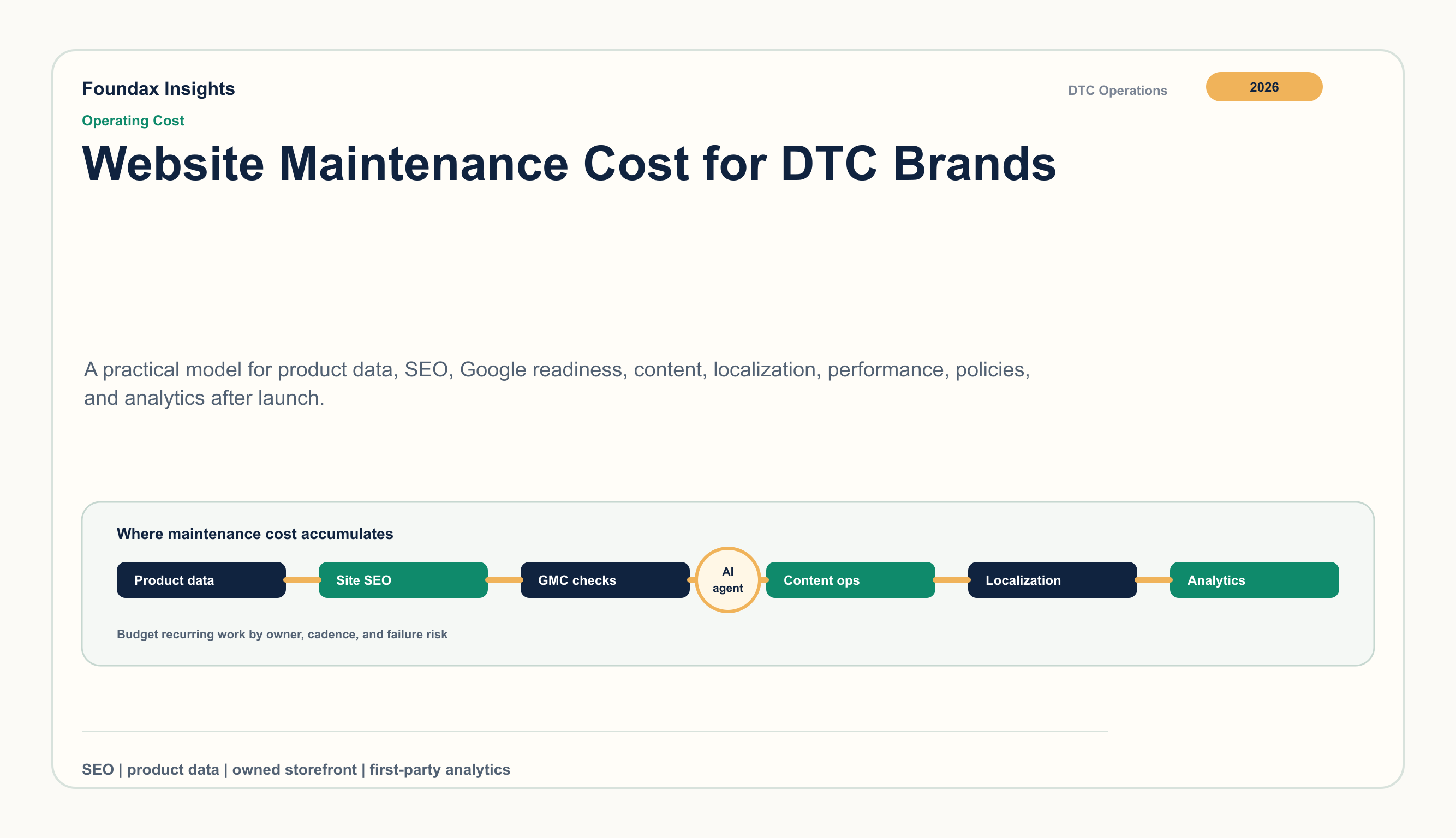
Un sito DTC costa meno il giorno del lancio. Dopo cambiano prodotti, prezzi, stock, policy, pagine mercato, tracking, script e feed. Il costo di manutenzione non è hosting: è tenere allineati questi livelli.
A price change can touch PDPs, collections, Product JSON-LD, Merchant Center, ads, email and support. A new market touches hreflang, currency, sizing, delivery, returns and links. Budget should follow these recurring surfaces.
The underestimated lines are product data, SEO/URL, Merchant Center feed, content refresh, localization, policies, third-party scripts and analytics. None of them is a one-time setup.
Product data is the base. Titles, SKU, images, price, stock, materials, sizing, shipping, returns and warranty must stay aligned with public PDPs and Google-facing data.
Buying guides, FAQ, category copy, policies and locale pages age. When season, inventory, shipping, tax, return language or sizing changes, content must be refreshed.
Scripts affect speed, consent, checkout and attribution. Analytics also needs stable event names, source labels, locale and product identifiers.
Foundax keeps SEO, sitemap, Product JSON-LD, Merchant Center preflight, Search Console, Content Studio, multilingual content, first-party analytics and GA4 diagnostics closer together.
Keeping product facts, SEO, feeds, content, localization and analytics aligned as the business changes.
High-traffic SKUs and Google-facing data should be reviewed monthly, and every product or market launch needs a release check.
No. It reduces drift by keeping product data, publishing, SEO, Google checks, content and analytics closer together.