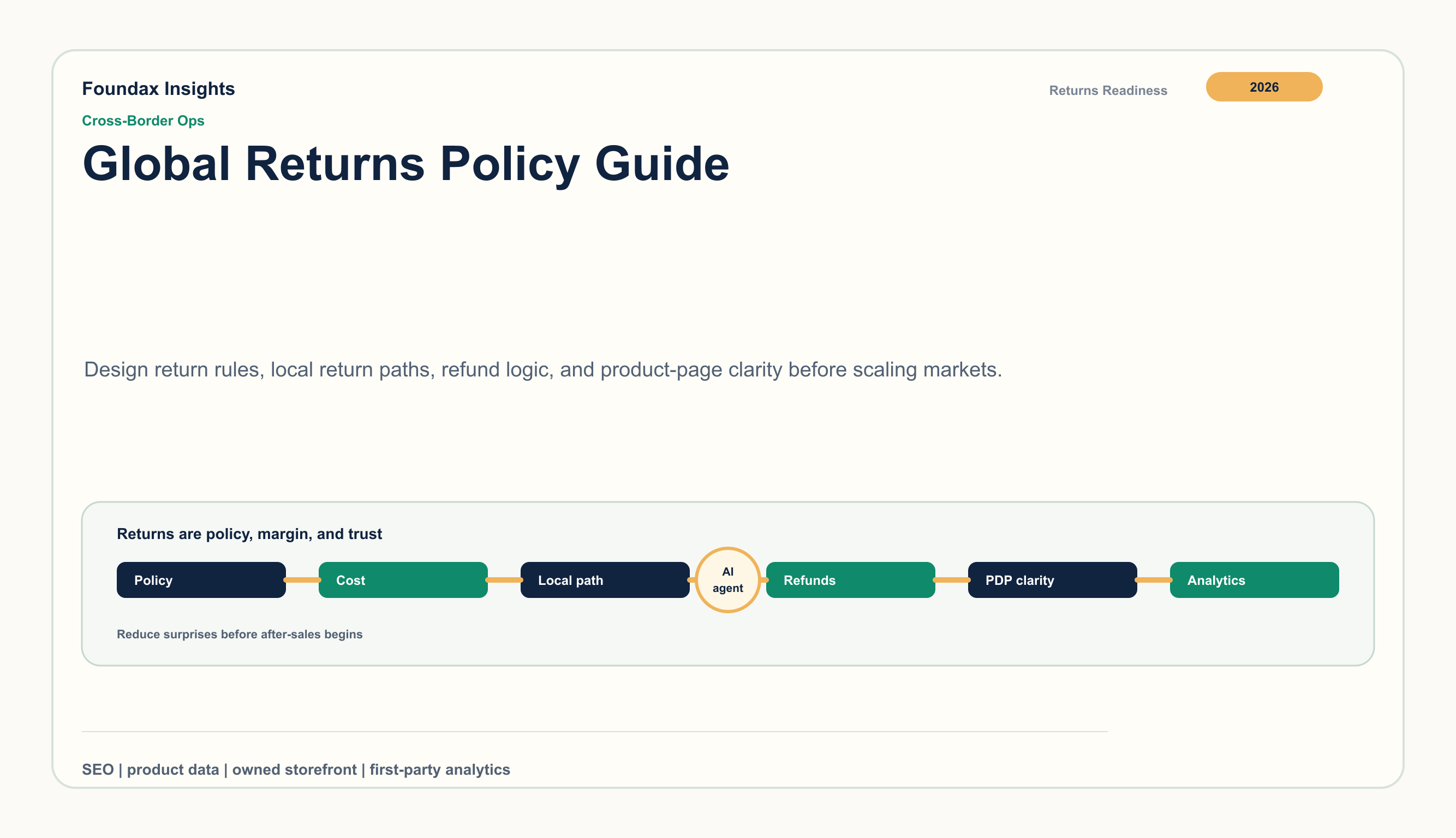
I resi cross-border uniscono diritto, margine e fiducia. Il post-acquisto rivela debolezze in consegna, dazi, rimborso, contenuto prodotto e percorso di reso.
Cinque livelli operativi
Livello
Obiettivo
Base legale
capire recesso, garanzie e obblighi informativi per mercato
Modello costi
stimare reso, controllo, write-off, rimborso e impatto doganale
Percorso locale
decidere dove vanno i resi e come vengono controllati
Chiarezza PDP
ridurre resi evitabili prima dell’acquisto
Analytics
trasformare i motivi di reso in miglioramenti di prodotto, contenuto e mercato
Checklist operativa
Partite dalla base legale. Nell’UE molti acquisti a distanza prevedono 14 giorni di recesso. Nel Regno Unito i clienti devono essere informati sui diritti di cancellazione dopo la consegna. L’Australia si concentra sui rimedi per prodotti difettosi o non conformi alla descrizione, mentre la California richiede policy limitate di reso chiaramente visibili.
Poi modellate l’economia reale. Un reso può includere etichetta, supporto, documenti doganali, controllo, reimballaggio, deposito locale, write-off, rimborso ed effetto cambio. Le modifiche sui pacchi di basso valore negli Stati Uniti e nell’UE rendono più importanti documentazione e gestione locale.
Infine costruite il percorso operativo. I mercati con volume elevato possono richiedere un indirizzo locale o un partner di ispezione. Per articoli a basso valore può essere più razionale un rimborso senza rientro fisico. La PDP deve chiarire taglia, compatibilità, materiali, consegna, dazi e responsabilità di reso prima dell’acquisto.
Come Foundax collega il flusso operativo
Foundax collega dati prodotto, pagine localizzate, contenuti policy, SEO metadata, Content Studio, workflow Google e first-party analytics per ricondurre i resi a problemi di prodotto, pagina, spedizione, policy o canale.
Domande frequenti
Una policy per tutti i paesi?
Usa un framework comune, ma adatta diritti, costi, dazi e aspettative per mercato.
Chi paga il reso?
Dipende da legge, margine, aspettative e causa del reso. Va chiarito prima dell’acquisto.
Quando usare refund-only?
Quando spedizione, ispezione e restock superano il valore recuperabile.