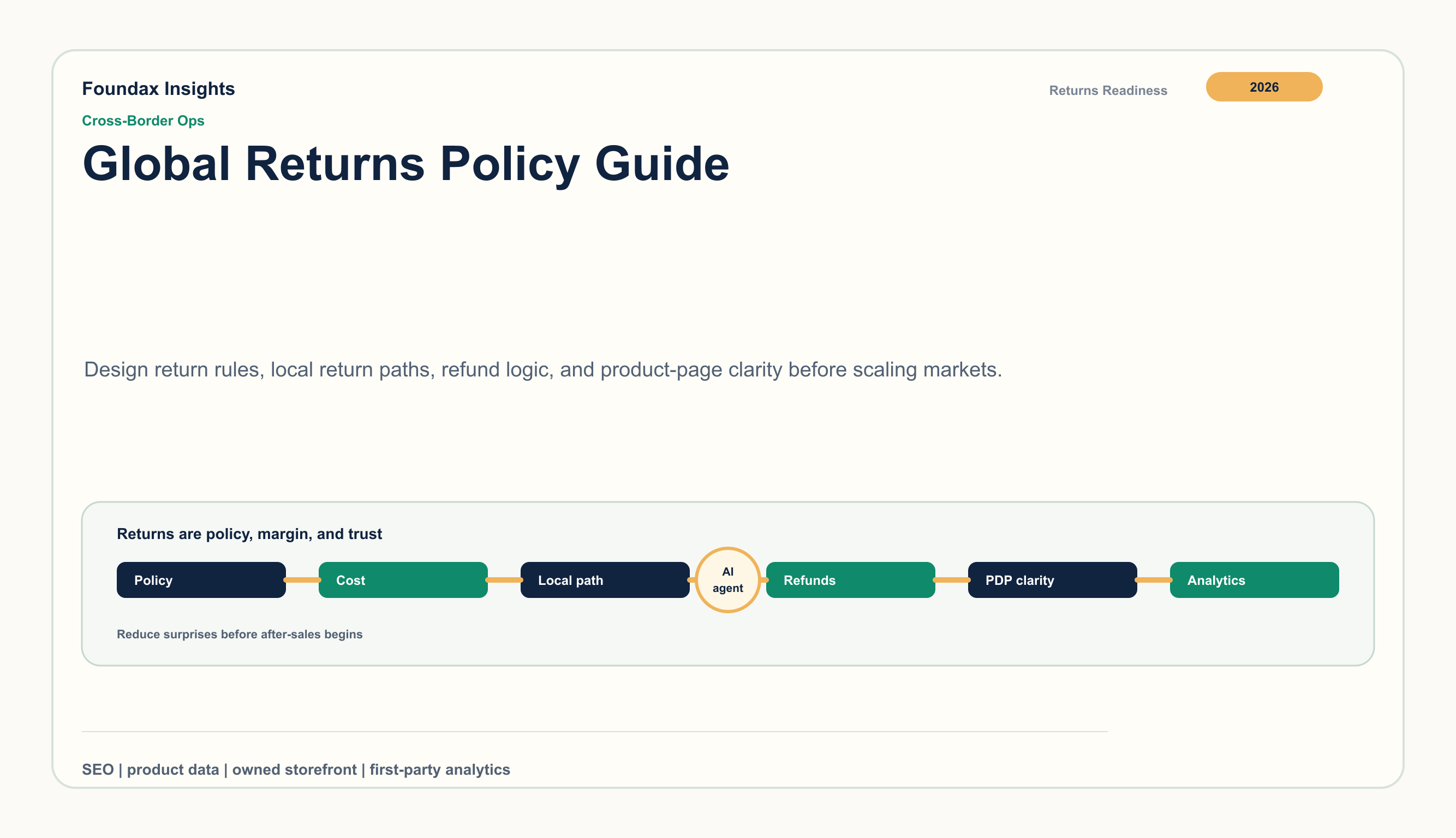
Cross-Border-Retouren verbinden Recht, Marge und Vertrauen. Nach dem Kauf zeigen sich Schwächen bei Versand, Zoll, Erstattung, Produktcontent und Retourenpfad.
Fünf operative Ebenen
Ebene
Zweck
Rechtliche Basis
Widerruf, Gewährleistung und Informationspflichten je Markt verstehen
Kostenmodell
Retoure, Prüfung, Abschreibung, Erstattung und Zollwirkung kalkulieren
Lokaler Pfad
festlegen, wohin Retouren gehen und wie sie geprüft werden
Klarheit der Produktseite
vermeidbare Retouren vor dem Kauf reduzieren
Analytics
Rücksendegründe in Produkt-, Content- und Marktverbesserungen übersetzen
Praktische Checkliste
Beginnen Sie mit der rechtlichen Basis. In der EU gilt für viele Fernabsatzkäufe eine 14-tägige Widerrufsfrist. In Großbritannien müssen Kunden über ihre Stornorechte nach Lieferung informiert werden. Australien stellt Rechtsbehelfe bei fehlerhaften oder falsch beschriebenen Waren in den Mittelpunkt, Kalifornien verlangt eine klare Anzeige eingeschränkter Retourenrichtlinien.
Danach folgt das Kostenmodell. Eine Retoure kann Labelkosten, Support, Zollpapiere, Prüfung, Neuverpackung, lokale Lagerung, Abschreibung, Erstattung und Währungseffekte enthalten. Änderungen für geringwertige Pakete in den USA und der EU machen Dokumentation und lokale Verwertung wichtiger.
Bauen Sie dann den operativen Pfad. Märkte mit hohem Retourenvolumen brauchen eventuell eine lokale Retourenadresse oder einen Prüfpartner. Bei Niedrigpreisartikeln kann eine Erstattung ohne Rücksendung sinnvoll sein. Produktseiten sollten Größe, Kompatibilität, Material, Lieferung, Zoll und Retourenverantwortung vor dem Kauf klären.
Wie Foundax den Workflow verbindet
Foundax verbindet Produktdaten, lokalisierte Seiten, Policy-Content, SEO-Metadaten, Content Studio, Google-Workflows und First-Party-Analytics, damit Retourengründe auf Produkt-, Seiten-, Versand-, Policy- oder Kanalprobleme zurückgeführt werden können.
FAQ
Eine Policy für alle Länder?
Ein gemeinsamer Rahmen ist möglich, Details zu Rechten, Kosten und Zoll müssen je Markt angepasst werden.
Wer zahlt die Retoure?
Das hängt von Recht, Marge, Kundenerwartung und Retourengrund ab. Die Information muss vor dem Kauf klar sein.
Wann ist refund-only sinnvoll?
Wenn Rückversand, Prüfung und Restocking mehr kosten als der Warenwert.