KI kann schnell eine Website bauen. Aber wer pflegt sie nach dem Start?
KI-Website-Builder können in Minuten einen Storefront generieren. Doch die wahren Kosten zeigen sich nach dem Launch — Updates, Sicherheit, Performance.
Weiterlesen
Betriebsmodell für DTC-Teams, die automatisieren wollen, ohne Produktdaten, SEO, Feeds, Content, Skripte und Analytics über getrennte Apps zu verstreuen.
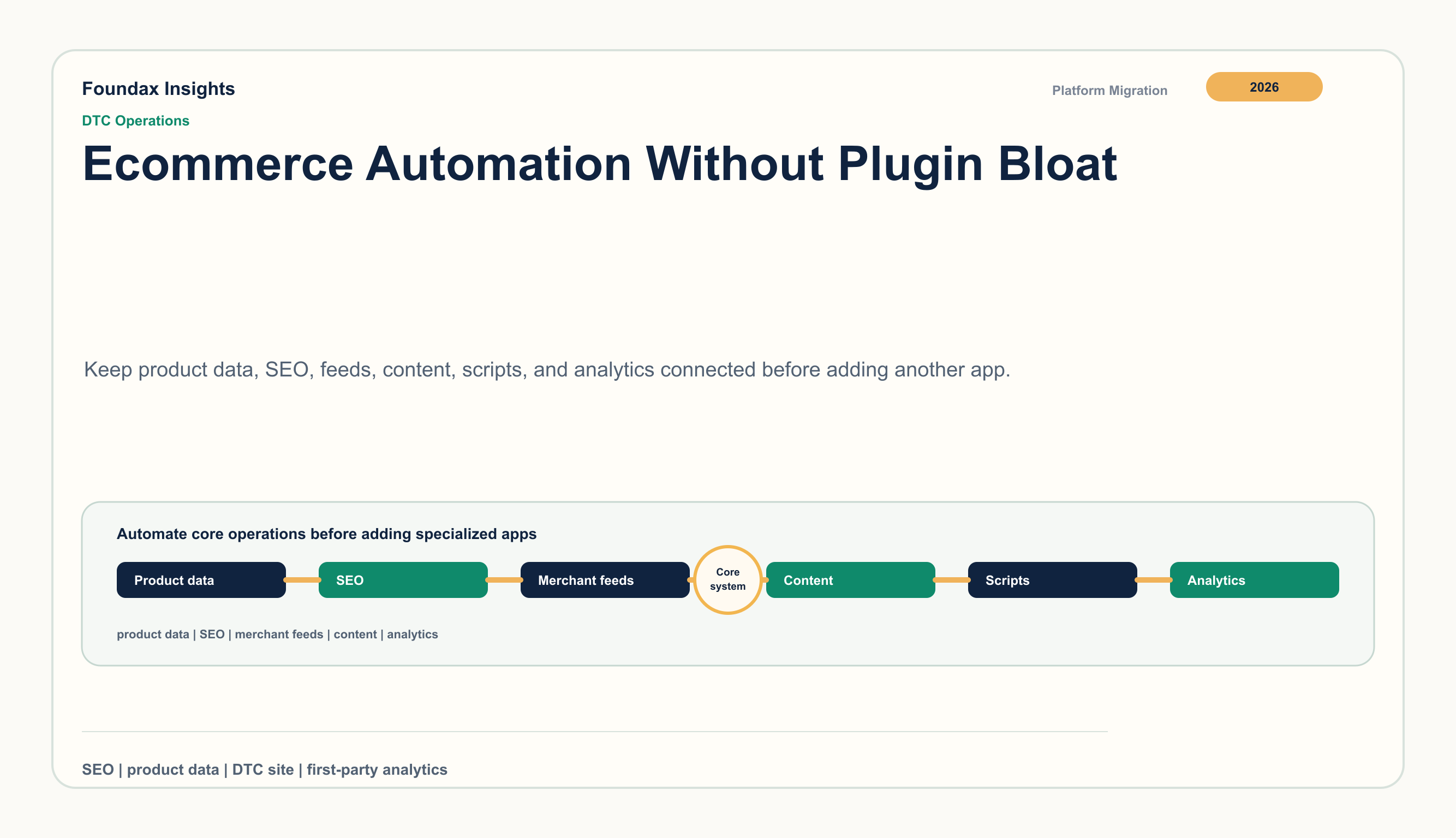
Ecommerce-Automatisierung ist attraktiv, weil DTC-Teams zu viel Wiederholarbeit haben: Produktupdates, SEO, Feed-Pflege, Content, Rabatte, Support, Analytics, Lokalisierung. Eine App kann für Spezialaufgaben richtig sein. Problematisch wird es, wenn Apps das Betriebsmodell ersetzen.
There is no magic number of apps that makes a store unhealthy. The warning sign is duplicated product truth: titles, variants, prices, SEO fields, feed values, policies, scripts and reports being managed in several places.
Before automating, decide which system owns product titles, price, inventory, PDP copy, Product JSON-LD, feed fields, shipping promises, return language and analytics labels. Automation should read from that source, not create a parallel one.
The core system should keep product data, SEO, Merchant Center checks, content, localization, scripts and analytics connected. Without that layer, each new app adds another dashboard and another hidden reconciliation task.
Apps are still useful for reviews, email, subscriptions, support, loyalty, warehouse, marketplace operations or specialized reporting. The question is whether the app has a clear job, data boundary, owner and review date.
Every app should be reviewed for cost, permissions, data ownership, script weight, performance, consent, duplicated fields and whether the business still uses the output. Otherwise automation quietly becomes maintenance debt.
Foundax keeps site SEO, sitemap, PDP Product JSON-LD, Merchant Center preflight and sync, Content Studio, multilingual content, first-party analytics and GA4 diagnostics closer together. That gives automation a cleaner operating base.
It is not simply having many apps. It is when apps duplicate product facts, SEO fields, scripts, reports and operational ownership.
No. Keep apps with a clear job, data boundary, owner and measurable value. Remove or replace apps that create hidden drift.
Start with repeatable checks around product data, SEO fields, feed-page alignment, content refresh, localization and analytics labels.