الذكاء الاصطناعي يمكنه بناء موقع ويب بسرعة. لكن من يقوم بصيانته بعد الإطلاق؟
بناة المواقع بالذكاء الاصطناعي يمكنهم إنشاء متجر في دقائق. لكن التكلفة الحقيقية تظهر بعد الإطلاق — تحديثات المحتوى والأمان والأداء.
اقرأ المزيد
دليل عملي لفرق DTC لمعرفة متى لا تكفي أدوات no-code في بيانات المنتج وSEO وMerchant Center والمحتوى والتوطين والأداء والتحليلات.
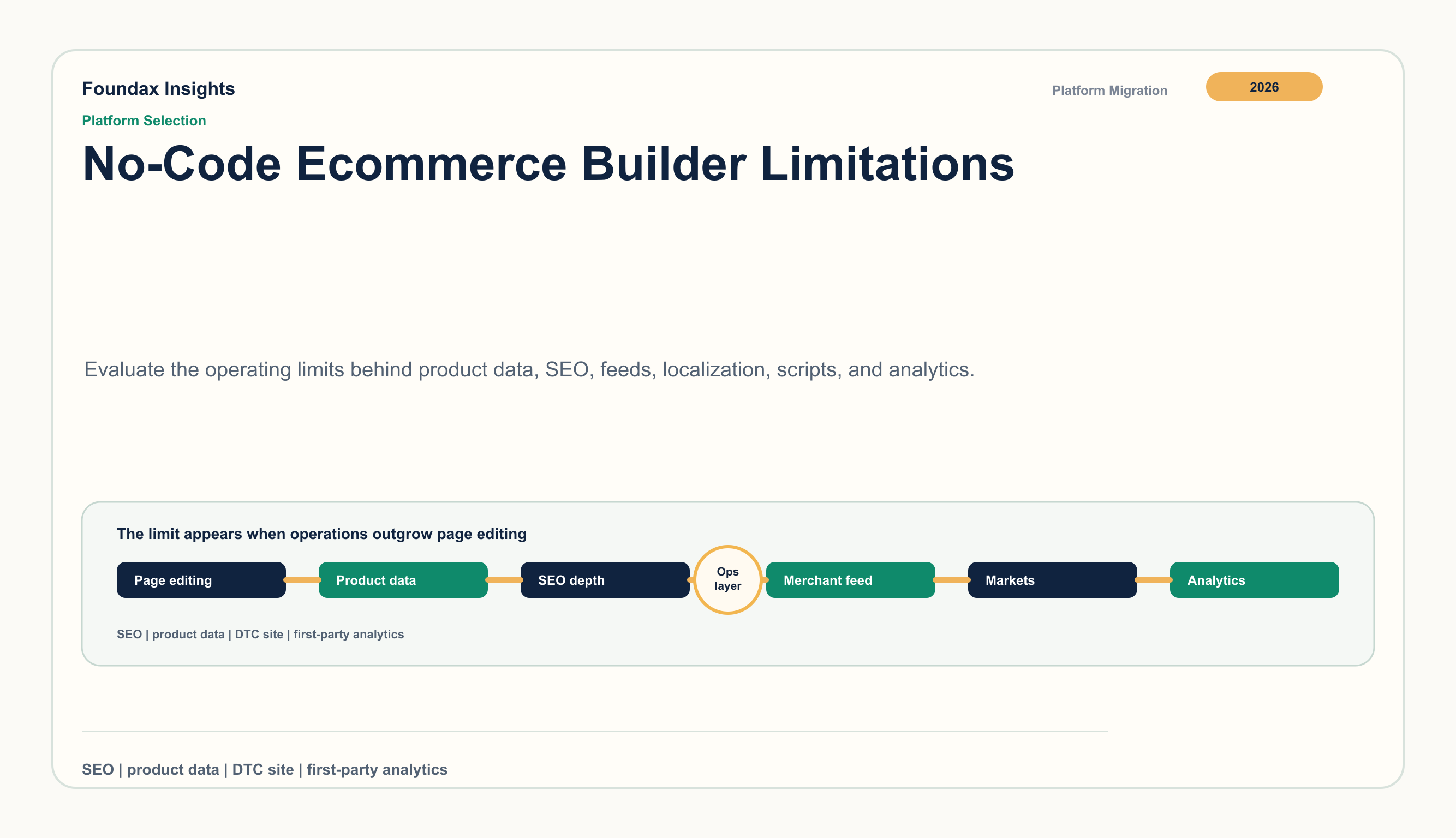
تفيد أدوات no-code ecommerce builder في البداية: نشر قصة المنتج بسرعة، اختبار التموضع، وإطلاق صفحة دون دورة هندسية طويلة. يظهر الحد بعد الإطلاق، عندما يمكن تعديل الصفحة لكن حقائق المنتج وSEO والخلاصات والتوطين والقياس لا تبقى متصلة.
A site can look good while every campaign or catalog update creates cleanup somewhere else. The useful question is not whether a block can be designed, but whether the business promise stays accurate next month.
When title, variant, price, image, identifier or availability drift, search, feed, PDP, support and reporting stop describing the same product. Visual editing cannot fix a weak source of product truth.
Meta fields are not enough. Canonical, sitemap, robots, hreflang, Product JSON-LD and Merchant Center landing pages must stay aligned with the public PDP.
Buying guides, FAQ, comparison pages and locale pages age when products, inventory, delivery or return policy changes. More translated pages do not help if local buying context is weak.
Third-party scripts affect speed, consent, checkout and attribution. Analytics also fails when events, sources, locales and product IDs drift.
Foundax keeps SEO settings, sitemap, PDP Product JSON-LD, Merchant Center preflight, Content Studio, multilingual content, first-party analytics and GA4 diagnostics closer together.
When the team can still edit pages but cannot keep product facts, SEO, feeds, localization, policies and analytics aligned.
No. They are useful for launch and testing. The question is when the business needs a stronger operating layer.
Product data ownership, SEO control, Merchant Center checks, content refresh, localization, script governance and first-party analytics.