GEO vs SEO สำหรับแบรนด์ ecommerce: อะไรเปลี่ยนเมื่อการค้นหากลายเป็นชั้นคำตอบ
GEO ไม่ได้มาแทน SEO แต่ทำให้มาตรฐานของหลักฐานสูงขึ้น หน้า product, content, feed, structured data และ analytics ต้องรองรับทั้ง ranking และการสร้างคำตอบ.
อ่านเพิ่มเติม
แนวทางเปลี่ยน specs, attributes, variants, policies, reviews, images และ feed fields ให้เป็น product facts ที่สอดคล้องกันระหว่าง PDP, schema, Merchant Center และ measurement
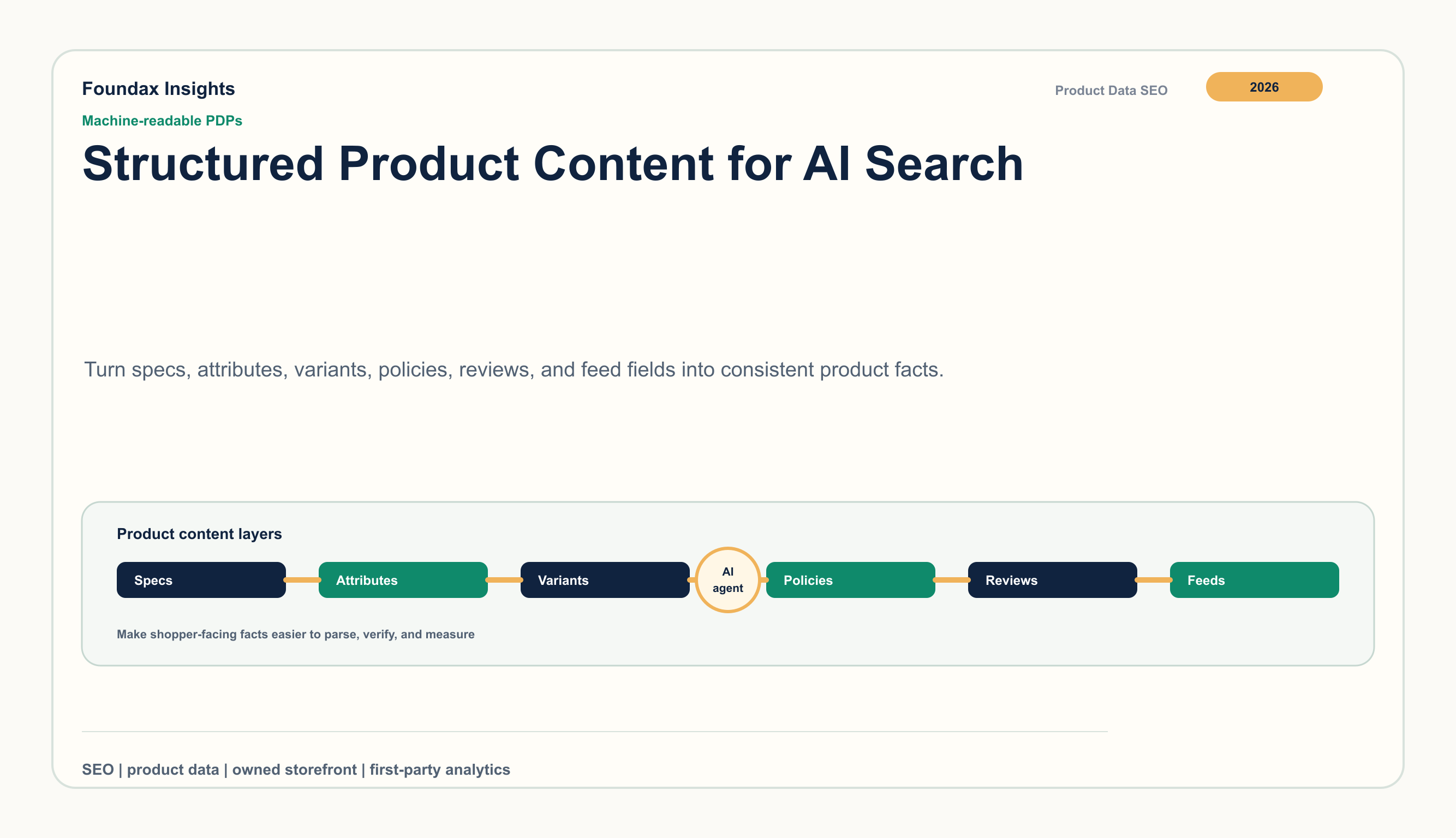
ผู้ซื้อไม่ได้พิมพ์ keyword สั้นๆ แล้วเปิดหน้าสินค้าสิบหน้าเพื่อเทียบเองเสมอไป ใน AI-assisted shopping ผู้ซื้ออาจถามหาเสื้อ hiking กันน้ำในงบหนึ่ง size หนึ่ง มีขายใน market ที่ต้องการ และมี return policy ที่เหมาะกับแผนเดินทาง Search และ shopping systems จึงต้องใช้ product facts ที่เทียบกันได้ เช่น price, availability, materials, size, color, variants, identifiers, images, reviews, shipping, returns และ source freshness
นี่ไม่ได้หมายความว่า AI อ่านแค่ schema OpenAI อธิบายว่า shopping results อาจใช้ merchant product data, publicly available product information และ retail sources อื่น ส่วน Google มีเอกสารทั้ง Product structured data ระดับหน้าและ Merchant Center product feeds บทเรียนที่ใช้ได้จริงคือ product content ต้องอ่านง่ายสำหรับมนุษย์ และต้องจัดเป็น facts ที่เครื่องตรวจสอบได้
Structured product content คือชั้นระหว่าง prose กับ feed data มันเปลี่ยน buyer-facing facts ให้เป็น specs, attributes, highlights, policies และ variant records ที่สอดคล้องกัน เพื่อให้ facts ชุดเดียวกันใช้ได้บน PDP, Product JSON-LD และ Merchant Center feed
Structured data คือ output แบบ machine-readable เช่น Product JSON-LD, Offer fields, Merchant Center attributes, product identifiers และ feed records ส่วน structured product content คือ source content model ที่ทำให้ output เหล่านั้นน่าเชื่อถือ เช่น spec tables, attribute lists, comparison points, product highlights, FAQ answers, review summaries และ localized product facts
หน้าสินค้าอาจมี schema ถูกต้อง แต่ structured content ยังอ่อนแอได้ เช่น JSON-LD มี product name, price และ availability แต่ material, fit, care instructions และ shipping limits ถูกฝังอยู่ในคำอธิบายที่คลุมเครือ แบบนี้ไม่พอสำหรับผู้ซื้อที่ถามละเอียด และไม่พอสำหรับทีมที่ดูแล feed หลาย market
งานจริงเริ่มจากทำ product record ให้ชัด ก่อนจะกลายเป็น schema, feed, page copy หรือ localized content
Product data specification ของ Google Merchant Center ระบุว่า Google ใช้ product data เพื่อ match สินค้ากับ relevant queries และเตือนว่า incorrect, inaccurate หรือ missing information อาจทำให้เกิด disapproval, limited eligibility, incorrect display หรือ conflict ระหว่าง feed กับ website ตัวอย่างที่พูดถึงมี category, GTIN, variant attributes, image quality และ feed/page data conflicts
ประกาศ Merchant Center AI insights วันที่ 27 พฤษภาคม 2026 ทำให้เรื่องนี้ชัดขึ้นใน AI-powered shopping experiences โดยมี product attribute insights และ attribute completeness score เพื่อช่วยหา products ที่ขาด structured attributes เช่น color, style และ material
OpenAI shopping help ก็ไปในทิศทางเดียวกัน ChatGPT อาจใช้ availability, price, quality และดูว่า merchant เป็น maker หรือ primary seller ส่วน shopping research อาจใช้ merchant product data, public information และ retail sources Product facts ที่ครบ ใหม่ และสอดคล้องกันจึงเป็นฐานของ discovery
1. Identity and identifiers
ชั้นนี้ป้องกันไม่ให้สินค้าชิ้นเดียวแตกเป็น records ที่ไม่ตรงกันระหว่าง PDP, feed และ analytics
2. Specs and attributes
Specs ควรเป็น facts ที่นำกลับมาใช้ได้ ไม่ใช่ paragraph ที่มีแต่คนอ่านถึงจะตีความได้
Product prose อธิบายได้ว่า spec สำคัญอย่างไร แต่ spec เองควรสั้น normalized และผูกกับ product record
3. Offers, inventory และ policies
Commerce facts เปลี่ยนบ่อยกว่า evergreen copy
Merchant Center structured data setup guide ระบุว่า structured data ต้องตรงกับค่าที่ผู้ใช้เห็น ดังนั้น price และ availability ต้องมี ownership ด้าน operation ชัดเจน
4. Reviews, proof และ FAQs
Reviews และ FAQs ช่วยอธิบาย fit, use cases, tradeoffs และ buyer concerns ได้
Structured content ควรทำให้ proof ตรวจสอบง่ายขึ้น
5. Images และ product highlights
Images ก็เป็น product data
Google กำหนดว่า image URLs ใน structured data ต้องเกี่ยวข้อง crawlable และ indexable
Foundax ใช้เป็น operating layer ระหว่าง public pages, structured data, feeds และ measurement ได้
คุณค่าคือ operational consistency: mismatch ระหว่าง product record, storefront page, structured markup, feed และ measurement น้อยลง
คือ product information ที่ผู้ซื้อเห็นและถูกจัดเป็น reusable facts เช่น specs, attributes, variants, images, policies, highlights, reviews และ FAQs เป็น content model สำหรับ PDP copy, structured data และ merchant feeds
Product schema เป็น output แบบ machine-readable ส่วน structured content คือ product fact model ที่อยู่ข้างใต้และทำให้ schema, feed data และ page content สอดคล้องกัน
เริ่มจาก identity, price, availability, images, brand, GTIN/MPN/SKU, variant attributes, material, color, size, item group ID, shipping, returns และ attributes ที่ผู้ซื้อใช้ filter หรือ compare จริง
ใช้เมื่อมีคำถามจริงจากผู้ซื้อและคำตอบ visible บนหน้า FAQ ควรช่วยให้ตัดสินใจซื้อชัดขึ้น
Foundax วาง product records, display specs, localized fields, Product JSON-LD, GMC preflight/sync, sitemap/Search Console workflows และ analytics checks ไว้ใน operating path เดียว
ใช้ เช็กลิสต์ SEO หน้าสินค้าสำหรับ AI Search เพื่อ audit live PDP, อ่าน Agentic Commerce Product Data Guide เพื่อจัดลำดับ fields และ Product Data Is Becoming the SEO Layer for AI Commerce Discovery เพื่อเข้าใจ discovery model ที่กว้างขึ้น