Localization ecommerce หลายภาษาสำหรับ AI shopping: localize ข้อเท็จจริงของสินค้า ไม่ใช่แค่ข้อความ
ระบบ AI shopping เปรียบเทียบ product facts, policies, content และ measurement signals ตามตลาด แบรนด์ DTC จึงต้องทำมากกว่าการแปลหน้าเว็บ.
อ่านเพิ่มเติม
คู่มือ returns cross-border: กฎหมายพื้นฐาน ต้นทุน เส้นทางคืนสินค้า refund ความชัดเจน PDP และ analytics
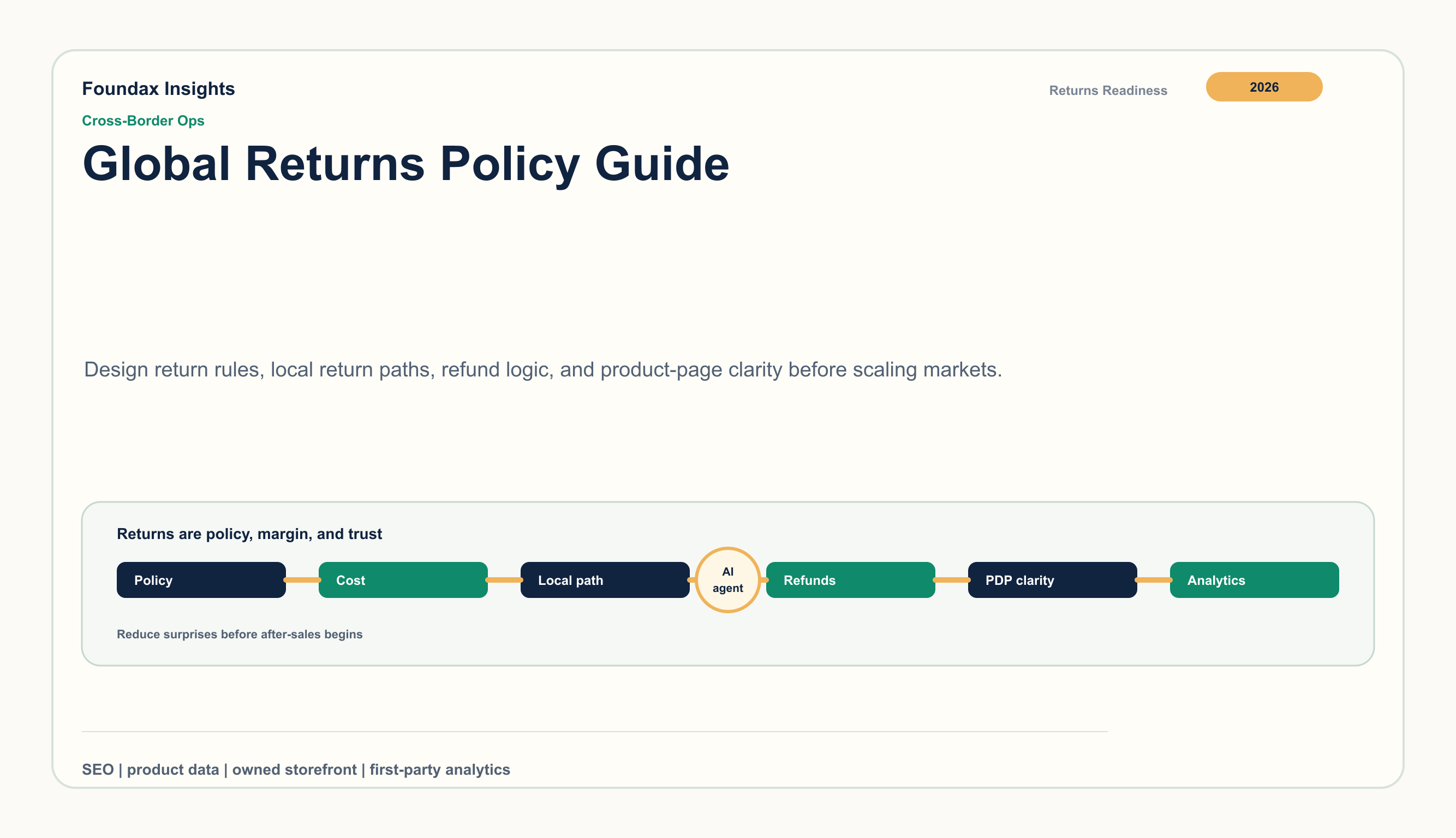
การคืนสินค้า cross-border คือจุดที่กฎหมาย margin และ trust มาพบกัน ประสบการณ์หลังซื้อจะเผยปัญหาด้านขนส่ง ภาษีศุลกากร refund เนื้อหาสินค้า และเส้นทางคืนสินค้า
| ชั้นงาน | จุดประสงค์ |
|---|---|
| ฐานกฎหมาย | เข้าใจสิทธิยกเลิก การรับประกัน และหน้าที่แจ้งข้อมูลของแต่ละตลาด |
| โมเดลต้นทุน | ประเมินค่าส่งคืน ตรวจสินค้า ตัดจำหน่าย คืนเงิน และผลกระทบศุลกากร |
| เส้นทางท้องถิ่น | กำหนดว่าสินค้าคืนไปที่ไหนและตรวจอย่างไร |
| ความชัดเจนของหน้าสินค้า | ลดการคืนสินค้าที่ป้องกันได้ก่อนซื้อ |
| Analytics | เปลี่ยนเหตุผลการคืนเป็นการปรับปรุงสินค้า คอนเทนต์ และตลาด |
เริ่มจากฐานกฎหมายก่อน สหภาพยุโรปมีสิทธิถอนการซื้อ 14 วันสำหรับการซื้อทางไกลหลายประเภท สหราชอาณาจักรกำหนดให้แจ้งสิทธิยกเลิกหลังส่งมอบ ออสเตรเลียให้ความสำคัญกับการเยียวยาสินค้ามีตำหนิหรือไม่ตรงคำอธิบาย ส่วนแคลิฟอร์เนียต้องแสดงนโยบายคืนสินค้าที่จำกัดอย่างชัดเจน
จากนั้นคำนวณต้นทุนจริง การคืนสินค้าอาจมีค่าป้ายส่งคืน ซัพพอร์ตลูกค้า เอกสารศุลกากร ตรวจสินค้า แพ็กใหม่ เก็บในประเทศ ตัดจำหน่าย คืนเงิน และผลกระทบจากอัตราแลกเปลี่ยน การเปลี่ยนกฎพัสดุมูลค่าต่ำในสหรัฐฯ และ EU ทำให้เอกสารและการจัดการในประเทศสำคัญขึ้น
สุดท้ายสร้างเส้นทางปฏิบัติการ ตลาดที่มีปริมาณสูงอาจต้องมีที่อยู่รับคืนในประเทศหรือพาร์ทเนอร์ตรวจสินค้า สินค้าราคาต่ำบางรายการอาจเหมาะกับการ refund โดยไม่ต้องส่งคืน หน้า PDP ควรอธิบายไซซ์ ความเข้ากันได้ วัสดุ การจัดส่ง อากร และผู้รับผิดชอบการคืนก่อนซื้อ
Foundax เชื่อม product data, localized pages, policy content, SEO metadata, Content Studio, Google workflows และ first-party analytics เพื่อโยงเหตุผลการคืนสินค้าเข้ากับปัญหา product, page, shipping, policy หรือ channel
ใช้ framework เดียวได้ แต่สิทธิ ค่าคืนสินค้า ภาษี และ expectation ต้องปรับตามตลาด
ขึ้นกับกฎหมาย margin ความคาดหวัง และเหตุผลการคืน ต้องอธิบายก่อนซื้อ
เมื่อค่าขนส่ง ตรวจ และ restock สูงกว่ามูลค่าที่กู้คืนได้