이커머스 브랜드를 위한 GEO와 SEO: 검색이 답변 레이어가 되면 달라지는 것
GEO는 SEO를 대체하지 않습니다. 상품 페이지, 콘텐츠, 피드, 구조화 데이터, 분석이 순위뿐 아니라 답변 생성에도 쓰이도록 증거의 기준이 높아진 것입니다.
더 읽기
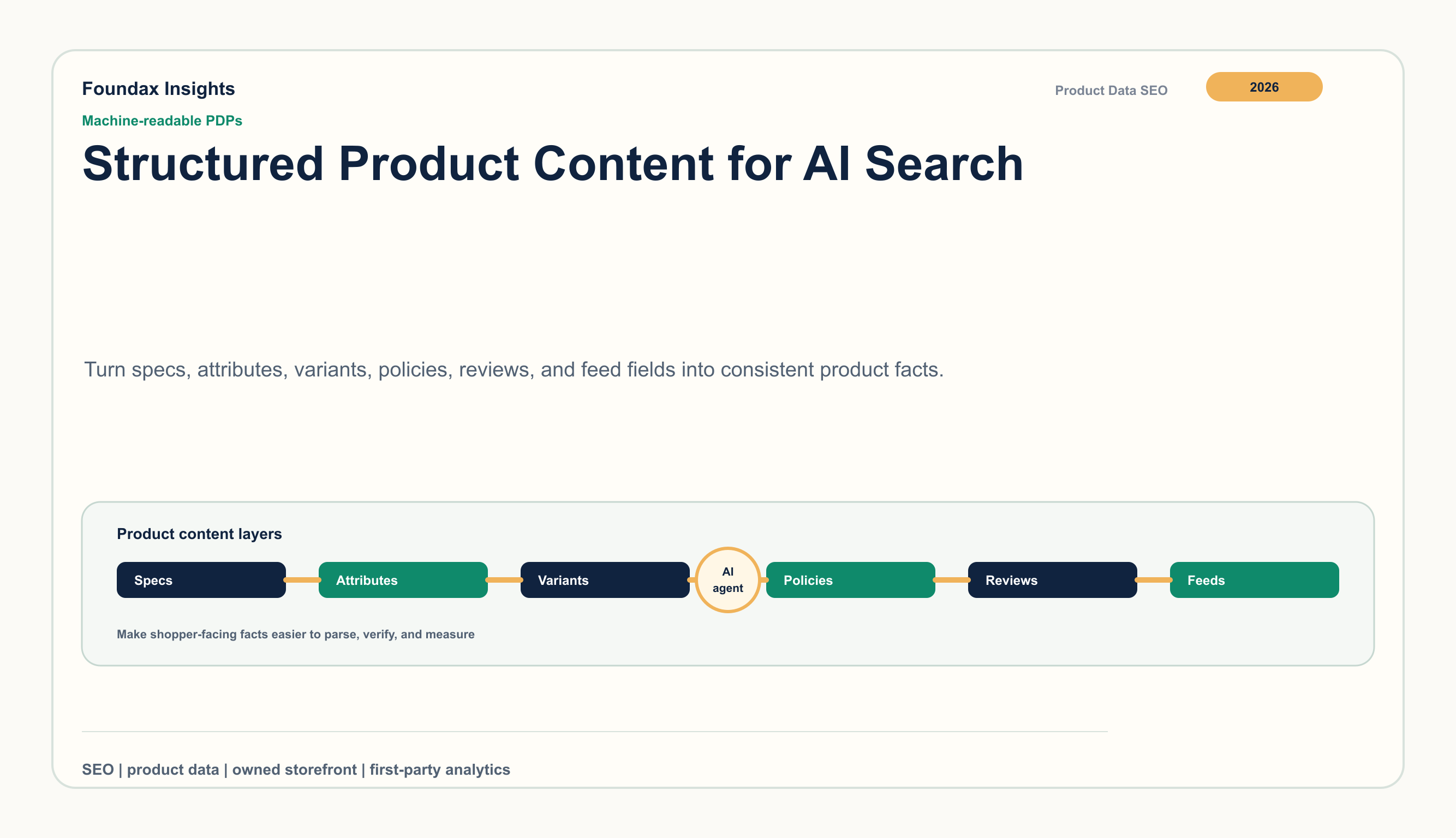
스펙, 속성, 변형, 정책, 리뷰, 이미지, feed fields를 일관된 상품 사실로 정리해 PDP, schema, Merchant Center, analytics를 비교하기 쉽게 만드는 실무 가이드입니다.
구매자는 더 이상 짧은 keyword 하나를 입력하고 열 개의 상품 페이지를 직접 비교하지만은 않습니다. AI-assisted shopping에서는 예산, 방수 여부, 특정 사이즈, 목표 시장에서의 구매 가능성, 여행 일정에 맞는 return policy까지 한 번에 물어볼 수 있습니다. 검색과 쇼핑 시스템이 이런 질문에 답하려면 비교 가능한 상품 사실이 필요합니다. price, availability, material, size, color, variants, identifiers, images, reviews, shipping, returns, source freshness입니다.
이것은 AI 시스템이 schema만 읽는다는 뜻이 아닙니다. OpenAI shopping help는 shopping results가 merchant product data, publicly available product information, other retail sources를 사용할 수 있다고 설명합니다. Google도 page-level Product structured data와 Merchant Center product feeds를 각각 문서화합니다. 실무적으로 중요한 결론은 상품 콘텐츠가 사람에게 읽히면서도 기계가 검증할 수 있는 사실로 정리되어야 한다는 점입니다.
구조화 상품 콘텐츠는 prose와 feed data 사이의 레이어입니다. buyer-facing facts를 specs, attributes, highlights, policies, variant records로 정리해 같은 사실을 PDP, Product JSON-LD, Merchant Center feed에 사용할 수 있게 합니다.
Structured data는 machine-readable output입니다. Product JSON-LD, Offer fields, Merchant Center attributes, product identifiers, feed records가 여기에 해당합니다. Structured product content는 그 output을 신뢰할 수 있게 만드는 source content model입니다. spec tables, attribute lists, comparison points, product highlights, FAQ answers, review summaries, localized product facts를 포함합니다.
상품 페이지에 valid schema가 있어도 structured content가 약할 수 있습니다. JSON-LD에는 product name, price, availability가 있지만 material, fit, care instructions, shipping limits가 모호한 설명에 묻혀 있는 경우입니다. 세부 질문을 하는 구매자에게도, 여러 market의 feed를 운영하는 팀에게도 부족합니다.
먼저 명확해야 하는 것은 schema가 아니라 product record 자체입니다.
Google Merchant Center product data specification은 Google이 product data를 relevant queries에 맞추는 데 사용한다고 설명합니다. 또한 incorrect, inaccurate, missing product information은 disapproval, limited eligibility, incorrect display, feed와 website conflict를 만들 수 있다고 말합니다. 예시로 category, GTIN, variant attributes, image quality, feed/page data conflicts가 제시됩니다.
2026년 5월 27일 Merchant Center AI insights 발표는 AI-powered shopping experiences 관점에서 이 문제를 더 분명히 보여줍니다. product attribute insights와 attribute completeness score로 color, style, material 같은 structured attributes가 부족한 상품을 찾는 흐름입니다.
OpenAI shopping help도 같은 방향을 가리킵니다. ChatGPT는 availability, price, quality, merchant가 maker 또는 primary seller인지 같은 요소를 사용할 수 있고, shopping research는 merchant product data, 공개 상품 정보, retail sources를 사용할 수 있습니다. 완전하고 최신이며 일관된 상품 사실은 discovery foundation입니다.
1. Identity and identifiers
먼저 상품 정체성을 안정화합니다.
이 레이어는 하나의 상품이 PDP, feed, analytics stack에서 여러 불일치 record로 쪼개지는 것을 막습니다.
2. Specs and attributes
스펙은 사람이 문단에서 추론해야 하는 설명이 아니라 재사용 가능한 facts여야 합니다.
Product prose는 spec이 왜 중요한지 설명할 수 있지만, spec 자체는 짧고 정규화되어 product record에 연결되어야 합니다.
3. Offers, inventory, policies
Commerce facts는 evergreen copy보다 자주 바뀝니다. 분리해서 관리해야 합니다.
Merchant Center structured data setup guide는 structured data가 user-facing values와 맞아야 한다고 설명합니다. price와 availability는 가끔 문구를 고치는 항목이 아니라 operational ownership이 필요한 사실입니다.
4. Reviews, proof, FAQs
리뷰와 FAQ는 fit, use cases, tradeoffs, buyer concerns를 설명할 수 있습니다. 하지만 부풀리거나 숨겨진 markup이 되기 쉬운 영역이기도 합니다.
Structured content는 proof를 검증하기 쉽게 만드는 역할입니다.
5. Images and highlights
이미지도 product data입니다.
Google structured data guidelines는 structured data에 쓰는 image URLs가 relevant, crawlable, indexable이어야 한다고 설명합니다.
수백 개 product descriptions를 다시 쓰기 전에 다음 순서를 사용합니다.
Foundax는 public pages, structured data, feeds, measurement 사이의 operating layer로 볼 수 있습니다.
가치는 operational consistency입니다. product record, storefront page, structured markup, feed, measurement 사이 mismatch가 줄어듭니다.
구매자가 볼 수 있는 상품 정보를 reusable facts로 정리한 것입니다. specs, attributes, variants, images, policies, highlights, reviews, FAQs가 포함되며 PDP copy, structured data, merchant feeds의 content model이 됩니다.
Product schema는 machine-readable output 중 하나입니다. Structured content는 그 아래에 있는 product fact model로, schema, feed data, page content를 일관되게 만듭니다.
identity, price, availability, images, brand, GTIN/MPN/SKU, variant attributes, material, color, size, item group ID, shipping, returns, 구매자가 실제로 비교에 쓰는 attributes부터 시작합니다.
실제 shopper questions가 있고 답변이 페이지에 보이는 경우에 사용합니다. FAQ content는 구매 결정을 명확히 해야 합니다.
Foundax는 product records, display specs, localized fields, Product JSON-LD, GMC preflight/sync, sitemap/Search Console workflows, analytics checks를 같은 operating path에 둡니다.
AI 검색 상품 페이지 SEO 체크리스트로 live PDP를 감사하고, Agentic Commerce Product Data Guide로 field prioritization을 정리한 뒤, Product Data Is Becoming the SEO Layer for AI Commerce Discovery에서 더 넓은 discovery model을 확인하세요.