EC ブランドのための GEO と SEO:検索が回答レイヤーになると何が変わるのか
GEO は SEO の置き換えではありません。商品ページ、コンテンツ、フィード、構造化データ、計測が、順位だけでなく回答生成にも使われるという基準の変化です。
続きを読む
AIショッピングでは、構造化され最新で検証しやすい商品情報が重要になります。属性、オファー、ポリシー、ローカライズ、DTCサイトの情報を揃える実務ガイドです。
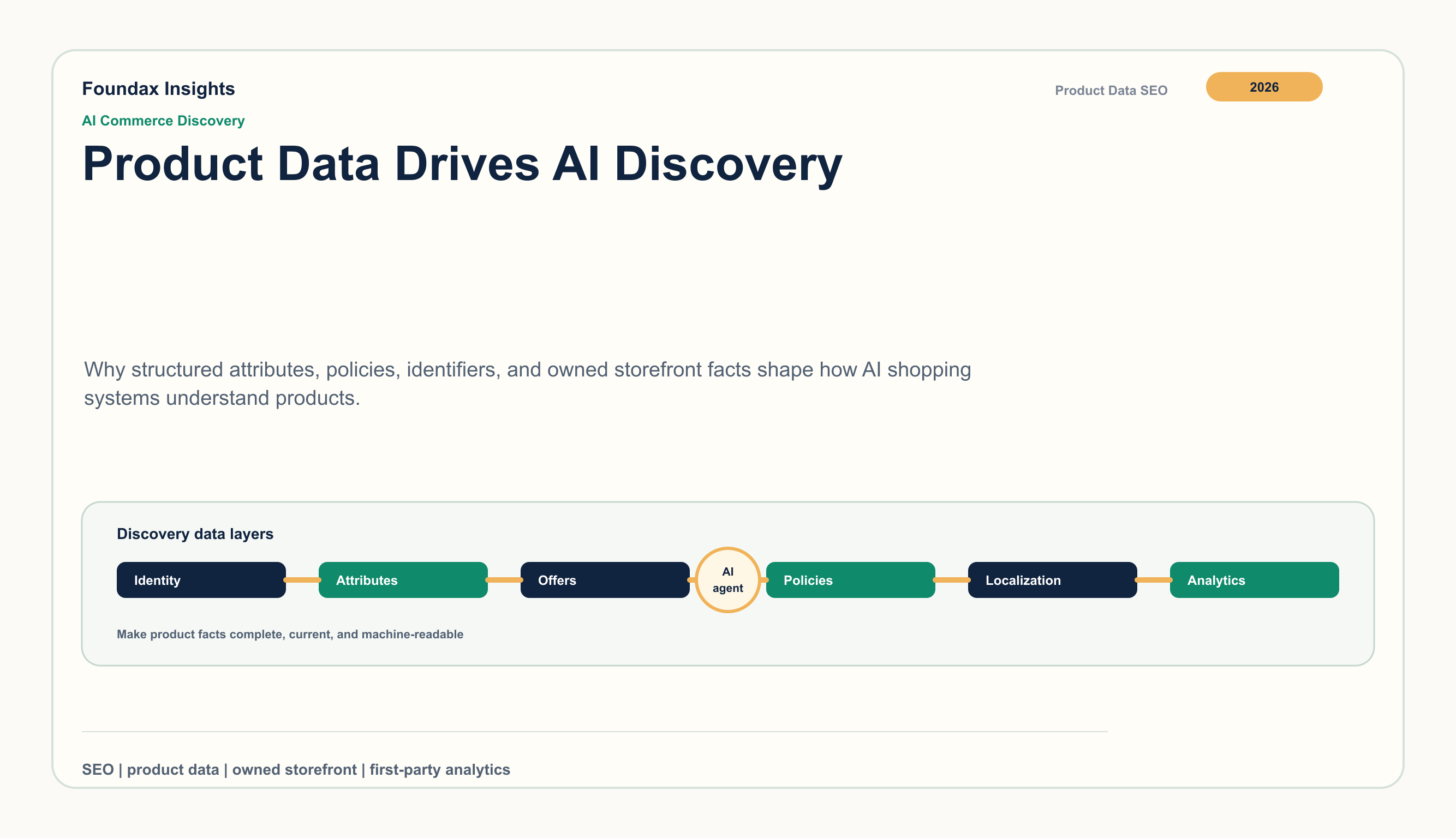
Ecommerce SEOは、かつてページから始まることが多くありました。title tags、description、backlinks、internal links、content depthです。これらは今も重要です。ただしAIショッピングでは第二の運用レイヤーが加わります。商品情報は、システムが読み取り、比較し、検証できるほど構造化されている必要があります。
この変化は公式プラットフォームの発表にも表れています。Google Merchant Centerは、share of voice、shopping funnel performance、product terms、product attribute insightsを扱うAI-powered shopping insightsを展開しています。Shopify Spring '26は、CatalogをAI channels向けの構造化されqueryableな商品インフラとして説明しています。Shopify Engineeringは、その裏側にあるproduct identity、merchant schemasの不一致、clustering、product IDsを保つstrict outputsの難しさを解説しています。AWSは、retailersが自社catalog、customer context、business rules、brand voiceと組み合わせられるagentic shopping assistantsを説明しています。
DTCチームにとって実務上の結論は明確です。商品データは、ecommerce discoveryの下にあるmachine-readable layerになりつつあります。brand site、product feeds、policy pages、localized content、structured data、measurementが同じofferを説明しているほど、検索やAIショッピングのシステムに渡る入力は明確になります。
Google Merchant Center AI insightsは、商品データ品質をAI surface reportingの一部にしました。ヘルプ文書は、product term insights、product attribute insights、color、style、materialなどのstructured attributesが欠けている商品を見つけるattribute completeness scoreを説明しています。これは単なるfeed hygieneではなく、AI-powered shopping experiencesが比較可能な商品属性を必要としているというサインです。
Shopify Spring '26も同じ方向を示します。Shopifyは、Catalogが商品データを構造化し、AI channelsに配信することで、agentsが商品を発見、理解、推薦できると説明しています。agentic storefrontのドキュメントでも、Shopify Catalog経由の商品はtitle、description、options、images、price、availability、その他key attributesを持ち、AI agentsがparseして理解できる形で掲載されると説明されています。
Shopify EngineeringのCatalog clustering記事が重要なのは、インターフェイスの裏にあるデータ問題を示しているからです。異なるmerchantは同じ、または似た商品を違うschemaで表現します。product identityは分断されやすく、agentic commerceではproduct IDsを保つstrict structured outputsが必要になります。これはmarketing問題の前にproduct data問題です。
AWSのAgentic Shopping Assistantはretailer側の同じ流れを示しています。AWSは、このassistantをretailerのdata、business rules、brand voiceと組み合わせられるfoundationとして説明しています。会話型UIになっても、catalog、policies、context、brand factsは重要です。
商品ページが「quiet espresso grinder」を何度も繰り返しても、burr type、dimensions、noise context、price、availability、warranty、shipping region、return termsがデータとして存在しなければ、「small apartment向けの静かなグラインダー」というqueryには弱くなります。Keywordはページを見つける助けになります。構造化商品データは、商品を理解する助けになります。
自然言語の買い物質問は、属性、制約、ポリシーを同時に含むことが多いです。小さな部屋向けの静かなgrinder、ドイツで返品できる150ドル未満のjacket、sensitive skin向けのskincare setなどです。薄いcopyだけでは支えきれません。整ったproduct data layerが必要です。
SEOの仕事は、単一keywordのページ最適化だけではなくなります。product identity、category、offer、attribute、policy、localization、measurement dataを、public pages、structured markup、feeds、reportsで一緒に扱えるようにすることです。
1. Identity. canonical URL、product name、brand、SKU、GTINまたはMPN、stable item group、parent-child variant relationships。
2. Attributes. material、color、size、dimensions、compatibility、certifications、use cases、performance specs、buyerがfilterやcompareに使うcategory-specific facts。
3. Offers. price、currency、availability、sale windows、shipping cost、delivery promise、return policy、market restrictions、warranty information。
4. Content proof. product descriptions、buyer FAQs、buying guides、comparison notes、review context、product highlights、有用なimage alt text。
5. Localization. market-specific language、units、currency、size systems、compliance text、delivery expectations、policy details。説明文だけを翻訳しても、feed attributesやpolicy factsが違うmarket contextのままならlocalizationとは言えません。
6. Measurement. Merchant Center diagnostics、利用可能なAI insights、Search Console trends、source/referrer、UTM analytics、PDP behavior、add-to-cart、checkout start、orders、manual AI-surface observations。
Foundaxは、DTCの商品事実をsite、structured data、Google workflows、measurementの間で揃えるoperating layerとして説明できます。
Foundaxはproduct records、SKUとvariant structure、SEO metadata、多言語ページ、sitemap workflows、元データがある場合のserver-rendered Product JSON-LDを支えます。これらは、product pages、search surfaces、merchant feedsを揃えやすくする入力です。
FoundaxはSearch Console verification、sitemap submission、Merchant Center preflight/sync、Products、Options、SKUs、GMC fields向けのbulk import templatesも扱います。価値はoperational consistencyです。product factsを同じworkflowで管理し、channel submission前に確認し、多言語DTC contentとして公開し、first-party analyticsで測定できます。
商品データはSEOにmachine-readable layerを追加します。page quality、crawlability、internal links、content relevance、performanceは今も重要です。AI commerce discoveryでは、比較し検証できる商品事実も必要になります。
canonical URL、product name、brand、identifiers、price、availability、image、category、core attributes、shipping、returns、warranty、localized descriptions、buyer FAQ answersから始めます。
より大きな方向性として、structured and queryable product dataがAI channelsのインフラになりつつあることを示しています。Shopify外のブランドでも、DTC product pages、structured data、feeds、policies、analyticsを整える価値があります。
Foundaxはproduct records、多言語ページ、Product JSON-LD、sitemap workflows、Search Console operations、Merchant Center preflight/sync、first-party measurementを一つのoperating layerに置きます。
すでに売上を作っている商品から始めます。属性を補い、PDPとfeedを揃え、実用的なFAQを追加し、structured dataを検証し、数週間単位でvisibilityとclick movementを記録します。