マーケットプレイス販売者にDTCサイトが必要な理由
マーケットプレイスを使いながら、商品データ、顧客接点、コンテンツ、測定をDTCサイトにも蓄積するための実務ガイドです。
続きを読む
AIによる高速なサイト生成と、DTCブランドが公開後に必要とする商品データ、SEO、フィード、ローカライズ、分析の運用レイヤーを切り分けます。
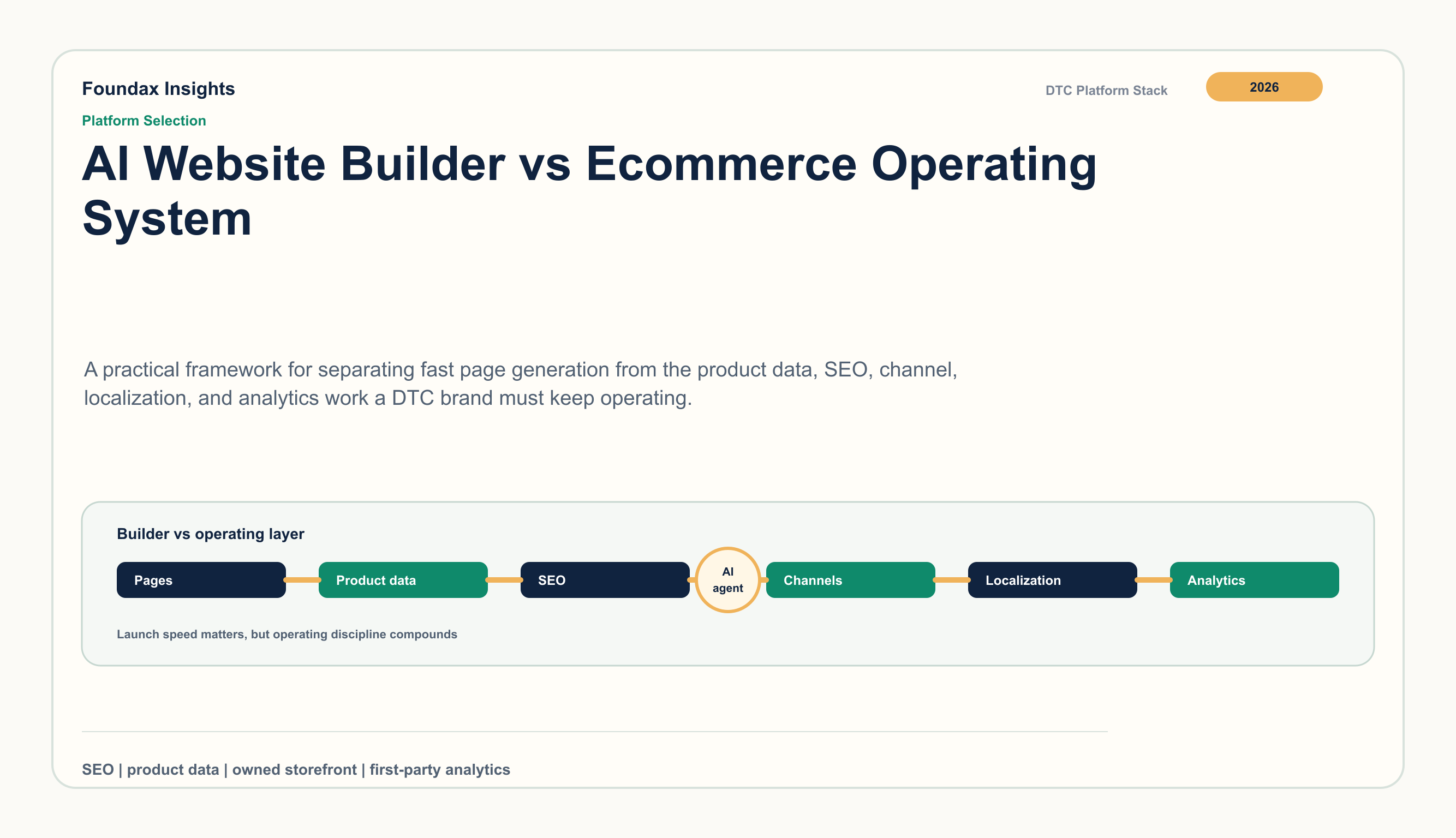
AIウェブサイトビルダーは、DTCブランドの立ち上げを速くしました。ブランドの方向性、商品カテゴリ、トーンを入力すれば、短期間で見栄えのする初期サイトを作れます。2025年2月11日のa16zの記事も、Bolt、Lovable、v0のようなツールが、Web制作をコード中心からプロンプト中心へ動かしていると説明しています。
ただし、最初のページができたことと、EC事業を運用できることは別です。公開後には、価格、在庫、商品画像、SEO、Merchant Center、ローカライズ、コンテンツ、分析が継続的に変わります。重要なのは「ページを作れるか」ではなく、「商品、チャネル、市場、データが動き始めても、ストア全体を矛盾なく保てるか」です。
生成されたサイトは、顧客が商品を見て理解し、購入へ進む場所を作ります。テスト販売や初期検証では十分に価値があります。しかしDTCブランドが検索流入、広告、リピート購入、海外市場、商品数の拡大を考えるなら、公開ページは運用全体の一部です。
通常の1か月だけでも、次のような作業が発生します。
ページビルダーは見えるページを助けます。EC運用システムは、商品事実、SEO metadata、構造化データ、merchant feed、ローカライズ文脈、計測を同じ方向に保つためのものです。
多くのチームは公開初日に限界を感じません。問題は2つ目の運用フローが始まったときに出ます。
商品データが複製されすぎる。 PDPには説明文、feedには別の属性、広告には別名、analyticsには別ラベルが存在します。小さな商品修正が確認作業になります。
SEOは入力欄ではなく公開プロセスになる。 Titleとdescriptionだけでは足りません。canonical、indexability、Product JSON-LD、画像、sitemap、Search Consoleの状態まで見る必要があります。
コンテンツは公開素材で終わらない。 Buying guide、比較ページ、FAQ、カテゴリ文、返品ポリシー、ローカライズPDPは、在庫、訴求、市場、顧客の不安に合わせて更新されます。
ローカライズは翻訳だけではない。 サイズ感、支払い方法、配送期待、住所表記、ポリシー表現、検索語彙は市場ごとに異なります。
計測が分裂する。 GA4、広告ピクセル、ファーストパーティイベント、Search Console、Merchant Center、売上レポートが、共通の商品IDとcampaign IDを持たないと別々の物語を語ります。
| 観点 | Builder-first | 運用システム |
|---|---|---|
| 公開 | どれだけ速くページを作れるか | 将来のデータ負債を増やさず公開できるか |
| 商品データ | PDPにコピーが表示される | 商品事実がPDP、構造化データ、feed、ローカライズ、analyticsで再利用される |
| SEO | titleとdescriptionを入れる | canonical、sitemap、Product JSON-LD、indexability、検索診断を扱う |
| コンテンツ | 初期コピーを生成する | ガイド、FAQ、比較ページ、ポリシー、ローカライズ更新を継続する |
| チャネル | 必要な時に連携を足す | ページ、feed、広告計測が同じ事実を参照する |
| 市場 | UIを翻訳する | 商品事実、ポリシー、通貨、配送期待、検索意図を市場別に調整する |
| 分析 | トラッキングを入れる | landing、PDP、cart、checkout、repeat purchaseまで測れる状態を保つ |
名前がbuilderかplatformかではなく、最初のページの次に何が起きるかを見るべきです。
GoogleのProduct structured dataは、価格、在庫、レビュー、配送、返品などをSearchのリッチな表示に使えることを説明しています。Merchant Centerの商品データ仕様も、商品情報が正確で、形式が正しく、ランディングページと一致している必要があると示しています。
Agentic commerceの流れでは、この要件がさらに重要になります。Googleは2026年1月にagentic commerce向けのUniversal Commerce Protocol関連の取り組みを発表し、Shopifyの資料も、AI agentが商品を理解するための構造化商品データを重視しています。DTCサイトでもプラットフォームでも、商品事実は最新で、具体的で、機械が読める必要があります。
Foundaxは、サイト公開、商品データ、SEO、Product JSON-LD、GMCチェック、Search Console、多言語コンテンツ、Content Studio、ファーストパーティ分析を同じ運用レイヤーで扱いたいチームに向いています。目的は魔法の自動化ではなく、照合、手戻り、説明の時間を減らすことです。
初期検証には役立ちます。商品データ、SEO、Merchant Center、ローカライズ、コンテンツ更新、分析が売上に影響し始めたら、運用レイヤーが必要です。
商品レコード、公開ページ、SEO metadata、構造化データ、merchant feed、ローカライズコンテンツ、analyticsを公開後もそろえるためのワークフローです。
DTCチームが、サイト公開と商品データ、SEO、GMCチェック、Search Console、多言語コンテンツ、分析を分断せずに扱いたい場合に役立ちます。